

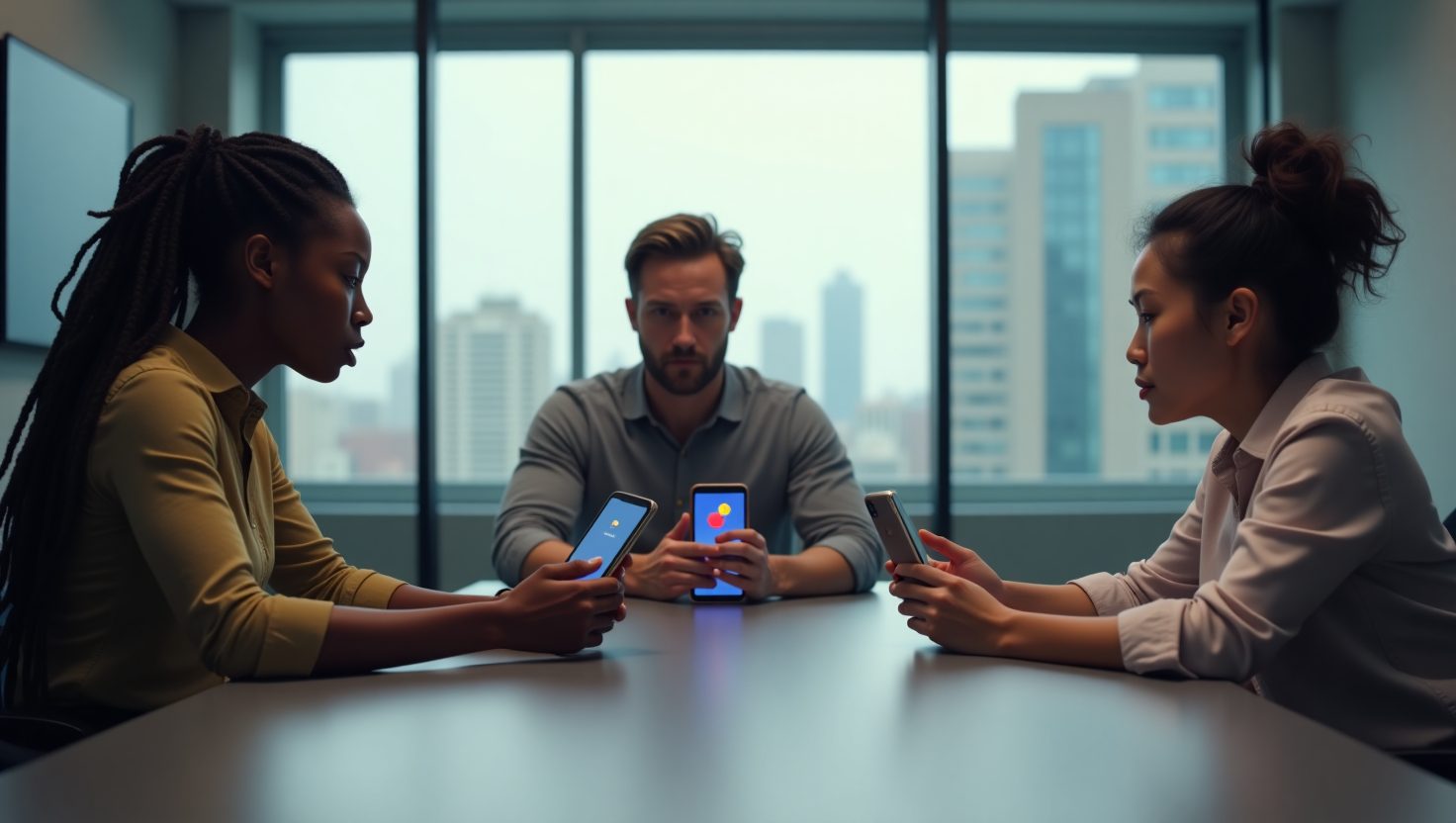
It seems Apple’s long-running tragicomedy with artificial intelligence has a new act. For a company that prides itself on products that “just work,” its flagship AI, Siri, has been a masterclass in “just about working” for years. Now, the grand reinvention we were promised is, yet again, stuck in development hell, leaving the rest of the voice assistant competition to sprint further ahead.
This isn’t just about a missed deadline; it’s about a fundamental strategic fumble. Apple had a monumental head start. Siri, launched in 2011, effectively created the mainstream category. Yet, here we are, watching the company that put a computer in every pocket play catch-up in the most important technological race of the decade.
Understanding the Real Stakes
The battle for the virtual assistant market was never just about answering trivia or setting timers. It has always been about owning the next great computing interface. The vision is ambient computing: a world where our primary interaction with technology is through conversation, not tapping on glass screens. Amazon’s Alexa and Google’s Assistant understood this early on, colonising our homes and embedding themselves into the fabric of the web.
Siri, by contrast, feels frozen in time. Despite being pre-installed on over a billion devices, its usage is often shallow. It’s the digital assistant you use when you can’t be bothered to type, not the one you turn to for complex tasks or genuine help. Its vast market share is a product of distribution, not desire. The question for Apple is, how long can that last?
The Revamp That Wasn’t (Yet)
The news, first highlighted by a report in TechCrunch, is that the much-hyped Siri overhaul has hit another snag. What was supposed to be the star of the iOS 26.4 update in March 2026 is now being pushed back. This is not a minor hiccup; it’s a significant stumble in a race Apple is already losing.
Another Victim of ‘Internal Testing’
The official reason for the delay is “issues encountered during internal testing.” This is corporate-speak for “it’s not ready, and it might be breaking things.” These aren’t simple tech delays; they point to a deeper problem. The overhaul’s ambition is to infuse Siri with modern Large Language Model (LLM) capabilities, making it conversational and genuinely intelligent, akin to a ChatGPT or Claude.
But here’s the kicker: Apple is reportedly licensing Google’s Gemini technology to power it. Think about that. Apple, the architect of the closed ecosystem, is outsourcing the brain for its most personal AI. It’s like discovering the secret ingredient in Coca-Cola is, in fact, Pepsi. This dependency demonstrates just how far behind Apple’s own foundational model development is. Integrating a third-party brain into the highly secure, privacy-focused fortress of iOS is proving to be a Herculean task.
Why AI Integration is Everything
The promise of true AI integration is to transform these assistants from glorified command-line prompts into genuine partners. A modern assistant should understand context, handle multi-step requests, and anticipate your needs. Asking it to “plan a weekend trip to Edinburgh for my anniversary, find a dog-friendly hotel near the Royal Mile, and book a table for two at a restaurant with good reviews for Saturday night” should be a single request, not a frustrating, twenty-question charade.
This is the standard Google is setting with Gemini. By weaving its powerful AI through its Assistant, Search, and Android ecosystem, it’s creating a cohesive, intelligent fabric. Every interaction makes the system smarter. Apple, meanwhile, is trying to stitch a foreign brain into its pristine ecosystem, and the seams are showing.
What Comes Next for Siri?
So, what can we expect now? According to the report from TechCrunch, the rollout will be piecemeal. We might see some of the less complex features in a May iOS update, but the more transformative capabilities could be postponed until iOS 27 in September 2026, or even later.
This strategy of a gradual rollout feels less like a thoughtful plan and more like a damage-control exercise. Apple needs to show something at its Worldwide Developers Conference (WWDC) to appease developers and investors. But releasing a watered-down version of its grand vision risks disappointing users and making the final product feel less revolutionary when it finally arrives.
– May Update: Likely to include basic conversational improvements. Siri might get better at understanding natural language but without the deep, multi-app integration.
– iOS 27 (September 2026): This is the new target for the headline features, such as on-device processing for complex tasks and genuine chatbot-like interactions. But can we trust this new deadline?
The Clock is Ticking Loudly
Apple’s entire ethos is built on the seamless integration of hardware, software, and services. It’s a powerful strategy that has made it the most valuable company in the world. But that integration is also a golden cage. When one critical component—in this case, in-house AI—lags, the entire structure is weakened.
The delay of the Siri revamp is more than just a product slip. It’s a flashing red light on Apple’s dashboard. The voice assistant competition isn’t waiting. Users are growing accustomed to the power of standalone AI apps, and every day Apple fails to deliver a compelling native alternative, that behaviour becomes more entrenched.
Siri’s head start has fully evaporated. The question now is whether Apple’s immense resources and loyal user base are enough to close a gap that is widening by the day. Will users wait patiently for Apple to perfect its AI offering, or have they already found a better conversation partner? What do you think?



