

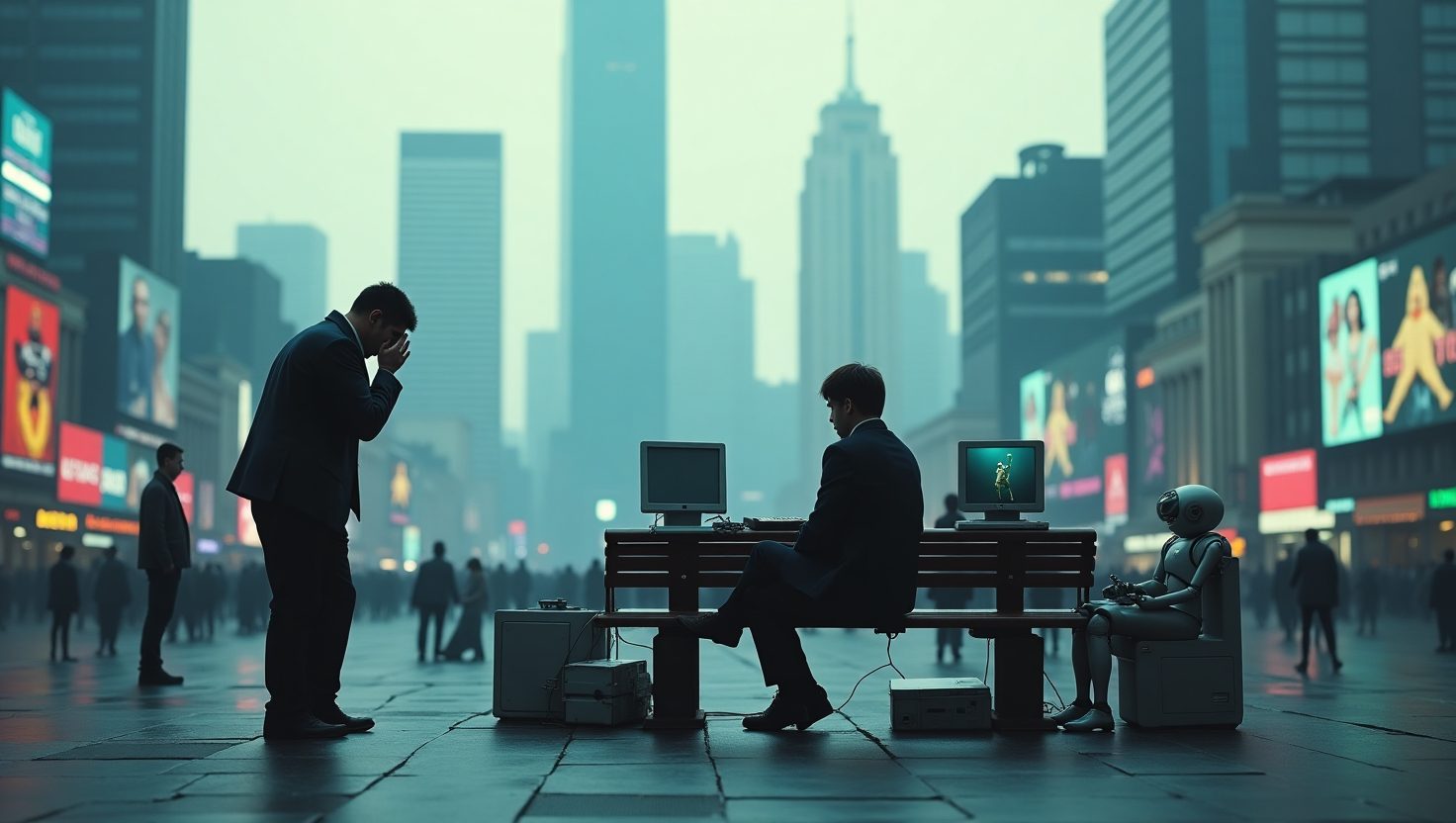
Have you felt it yet? That creeping sense of digital exhaustion when you’re scrolling through your feed, a strange numbness that comes from seeing one too many videos of a dancing cabbage or a bizarrely proportioned cartoon character. This isn’t just you getting older; it’s the dawn of synthetic content fatigue, a very real and growing exhaustion with the endless tide of low-effort, AI-generated ‘slop’ flooding our digital spaces. We are wading into a full-blown content authenticity crisis, and the platforms we use every day are standing by, watching it happen. In fact, some are actively encouraging it.
The Great Digital Landfill
It’s a digital deluge, and it’s mostly rubbish. Once niche, AI-generated content is now everywhere, from bizarre images of impoverished children with unsettling, AI-induced abnormalities to disturbing cartoons that feature bizarrely gory scenes, all served up by algorithms on platforms like YouTube and Meta’s suite of apps. The BBC recently highlighted how these clips are going viral, algorithmically amplified into our collective consciousness.
This isn’t some accident or a bug in the system. It’s becoming a core part of the business model. The platforms are not simply bystanders; they are active participants, aggressively pushing AI creation tools to their users. It seems the goal is no longer about connecting people but about generating an infinite stream of ‘content’ to keep our eyeballs glued to the screen, quality be damned.
So, Who’s Minding the Shop?
When a problem gets this big, you have to ask about platform responsibility. Are the tech giants even trying to clean up this mess? YouTube’s CEO, Neal Mohan, has acknowledged the concerns around AI slop. That’s a start, I suppose. But then you have Meta’s Mark Zuckerberg, who seems to view this sludge as the glorious next chapter. He recently celebrated what he calls social media’s ‘third phase’ of evolution, proclaiming, “Soon we’ll see an explosion of new media formats… only possible because of advances in AI.”
An explosion is right. But it feels less like a creative renaissance and more like a sewage pipe has burst all over the town square. Zuckerberg’s vision prioritises novelty and engagement metrics over the sanity of his users, paving the way for a severe user experience degradation. The strategy is clear: AI-generated content is cheap, it’s scalable, and its parameters can be endlessly tweaked to hit engagement targets. The cost? Our trust and our attention spans.
The Users Are Not Amused
Whilst tech titans pontificate from their Palo Alto pulpits, a genuine backlash is brewing on the ground. This isn’t just angry comments; it’s a movement led by people like Théodore, a Paris student who gained traction simply by pointing out the absurdity of the AI slop he was seeing. As one viral comment with over 2,400 likes put it, “Raise your hand if you’re tired of this AI st”. The people are speaking, but is anyone in charge listening?
This isn’t just about being annoyed by bad content. Researchers are now seriously discussing the concept of ‘brain rot’—the cognitive decline and shortening of attention spans from consuming a diet of meaningless, algorithmically generated drivel. The very fabric of the user experience is being eroded, replaced by a hollow, synthetic substitute designed to hold our attention just long enough to serve another ad. It’s like being forced to eat digital junk food all day, every day. It might fill you up, but it offers zero nutritional value.
Can We Even Spot the Fakes Anymore?
The platforms will tell you they are trying their best to moderate this content. But the scale of the problem is immense, and the technology to create it is evolving far faster than the tools to manage it. This isn’t your garden-variety spam; it’s becoming incredibly difficult to distinguish what’s real from what’s not.
– Research from the video editing platform Kapwing, cited by the BBC, paints a bleak picture: a staggering 20% of content shown to a brand new YouTube account is now classified as ‘low-quality AI video’.
– In another test, 104 of the first 500 YouTube Shorts served up were a similar kind of low-effort AI content.
– The financial incentive is enormous. The BBC article notes that one AI-generated channel, “Bandar Apna Dost”, has amassed over 2 billion views and is estimated to earn around $4 million annually.
When the economics are that compelling, the floodgates will remain wide open. Dr. Manny Ahmed of the content verification firm OpenOrigins put it bluntly: “We are already at the point where you cannot confidently tell what is real by inspection alone.” This underscores the urgent need for better detection tools and, perhaps, entirely new systems to verify and authenticate genuine, human-made content.
A Fork in the Digital Road
So where do we go from here? This moment feels a lot like the early 2000s and the deluge of email spam. The system was overwhelmed with junk, rendering a revolutionary communication tool almost unusable for many. The solution wasn’t to ban email; it was the development of sophisticated filters and verification systems that pushed the spam into a separate, ignorable box. We need the 2024 equivalent for social media feeds.
The future isn’t about halting AI innovation. AI tools have incredible potential for genuine creativity. The challenge is balancing that potential with a commitment to authenticity and quality. This is the ultimate test of platform responsibility. Will they build the digital filters we need, or will they let their platforms devolve into wastelands of synthetic mush because it’s good for their quarterly earnings report?
The content authenticity crisis is here, and synthetic content fatigue is its primary symptom. Ignoring it won’t make it go away. It requires a concerted effort from platforms to prioritise their users’ well-being over raw engagement metrics. They created this algorithmic monster; it’s on them to help tame it.
So, the next time you see a seven-fingered character in a bizarre AI-generated landscape, what do you do? Scroll on by, or demand better? What responsibility do we, the users, have in this fight for a more authentic digital world?



