

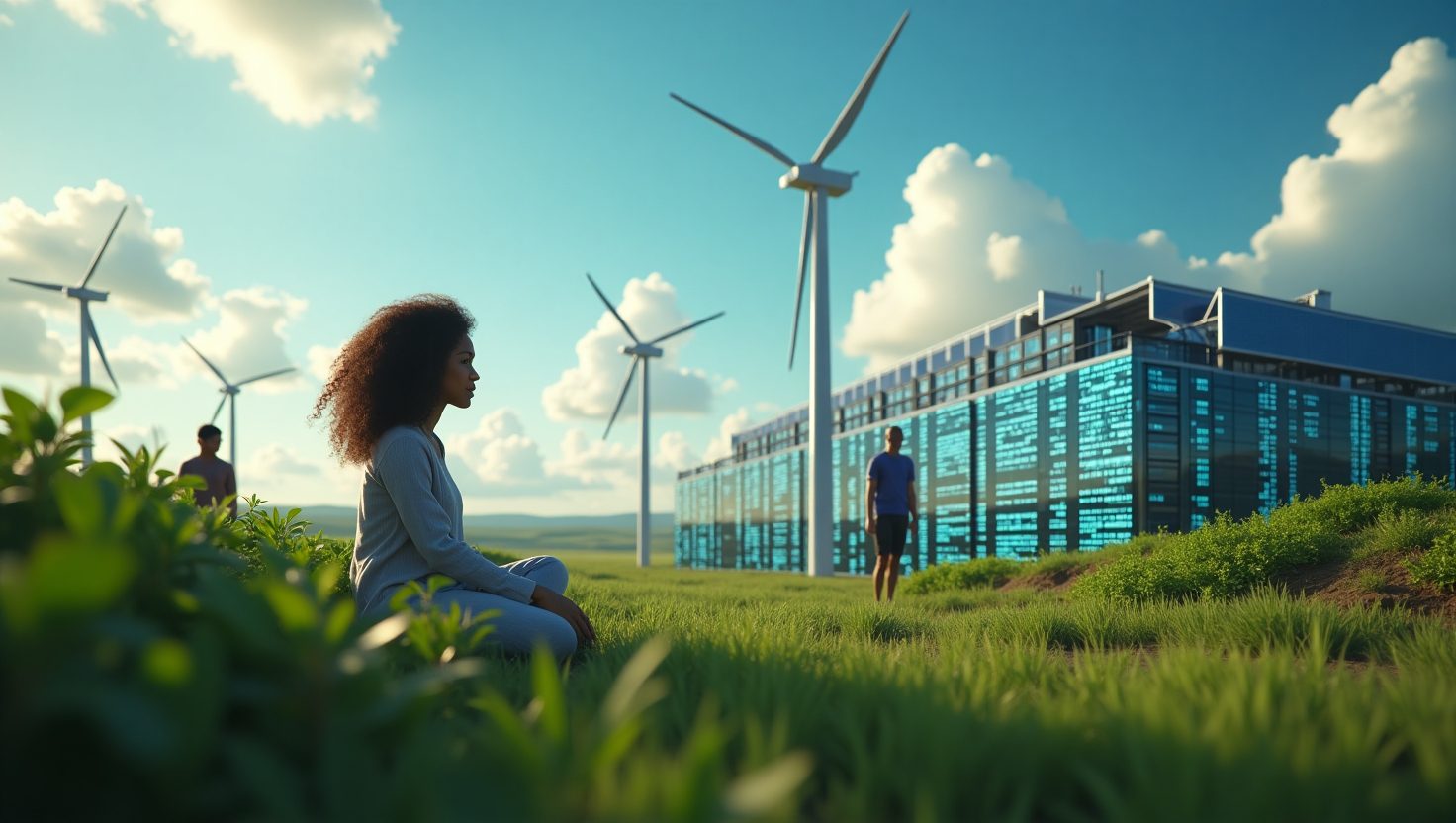
The boom in AI infrastructure isn’t just about silicon and code; it’s about cranes, cement mixers, and a finite pool of skilled labour. The question we’re now forced to ask is a stark one: what happens when building the future of AI means we can’t afford to fix today’s roads and bridges? This isn’t a hypothetical dilemma. It’s happening right now, and it forces a critical conversation about what sustainable AI infrastructure truly means.
The Unquenchable Thirst for Data Centres
Let’s look at the numbers, because they tell a rather dramatic story. According to a recent TechCrunch analysis, private spending on data centre construction has rocketed to an annualised rate of $41 billion. To put that into perspective, that figure now directly rivals the amount US state and local governments spend on building and maintaining transport infrastructure like roads, railways, and airports.
This isn’t a bubble; it’s a fundamental reallocation of economic gravity. Every large language model being trained, every AI-powered image being generated, and every smart assistant answering a query requires immense physical resources. The demand for computation is, a a practical level, infinite. This has created an arms race among tech giants to build bigger, more powerful data centres as quickly as possible. The problem, of course, is that the resources required to build them are very much finite.
A Tug-of-War for Concrete and Crews
This explosive growth is creating a direct competition for resources that public projects simply cannot win. Think of it like a small town with a single, highly-skilled construction crew. For years, that crew has been busy fixing schools and paving roads. Suddenly, a tech billionaire moves in and offers to pay them triple the rate to build a giant warehouse for his computer servers. What do you think happens to the school repairs?
This is precisely the scenario unfolding across the country. Andrew Anagnost, the CEO of design and construction software giant Autodesk, pulled no punches in his assessment. He stated there is ‘absolutely no doubt’ that the data centre boom ‘sucks resources from other projects’. He went even further, guaranteeing that many vital public infrastructure initiatives ‘are not going to move as fast as people want’ because the labour and materials are being diverted to these more lucrative private projects.
This isn’t just about a few delayed roadworks. The construction industry is already grappling with severe labour shortages. When a significant portion of the available workforce is redirected to data centres, the ripple effects are felt everywhere, slowing down everything from hospital expansions to public housing developments. This intense competition is a defining challenge in computing resource allocation – not just for processors and memory, but for the very people and materials needed to house them.
The Power Grid’s new Apex Predator
Beyond the construction site, there is an even bigger challenge: electricity. Modern AI data centres are the apex predators of the power grid. Their energy consumption is staggering. The International Energy Agency (IEA) has warned that by 2026, the AI industry could consume ten times more electricity than it did in 2023. This is a level of demand growth that utility providers have never seen before.
This makes renewable energy integration not just a green PR exercise, but a strategic imperative. A data centre without a massive, reliable, and preferably cost-effective power source is just an expensive, useless box. Tech companies know this. It’s why they are now the largest corporate buyers of renewable energy in the world.
However, simply buying renewable energy credits isn’t a silver bullet. True sustainability requires co-locating data centres with new, dedicated renewable sources like solar and wind farms. This ensures the infrastructure isn’t just putting an additional strain on an existing grid that still relies heavily on fossil fuels. It is a far more complex and capital-intensive approach, but one that is essential for long-term viability.
A Smarter Way Forward: Partnerships and Planning
So, are we doomed to a future of crumbling bridges and gleaming, energy-hungry data centres? Not necessarily, but avoiding that outcome requires a deliberate and collaborative strategy. We cannot simply let market forces barrel ahead unchecked. The solution lies in a more intelligent coupling of public needs and private ambition.
This is where public-private partnership models become absolutely critical. Instead of seeing each other as competitors in a zero-sum game, local governments and tech companies must become collaborators. These partnerships could involve agreements where, in exchange for zoning approvals and utility connections, a tech company contributes directly to a community infrastructure fund or invests in local job training programmes for the construction trades. The goal is to ensure the economic benefits of a data centre are shared more broadly.
This must also be paired with far more sophisticated regional economic planning. Plonking a data centre down in a region without considering its impact on the local power grid, water supply, housing market, and labour pool is a recipe for disaster. Strategic planning involves identifying locations where the infrastructure can support such a facility and where the facility, in turn, can support the community. It’s about integrating these digital factories into our civic fabric, not just dropping them on the outskirts of town.
This AI revolution is very real and its demand for physical infrastructure is not going to slow down. The choice we face is whether we allow this boom to happen to our communities, or whether we proactively shape it with them. Building a truly sustainable AI infrastructure is about more than just energy efficiency; it’s about ensuring the digital future doesn’t come at the expense of a liveable present.
What do you think? Should local governments offer tax breaks to attract data centres, even if it means public projects get delayed? Who should bear the cost of upgrading our national power grids to handle the demands of AI? Let me know your thoughts in the comments below.



