

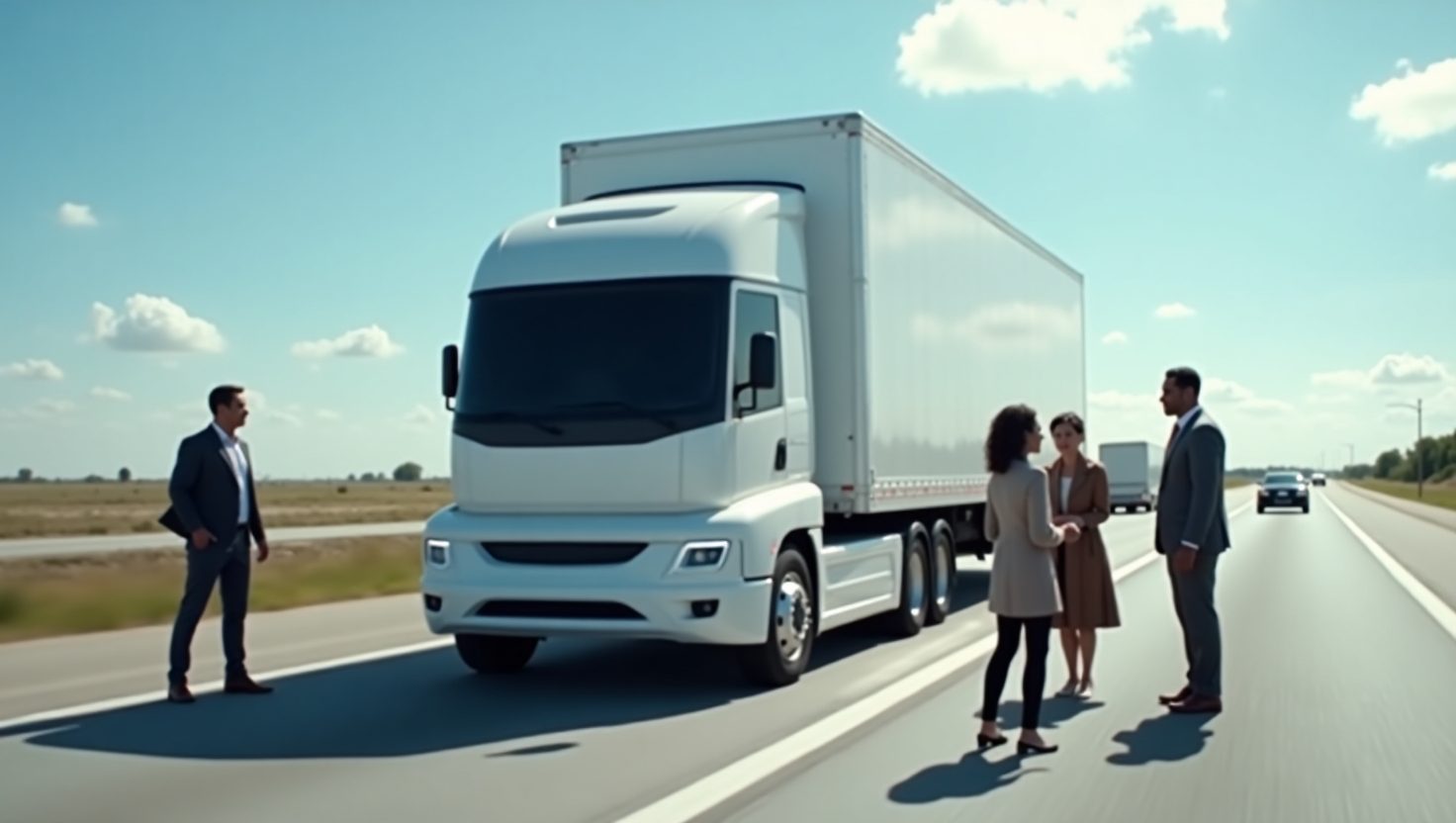
Another week, another bold proclamation from the world of autonomous vehicles. This time, it’s not a flashy robotaxi you might summon in a city centre, but a 40-tonne articulated lorry thundering down a 600-mile stretch of Texan motorway, seemingly without a soul in the driver’s seat. Aurora Innovation, a key player in this high-stakes game, has just switched on its second commercial driverless route. It’s a move that pushes the concept of self-driving logistics out of the realm of science fiction and firmly onto the tarmac of reality.
But as with all grand technological leaps, we have to ask the hard questions. It’s one thing to make a machine drive itself; it’s quite another to unleash it upon the world’s most critical arteries of commerce. This isn’t just about clever code and advanced sensors. This is about reshaping the global supply chain, and with it, the lives of millions. The conversation must extend beyond engineering triumphs to include supply chain ethics and the future of the CDL workforce.
The Robot Lorries are Rolling in Texas
Let’s get the details straight. According to TechCrunch, Aurora is now running its autonomous lorries between Fort Worth and El Paso. This isn’t a short test loop around a car park; it’s a significant commercial corridor. This new route joins its existing Dallas-to-Houston service, signalling a clear strategy: conquer Texas first. And why not? The state features long, relatively straight motorways and a booming freight market, making it the perfect sandbox for this technology.
Aurora’s lorries, built on the Volvo VNL platform, have already clocked over 100,000 commercial miles without a driver at the controls. While currently operating with only a handful of vehicles, the company’s ambitions are anything but small. The plan involves scaling up with manufacturing partners, including Volvo and Aumovio, to produce ‘hundreds of trucks’ in 2026 and then, supposedly, ‘tens of thousands’ from 2027 onwards.
These aren’t just the same lorries with a few software updates. Aurora has unveiled its next-generation hardware, boasting a new lidar system—the ‘eyes’ of the vehicle—that can detect objects a full kilometre away. That’s double the previous range. To put that in perspective, at motorway speeds, that extra distance gives the system precious extra seconds to think, plan, and react. It’s the difference between seeing a hazard and having enough time to navigate around it smoothly versus slamming on the brakes.
A Game of Economics and Electrons
Why is this so important? Because the entire business model for self-driving logistics rests on two pillars: safety and efficiency. A lorry that can see further can operate more safely at speed, and a lorry that doesn’t need to sleep can, in theory, run 24/7. This fundamentally alters the economics of haulage.
Today, a human driver is limited by law to around 11 hours of driving per day. An autonomous system has no such constraint. It can haul goods from a depot in El Paso to Fort Worth and be ready for the return journey almost immediately. This transforms a lorry from a simple vehicle into a constantly utilised asset, maximising its value for haulage giants like Uber Freight and Hirschbach, who are already piloting Aurora’s service. The knock-on effect is faster delivery times, potentially lower costs, and a supply chain that is more resilient to the driver shortages that currently plague the industry.
Are We Paving the Roads for Robots?
Having a technologically brilliant lorry is only half the battle. It’s like designing a state-of-the-art electric car but having nowhere to plug it in. The question of infrastructure readiness is a colossal elephant in the room. Motorways in Texas might be suitable, but what about the winding roads of the Scottish Highlands or the congested M25 around London?
Effective autonomous trucking requires more than just a lorry:
– High-Fidelity Maps: These systems rely on incredibly detailed, constantly updated maps that go far beyond what your satnav uses.
– Reliable Connectivity: Consistent 5G coverage is essential for communication and for the system to receive critical updates on weather, traffic, and road closures.
– Autonomous-Ready Terminals: The vision for self-driving logistics is a ‘hub-to-hub’ model. Robots handle the long, tedious motorway miles, while human drivers take over for the complex final leg into urban centres. These transfer hubs don’t really exist yet. They will need to be large, secure, and specifically designed for swift and safe handovers between human and machine.
– Maintenance & Support: These aren’t your grandfather’s lorries. Servicing them requires highly skilled technicians who are as comfortable with software diagnostics as they are with a spanner. A nationwide network of such service centres is years, if not decades, away.
Without massive public and private investment in this supporting ecosystem, the rollout of autonomous trucking will be a slow, fragmented affair, confined to a few specific, well-resourced corridors.
The Million-Driver Question: What Happens to the CDL Workforce?
Now we arrive at the most difficult part of the conversation. According to the American Trucking Associations, the industry supports over 8.4 million jobs in the U.S. alone, with about 3.5 million of those being lorry drivers. In the UK, the figure is around 300,000 drivers. Driving a heavy goods vehicle is a cornerstone of the working-class economy. So, what happens when the machines can do it better, cheaper, and for longer?
The optimistic view, often pushed by the tech companies themselves, is one of ‘job transformation’, not ‘job loss’. They argue that new roles will be created:
– Remote Operators: People monitoring fleets of autonomous lorries from a control centre, ready to intervene if an unexpected situation arises.
– Hub Technicians: The specialists mentioned earlier, who will service and maintain the vehicles.
– ‘Last-Mile’ Drivers: Human drivers who will become experts in urban logistics, handling the most complex part of the journey.
This is a neat and tidy narrative, but it glosses over a harsh reality. A single remote operator might be able to oversee ten or twenty lorries at once. That’s a significant reduction in headcount. Furthermore, the skills required to be a software technician or remote operator are vastly different from those needed to drive a 40-tonne vehicle across the country. This isn’t a simple retraining programme; it’s a fundamental career shift that many in the current CDL workforce may be unwilling or unable to make.
A Question of Supply Chain Ethics
This brings us to the thorny issue of supply chain ethics. For decades, companies have sought to make their supply chains faster and cheaper. Automation is the logical next step. But there’s a moral dimension to this pursuit of efficiency. Is it ethical to automate away millions of jobs without a robust, well-funded, and realistic transition plan?
Companies like Aurora and their customers stand to make billions from this technology. Do they have a responsibility to the drivers they are displacing? Should a portion of their profits be channelled into a fund for retraining, early retirement packages, or the creation of new, unionised jobs in the logistics sector? This is not a conversation the industry seems eager to have. Instead, the focus remains on the technology and the potential profits. As noted by the U.S. Bureau of Labor Statistics, the median pay for drivers is a solid middle-income wage, and its erosion could have profound economic consequences for countless communities that depend on it.
The Road Ahead is Far From Smooth
The future of self-driving logistics is no longer a question of ‘if’, but ‘how’ and ‘when’. Aurora’s expansion in Texas is a clear indicator that the technology is maturing rapidly, and the business case is compelling. The potential for a more efficient, resilient, and perhaps even safer supply chain is immense.
However, the path forward is littered with obstacles that are not technological but human. The challenge of infrastructure readiness requires coordinated national-level investment. The impact on the CDL workforce demands a pre-emptive and compassionate strategy, not a reactive afterthought. And the underlying questions of supply chain ethics force us to consider what kind of society we want to build. Do we prioritise pure efficiency and corporate profit above all else, or do we manage this transition in a way that is equitable and just for the people whose livelihoods are on the line?
The robot lorries are coming. We can either watch them roll past from the hard shoulder, or we can get in the driver’s seat and help steer this revolution towards a destination that benefits everyone.
What responsibility do you think tech companies and governments have to the existing workforce as they push for automation? Who should ultimately foot the bill for the societal transition?



