

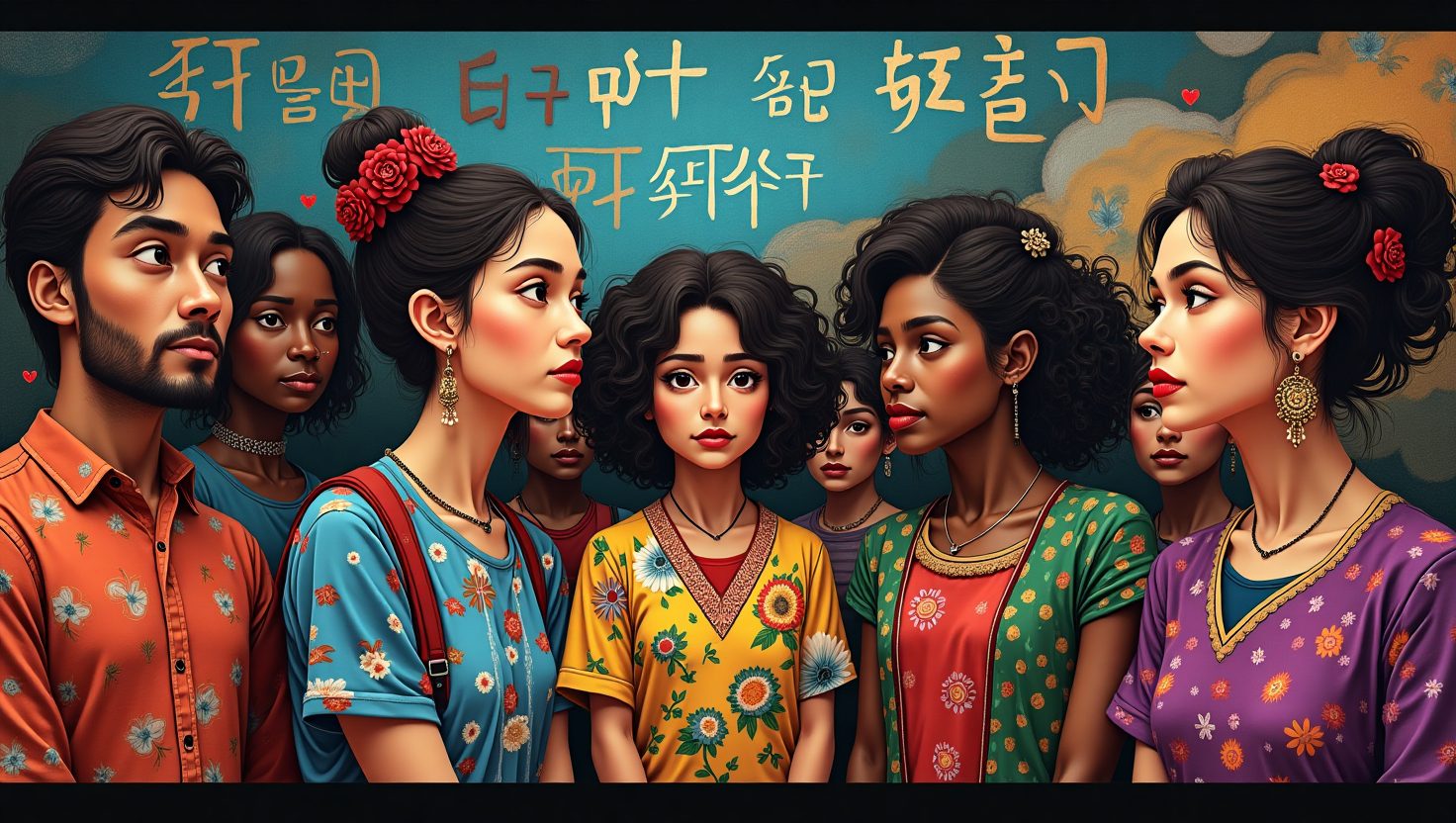
The slick user interfaces of these tools mask a messy truth. Behind the curtain, we’re facing a series of profound linguistic AI challenges that aren’t just about getting grammar right. These models, trained predominantly on the vast digital troves of English and a handful of other major languages, are creating a new kind of digital divide. They often fail to grasp nuance, flatten cultural identity, and, in some cases, risk silencing the very voices they claim to amplify. This isn’t just a technical problem; it’s a human one with far-reaching consequences.
Understanding the Machine’s Tongue
So, what exactly is linguistic AI? In simple terms, it’s the technology that powers everything from Google Translate to Siri and Alexa. It’s a branch of artificial intelligence focused on understanding, interpreting, and generating human language. It’s used in customer service chatbots that triage your complaints, in content moderation systems that try (and often fail) to spot hate speech, and in the language-learning apps that promise fluency in 15 minutes a day. The applications are everywhere, and the market is enormous.
The central challenge, however, is that language isn’t just a collection of words and rules that can be neatly organised in a database. It’s a living, breathing expression of culture, history, and identity. This is where the machine stumbles. The primary hurdles are not just about processing power, but about representation and context. The biggest issues fall into three buckets: a severe data disparity between languages, a clumsy inability to preserve cultural meaning, and a minefield of ethical quandaries.
The Data-Poor and the Data-Rich
At the heart of the problem is a simple, brute-force reality: modern AI models are data-hungry beasts. They learn by ingesting biblical amounts of text and speech data. For a language like English, the internet provides an all-you-can-eat buffet. For thousands of other languages, however, it’s a famine. This is the core of the low-resource language AI problem. Languages like Zulu, Amharic, Igbo, or Quechua simply don’t have the massive, digitised corpora of text that models require for effective training.
This isn’t because these languages are less complex or important; it’s a legacy of colonialism, economic disparity, and the digital world’s inherent biases. The internet was built on an English-centric framework, and the data reflects that. The consequence? AI models are brilliant at translating between English and French, but ask them to handle a nuanced conversation in a less-digitised language, and the results can range from comical to dangerously inaccurate. This neglect risks rendering vast swathes of human culture and knowledge invisible to the digital world, creating a future where linguistic diversity is flattened into the few languages Big Tech deems profitable.
Why We Must Bridge the Language Gap
Ignoring this issue isn’t an option. Thankfully, there are concerted efforts to fix it. Organisations like Masakhane, a grassroots research community, are focused on natural language processing for African languages. They are building datasets, creating models, and nurturing a generation of researchers who understand the linguistic and cultural contexts firsthand. Similarly, events like the Deep Learning Indaba are becoming crucial hubs for this work.
The 2025 conference in Kigali, for instance, wasn’t just another tech gathering. As reported by the MIT Technology Review, it brought together 1,300 researchers from across Africa, all focused on building AI from a local perspective. Nyalleng Moorosi, a senior researcher at Google, captured the sentiment perfectly when she said, “I dream of African industries adopting African-built AI products.” This isn’t about charity; it’s about self-determination and building technology that serves its community, rather than imposing a one-size-fits-all solution from Silicon Valley. It’s a strategic move to ensure that the future of AI is multilingual in a truly meaningful way.
Lost in Translation: The Fight for Cultural Context
Imagine trying to understand a British sitcom using only a dictionary. You might grasp the literal meaning of words like “chuffed” or “gobsmacked,” but you’d miss the class subtext, the regional humour, and the cultural references that make it funny. This is precisely the problem with AI translation today. It gets the words, but it completely misses the music. This failure of cultural context preservation is one of the most stubborn linguistic AI challenges.
Language is riddled with idioms, metaphors, and historical echoes that don’t have direct equivalents. A literal translation can strip a phrase of its power, politeness, or intended meaning. For example, a phrase indicating respect in one culture might be translated into something blandly transactional in another, souring a business deal. In marketing, a slogan that’s catchy in one language can become offensive or nonsensical in another. Without a deep understanding of the cultural context—the shared knowledge, social norms, and history of a group of people—translation becomes a game of semantic telephone, with the message getting more distorted at every step.
Teaching the Machine Some Manners
So how do you teach an algorithm culture? It’s not easy, but it’s not impossible. The most promising strategies involve moving away from a purely data-driven approach and incorporating human expertise. This can mean:
* Community-Led Data Collection: Instead of just scraping the web, researchers are working directly with native speakers to build datasets that are not only large but also culturally rich and representative. This includes recording oral histories, digitising local literature, and annotating texts with cultural explanations.
* Integrating Knowledge Graphs: These are databases that map relationships between concepts, people, and places. By linking a translation model to a knowledge graph for a specific culture, the AI can start to understand, for example, that a certain name is associated with a revered historical figure or that a particular food is central to a national holiday.
* Human-in-the-Loop Systems: Rather than aiming for full automation, many systems now use AI to produce a first-draft translation, which is then reviewed and refined by a professional human translator. This combines the speed of the machine with the nuance and cultural awareness of a person.
The goal isn’t just accuracy; it’s adequacy. An adequate translation is one that fulfils its purpose in the new cultural context, whether that’s to persuade, to inform, or to entertain. It respects the source culture while speaking authentically to the target audience.
The Thorny Path of Translation Ethics
This brings us to the unavoidable question of ethics. When an AI mistranslates a funny meme, the result is a laugh. When it mistranslates a medical diagnosis, a legal contract, or an asylum application, the consequences can be catastrophic. The field of translation ethics asks a simple but profound question: what are our responsibilities when we automate the act of translation, especially for vulnerable populations?
The power imbalance is stark. Often, the people most reliant on free, automated translation tools are those with the least power: refugees, migrant workers, and speakers of low-resource language AI communities who lack access to professional human translators. A flawed translation of a legal document could lead to a wrongful deportation. A mistranslated set of instructions for medication could lead to a health crisis. Developers of these technologies have an ethical obligation to be transparent about their models’ limitations and to ensure that these tools are not deployed in high-stakes situations where their failures could cause irreparable harm.
The Ethical Weight on Low-Resource Languages
The ethical dilemmas are magnified when dealing with languages that are digitally underserved. The very act of creating datasets can be fraught. Who owns the data of a community’s language? How do we ensure that contributors are compensated fairly? How do we prevent this data from being used to build surveillance technologies or commercial products that exploit the community without giving back?
Inclusivity and representation are paramount. As the Deep Learning Indaba conference highlights, it is crucial that African priorities shape continental AI strategies. The call for more African representation in AI research, as detailed in the MIT Technology Review article, is not just about fairness; it’s a practical necessity. Only those who live and breathe a culture can steer technology to serve it ethically. Without their leadership, we risk a new era of “digital colonialism,” where a few dominant languages and cultures dictate the technological reality for everyone else.
What’s Next on the Linguistic Frontier?
The future of linguistic AI will be defined by the tension between scale and specificity. Big Tech will continue to build ever-larger, general-purpose models. The real innovation, however, will likely come from smaller, more focused groups building bespoke models for specific languages and cultural contexts. The grassroots work being done by organisations like Masakhane and championed at the Deep Learning Indaba points the way forward.
We can expect a shift away from a singular focus on “accuracy” towards a more holistic measure of “quality” that includes cultural appropriateness, politeness, and contextual awareness. The business case for this is clear: a company that can genuinely connect with customers in their own language, with all its nuance and cultural depth, will have a massive competitive advantage. More importantly, technology that respects linguistic diversity is simply better, more humane technology.
The path forward requires a multi-pronged attack on these linguistic AI challenges. It demands investment in low-resource language AI, a rigorous commitment to cultural context preservation, and a non-negotiable framework for translation ethics. This isn’t just about making our gadgets smarter. It’s about deciding what kind of global communication we want: one that is flattened and homogenised, or one that is rich, diverse, and truly connected.
So, the next time you use a translation tool, take a moment to consider the immense complexity hidden behind that simple interface. What idioms might it be missing? What cultural cues is it ignoring? And what more could it be if we built it with the world’s full linguistic tapestry in mind?



