

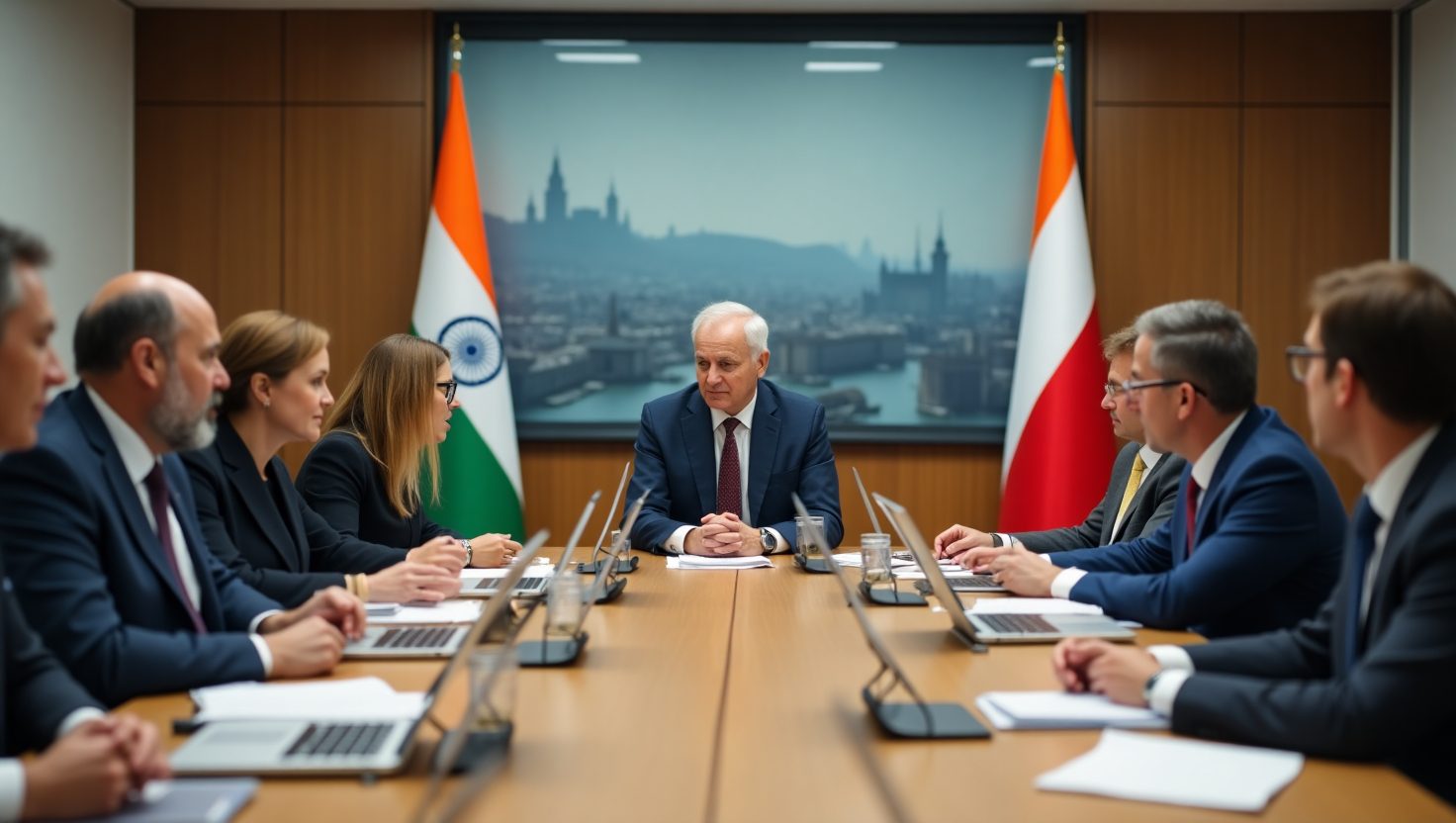
This isn’t just another diplomatic handshake. It’s a masterclass in modern tech diplomacy, a blueprint for how middle and major powers can shape the future of technology, security, and the global economy. At the heart of it all is the critical question of international AI governance.
The Grand AI Rulebook: Who Gets to Write It?
Let’s be clear about what international AI governance actually is. It’s not some dusty committee in Geneva deciding what your chatbot can say. It’s the foundational framework—the ethical guidelines, regulatory standards, and shared best practices—that will determine how artificial intelligence is developed and deployed across the globe. Think of it as creating the rules of the road before every country builds its own self-driving car. Without them, you get chaos.
For years, the conversation has been dominated by the US and China. But what if the most sensible rules don’t come from the titans, but from a coalition of the willing? This is where tech diplomacy becomes so vital. It’s the art of using technological collaboration to build strategic alliances. It’s about countries like Poland and India looking at each other and realising they can achieve more together than apart. As we see with the upcoming visit of Polish Foreign Minister Radosław Sikorski to India, the agenda is less about old-world politics and all about new-world code.
Pylons and Pixels: Building the Digital Future
AI doesn’t exist in a vacuum. It runs on digital infrastructure partnerships. These are the digital highways, the data centres, and the secure networks that form the backbone of a modern economy. You can’t have a thriving AI ecosystem without world-class digital plumbing.
Poland and India both understand this implicitly. Poland, which recently crashed through the trillion-dollar GDP ceiling, is buzzing. According to a recent report in ThePrint, its economy is set for 3.8% growth, fuelled by a vigorous digital transformation. India, meanwhile, has demonstrated its prowess with its Unified Payments Interface (UPI), a piece of digital public infrastructure so successful it’s become a global case study.
The conversation between these two nations, as detailed in the lead-up to Sikorski’s January 2026 visit, is about connecting their strengths. Poland brings regulatory savvy from its experience within the EU, a bloc that is arguably leading the world in creating comprehensive tech legislation. India brings demographic scale, a massive pool of engineering talent, and an unparalleled ability to deploy technology to hundreds of millions of people. It’s a classic synergy: Poland’s framework expertise meets India’s battlefield-tested scale.
“Cybersecurity is a Team Sport”
As AI becomes more integrated into our critical infrastructure, from power grids to financial markets, the stakes for security have never been higher. This is where the idea of cross-border cybersecurity moves from a technical concern to a pillar of national security.
Polish Deputy Minister Michał Gramatyka put it perfectly: “Cybersecurity is a team sport.” This single line captures the entire philosophy. No country, no matter how powerful, can defend its digital borders alone. Adversaries are global, networked, and relentless. The only rational response is a collaborative defence.
Poland is bringing a tangible strategy to the table with its “three-zone defence model,” a layered approach that has already integrated 40,000 businesses into its national cybersecurity system. By sharing this playbook with India, both countries can learn from each other’s successes and failures, hardening their defences against common threats without having to reinvent the wheel. It’s a profoundly pragmatic approach to a complex problem.
Fintech, EVs, and the Next Wave of Collaboration
If cybersecurity is the defence, then fintech collaboration is the offence—the part that drives economic growth. The intersection of finance and technology is one of the most dynamic fields for AI innovation.
Consider Poland’s Blik, a mobile payment system that has become a national champion. It’s a story that will sound very familiar to anyone in India who uses UPI. Now, with partners like Mastercard, Blik is looking to go global. Imagine the possibilities of a partnership between the architects of Blik and the minds behind India’s fintech revolution. This could lead to new, secure, and incredibly efficient payment corridors that challenge the existing global players. We’re also seeing this collaborative spirit extend into other deep-tech areas. Gramatyka specifically mentioned a desire to partner with Indian automaker Mahindra on electric vehicles, praising its technology. This move is also a shrewd piece of strategic diversification for Poland, ensuring it isn’t overly reliant on any single country for its EV ambitions.
What we are witnessing is the assembly of a new kind of supply chain—not just for physical goods, but for innovation, regulation, and security protocols. It is a partnership built for the AI age.
The dialogue between Poland and India is more than just a bilateral meeting; it’s a sign of a broader geopolitical realignment. The future of international AI governance won’t be dictated from a single capital. Instead, it will be woven together through a network of pragmatic partnerships like this one. By focusing on shared strengths in digital infrastructure, cross-border cybersecurity, and fintech collaboration, these nations are not just talking about the future—they are actively building it.
The real question is, which countries will be next to join this new model of “team sport” diplomacy? What do you think is the most critical element for successful tech partnerships between nations?
– – –
References
– ThePrint (2024). “Polish Foreign Minister likely to visit India next month; cybersecurity, AI, digital infra on agenda”. Available at: https://theprint.in/world/polish-foreign-minister-likely-to-visit-india-next-month-cybersecurity-ai-digital-infra-on-agenda/2801975/
– The context for these discussions is often shaped by major national initiatives, such as India’s ongoing focus on becoming a global AI leader, previously highlighted by events like the AI Impact Summit.



