

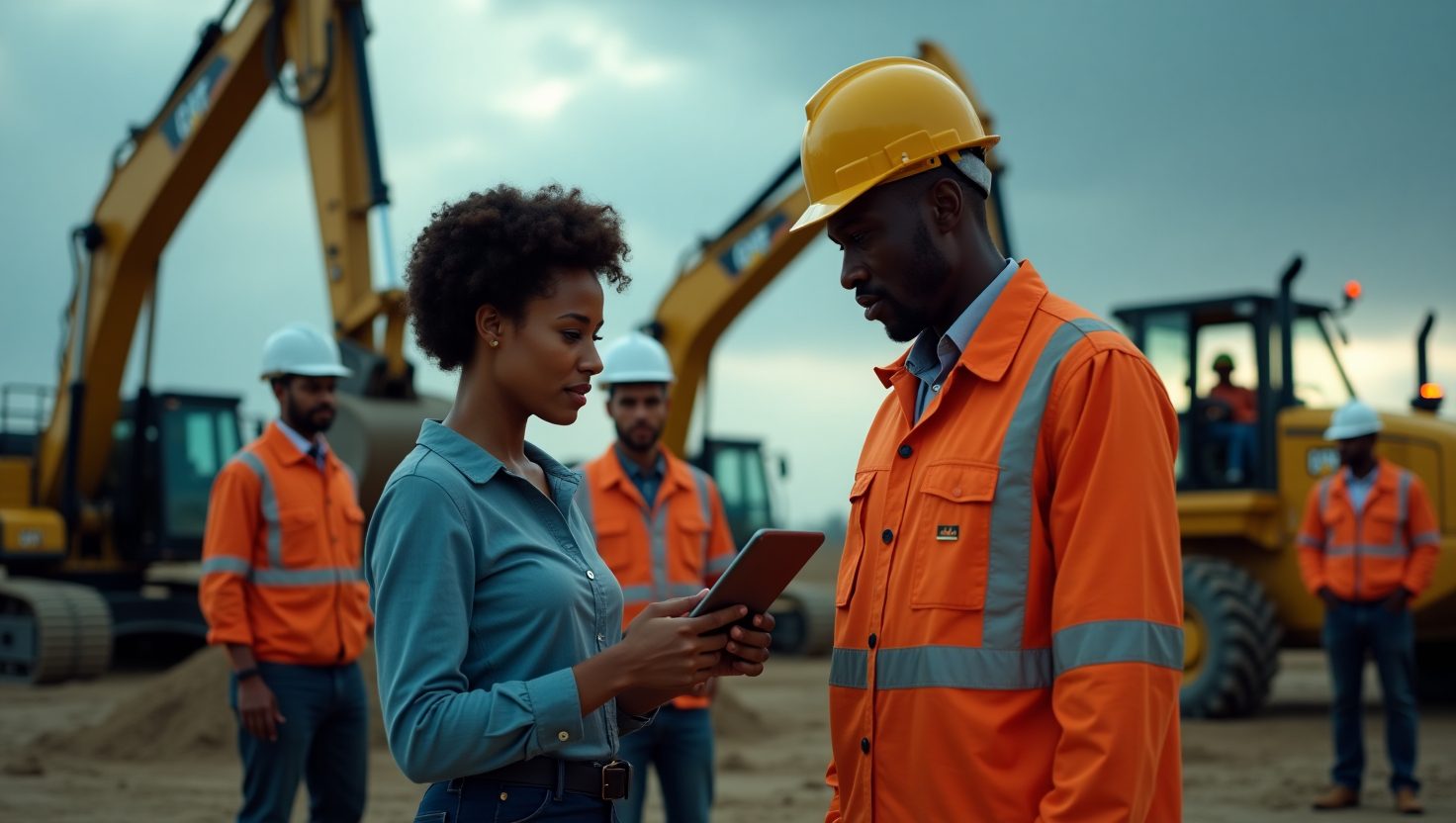
The company has essentially become the flagship customer for a brand-new venture between consulting titan Accenture and data cloud specialist Snowflake. This isn’t just another IT upgrade; it’s a fundamental rewiring of the company’s brain. This is a full-scale industrial AI data transformation, and it’s a move that should have every heavy-hitter in the manufacturing and industrial sectors paying very close attention. The message is clear: the future of heavy industry is intelligent, and it’s being built on the cloud.
So, What on Earth is Industrial AI?
Let’s get one thing straight. When we talk about AI in this context, we’re not talking about a friendly chatbot to help you order a new digger. This is the serious, grown-up side of artificial intelligence. Industrial AI is about taking the torrent of data spewing from every sensor on every piece of equipment, from the assembly line to the finance department, and turning it into something useful.
Think of it like this: for decades, a Caterpillar bulldozer was a standalone instrument. It did its job, but its ‘knowledge’—how it was performing, when it might need a service—was locked inside it. Getting that information was manual and inefficient. The new approach, powered by a unified cloud data strategy, is like giving that entire fleet of bulldozers a collective consciousness. They can now talk to each other, to the factory, and to the executives.
This transforms manufacturing technology from a reactive process (fixing things when they break) to a predictive one (fixing things before they break). It’s about optimising fuel consumption across an entire fleet in real time or streamlining the labyrinthine process of equipment finance with predictive risk models. It’s about making smarter, faster decisions at every single level of the business.
The Power of the Three-Body Problem
Caterpillar isn’t trying to do this alone, and that’s the smartest part of the strategy. Building this kind of capability from scratch is a monumental task. Instead, they’ve formed a classic tech power trio, leaning on strategic Accenture partnerships to get it done.
– Caterpillar brings the scale and the data. They have the machines, the factories, and a century’s worth of industrial expertise. They know the problems that need solving.
– Snowflake brings the platform. They provide the AI Data Cloud, a clean, centralised, and scalable home for all this disparate data to live. It breaks down the silos that have plagued big companies for years, creating a single source of truth.
– Accenture brings the brains and the bodies. They are the strategists and implementers. They have the vertical expertise in industrial sectors and the technical know-how to connect Caterpillar’s needs to Snowflake’s platform, building the actual AI models and workflows that create value.
This collaboration, as reported by Equipment Finance News, is the first major test for the newly formed Accenture Snowflake Business Group. Caterpillar is the guinea pig, but in the best possible way. The goal is to accelerate everything—from cloud migration to implementing scalable generative AI solutions that can query operational data in plain English. The pressure is on for this trio to deliver.
The Payoff: More Than Just Efficiency Gains
So, what does Caterpillar actually get out of this expensive and complex undertaking? The benefits go far beyond trimming a few percentage points off the operating budget.
– Smarter, Data-Backed Decisions: Instead of relying on historical averages and gut feelings, managers can now ask complex questions and get instant, data-driven answers. “Which component across our 770G truck fleet is most likely to fail in the next 30 days?” That’s a question that can now be answered.
– Radical Operational Efficiency: Predictive maintenance is the headline act here. Knowing a part needs replacing before it fails can save millions in downtime and repair costs, especially on a remote mining or construction site. But it also applies to streamlining supply chains and optimising factory floor output.
– Higher Quality Products: The data doesn’t just flow one way. Insights from equipment operating in the field can be fed directly back to the design and engineering teams. This creates a powerful feedback loop, allowing Caterpillar to build more durable, efficient, and reliable machines in the next generation.
It’s Not All Plug-and-Play
Of course, announcing a partnership is the easy part. The execution is where things get messy. Embarking on a true industrial AI data transformation is fraught with challenges. Companies aren’t just installing new software; they’re performing open-heart surgery on their core processes.
There are legacy systems that refuse to cooperate, decades of messy and inconsistent data that need cleaning, and, most importantly, a cultural resistance to change. You can have the best AI in the world, but if the engineers, mechanics, and managers on the ground don’t trust it or know how to use it, it’s worthless.
Furthermore, moving from small, isolated AI pilot projects to a scalable, enterprise-wide implementation is a huge leap. It requires new governance models, new skills, and a relentless focus from the top of the organisation. This is a multi-year, multi-billion-pound journey, not an overnight fix.
The Shape of Things to Come
Caterpillar’s move isn’t happening in a vacuum. It’s a reflection of a massive shift happening across the executive landscape. According to the same Equipment Finance News report, a staggering 85% of C-suite executives plan to increase their investment in AI in 2025.
Even more telling is the change in mindset. The conversation has moved beyond simple cost-cutting. A full 67% of those leaders now see AI primarily as a tool for revenue growth. They’ve realised that smarter products, better customer service, and data-driven market expansion are the real prizes. This is a pivotal moment, where AI stops being a defensive measure for the IT department and becomes an offensive weapon for the entire business.
The Caterpillar-Accenture-Snowflake deal is a blueprint. We are going to see many more legacy industrial giants forming similar alliances, desperately trying to bolt a digital brain onto their steel bodies. For those that succeed, the reward will be a dominant position in the intelligent industrial economy. For those that fail? They risk becoming the modern-day dinosaurs—big, powerful, but ultimately unable to adapt to a changing world.
The question is no longer if heavy industry will be transformed by data and AI, but who will lead the charge. Caterpillar has just thrown down the gauntlet. Now, who’s going to pick it up? What do you think this means for competitors like Komatsu or John Deere?



