

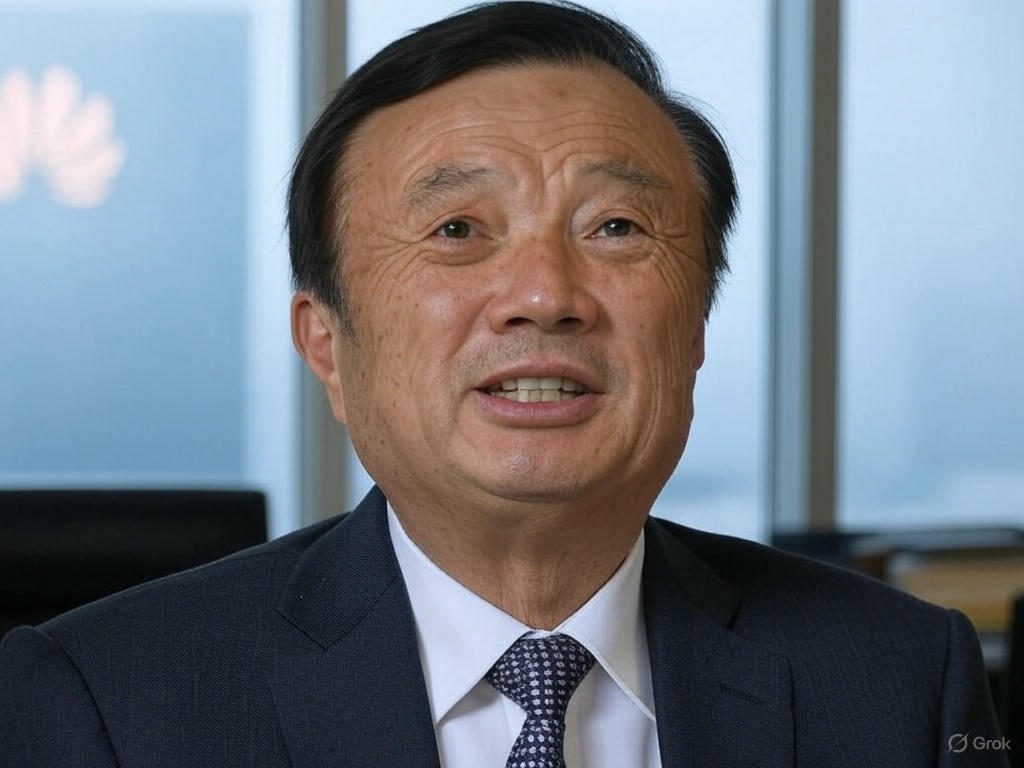
So, here’s the thing. For years, we’ve been hearing about the chokehold the US has on global chip technology, especially when it comes to China and specifically, Huawei. Sanctions, restrictions, you name it – the narrative was pretty clear: Huawei’s smartphone dreams, and maybe China’s tech ambitions in general, were on ice. But hold up, folks, because the story might just be flipping. Word on the street – or rather, state media in China – is that Huawei’s founder, the notoriously low-profile Ren Zhengfei, has told Xi Jinping himself that concerns about China chips and the whole chip shortage situation? Yeah, apparently, those worries? Easing up.
Has Huawei Actually Pulled Off a Chip Miracle?
Now, before we dive into the champagne and declare China chip independence a done deal, let’s pump the brakes for a sec. This news, straight outta official channels like the China Media Group (CMG), comes with a healthy dose of, shall we say, national pride flavoring. But, and this is a big but, it also lands right after Huawei dropped the Mate 50 Pro bombshell. Remember that? The phone that seemingly came out of nowhere, packed with what everyone suspects is a surprisingly advanced, domestically produced chip? Yeah, that phone.
The Mate 60 Pro: More Than Just a Phone?
Let’s be real, the Huawei Mate 60 Pro chip origin story is still shrouded in more mystery than a Christopher Nolan movie. Officially, Huawei’s being tight-lipped, but the teardowns and the whispers suggest a significant leap forward for China technology in semiconductor manufacturing. And timing, as they say, is everything. Ren’s comments to Xi, reported by CMG, essentially paint a picture where the US Huawei restrictions, intended to cripple Huawei and slow down China’s tech rise, may have actually backfired. Instead of crushing innovation, could it have lit a fire under China to double down on homegrown tech?
Ren Zhengfei Speaks: A Shift in Tone?
What’s fascinating here isn’t just the tech specs or the political maneuvering; it’s the shift in tone. Ren Zhengfei, usually known for his cautious, even pessimistic outlook when discussing Huawei’s challenges under sanctions, is now apparently signaling a newfound optimism. According to the reports, he told Xi that the situation is “getting better year by year.” That’s a pretty strong statement, especially coming from a guy who’s navigated some serious storms. Is this just patriotic boosterism? Maybe a little. But it’s also likely a calculated message, both domestically and internationally.
Decoding Ren’s Message: What’s Really Going On?
Let’s break down what Ren Zhengfei comments on chip situation might actually mean. First off, it’s a clear win for national morale in China. “See? We told you we could do it!” is the unspoken message. It’s also a signal to the global tech industry. The US restrictions on Huawei impact has been a major storyline in tech for years. If Huawei, against all odds, is indeed bouncing back and driving domestic chip progress, it throws a wrench into the narrative that sanctions are a foolproof way to contain China’s tech ambitions. And let’s not forget the business angle. For Huawei, this narrative shift is crucial for regaining market confidence, attracting talent, and, crucially, selling more phones and other tech gear. The China smartphone market is brutally competitive, and perception is reality.
Beyond Huawei: A Broader China Tech Picture
This isn’t just a Huawei chip breakthrough story in isolation. It reflects a much broader push for self-reliance in critical technologies across China. The government has been pouring resources into boosting domestic semiconductor manufacturing for years, and the US-China tech rivalry has only accelerated this trend. Think about it: when your access to global supply chains is threatened, what do you do? You build your own. It’s Tech 101, survival mode edition. And while no one is suggesting China has magically closed the gap with global chip leaders overnight, the progress seems undeniable. The China chip independence journey is a marathon, not a sprint, but every step forward changes the game.
What Does This Mean for the Rest of Us?
So, why should you care if Qualcomm and TSMC are potentially facing new competition from China’s burgeoning chip industry? Well, for starters, competition is generally good for consumers. More players in the chip game could mean more innovation, potentially lower prices, and a less concentrated supply chain, which, let’s be honest, has looked a bit shaky lately. The chip shortage of recent years hammered home just how dependent the world is on a few key chipmakers. Geopolitical tensions aside, a more diversified chip landscape could be a more resilient one.
The Geopolitical Chessboard: Chips as Pawns?
Of course, let’s not pretend this is all just about market dynamics. Chips are the new oil, the critical infrastructure of the 21st century. The US-China relationship is increasingly defined by technological competition, and semiconductors are right at the heart of it. Ren Zhengfei’s comments, Xi Jinping’s likely approval, and the Mate 60 Pro saga all play into this larger geopolitical drama. Are we heading towards a bifurcated tech world, with separate ecosystems and supply chains? It’s a question that keeps tech execs and policymakers up at night. And while “easing concerns” about chips in China might sound like good news on the surface, the underlying shifts in global tech power are complex and far-reaching.
Looking Ahead: Chip Wars and Tech Resilience
The US restrictions on Huawei were meant to be a knockout blow, or at least a major setback. But if Ren Zhengfei’s assessment is even partially accurate, it looks like Huawei, and by extension China’s tech sector, might be playing a longer, more strategic game. The chip shortage may be easing, but the chip race is just heating up. And as for Huawei? Don’t count them out just yet. They might just be getting started, sanctions and all. What do you think? Is this a genuine turning point for China’s chip industry, or just clever PR? Let me know in the comments below.



