

So, What Are We Really Talking About?
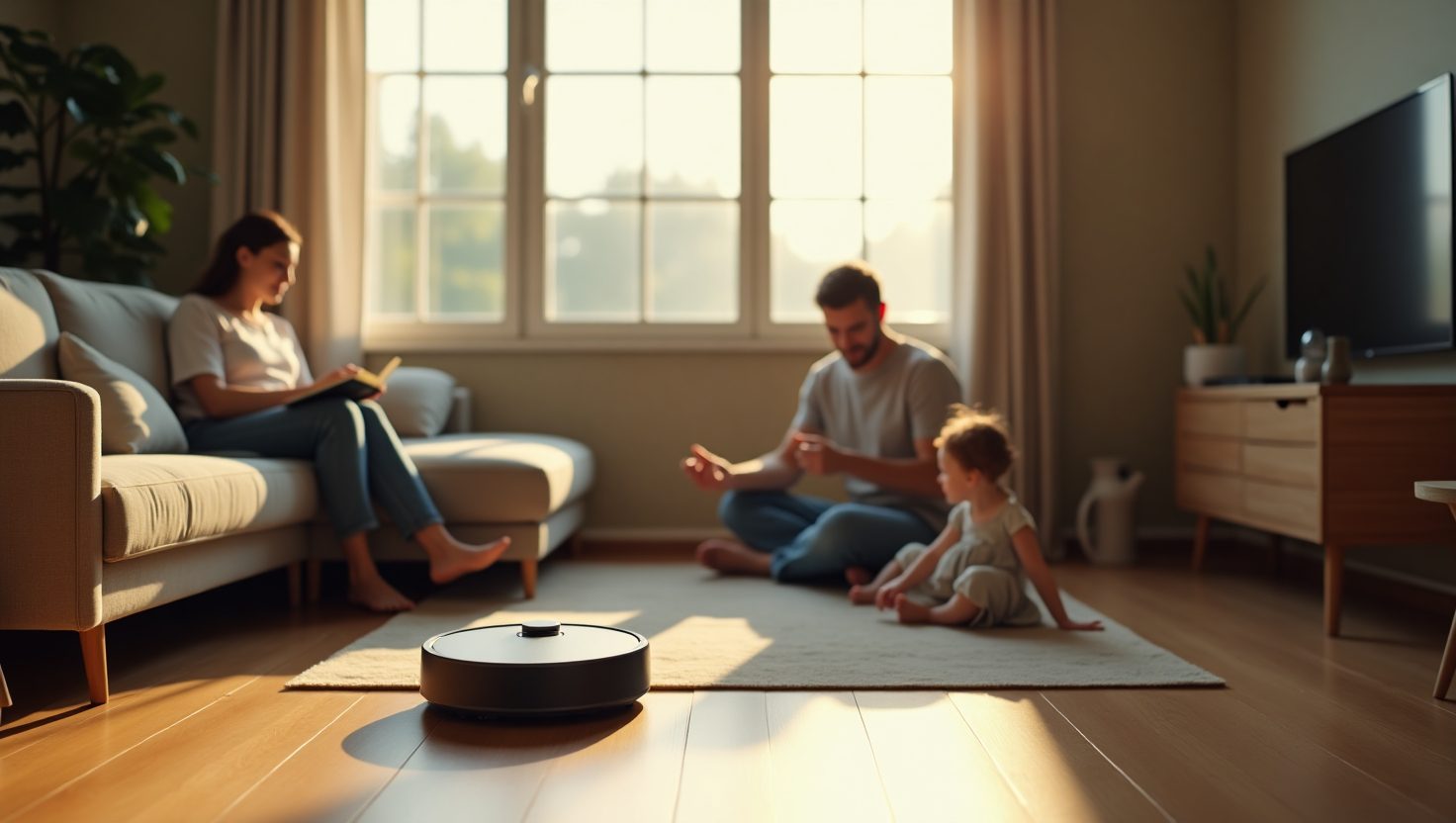
When people hear domestic robotics, their minds often jump straight to a walking, talking humanoid straight out of science fiction. While that’s the end goal for many companies, the reality today is far more mundane, yet still incredibly significant. For now, we can split the field into two distinct categories. First, you have the single-task robots. These are the pioneers that have already infiltrated our homes: the robot vacuum cleaners (like iRobot’s Roomba), the automatic lawnmowers, and the window-cleaning bots. They do one job, and they generally do it quite well.
The second, more ambitious category is the multi-purpose service robot. This is where the lines blur with advanced appliance automation. Imagine a kitchen where your smart fridge adds items to a shopping list, which an automated system then orders, and a robotic arm can retrieve ingredients for a recipe that your smart oven is already preheating. We are not there yet, but the integration of smart devices is the foundational layer for this future. Think of it this way: current robots are like a standalone toaster. It does one thing reliably. A fully integrated smart home with humanoid assistants is like a master chef who not only knows how to use every gadget in the kitchen but can also improvise, plan meals for the week, and even tidy up afterwards. That’s the leap we’re trying to make.
The Quiet Boom in Home Automation
The market for this technology is growing at a staggering pace, and it’s not just driven by a desire for convenience. A powerful confluence of factors is at play. In many wealthy nations, populations are ageing rapidly. At the same time, the cost of human labour for domestic help and care has skyrocketed. This creates a powerful economic incentive—a core issue in labor economics—for automation in the home. It’s no longer just about saving an hour on hoovering; it’s about enabling an elderly person to live independently for longer, which has profound economic and social benefits.
Consequently, the global market for domestic robots was already valued at over £8 billion in 2023 and is projected to more than triple in the next decade. Venture capitalists and tech giants are pouring billions into startups promising the next big thing in home automation. They see the writing on the wall: the home is the next great frontier for a tech revolution. The demand is there, simmering under the surface. The question is, who will be able to afford the supply?
The Promise: A More Accessible and Efficient World
It’s easy to be cynical about technology, but it’s important to acknowledge the genuine, life-altering benefits that domestic robotics can offer, particularly when it comes to accessibility.
Enhancing Life for Everyone
For individuals with disabilities or the elderly, the impact of this technology cannot be overstated. Improved service robot accessibility means more than just a clean floor. It means a robotic arm that can retrieve a dropped item, a smart pill dispenser that ensures medication is taken on time, or a system that can help someone get in and out of bed. These aren’t futuristic fantasies; early versions of these technologies are already in development and use. They represent a tangible path towards greater independence, dignity, and quality of life. For this segment of the population, a service robot isn’t a luxury; it’s a lifeline. It’s the difference between staying in your own home and moving into an assisted living facility.
Giving Us Back Our Time
For the rest of us, the primary benefit is time. It’s the most finite resource we have. Studies have consistently shown that domestic chores disproportionately fall on women, contributing to stress and career inequality. Shifting that burden to automated systems could, in theory, free up hundreds of hours a year per household. This isn’t just about having more time to watch television. It’s about having more time for family, for creative pursuits, for education, or for simply resting. The cumulative effect of this “time dividend” on a societal level could be immense, fostering a more productive, creative, and less-stressed population. But again, this utopian vision hinges on one crucial factor: widespread access.
The Darker Side: Ethics and a New Class Divide
For every promise of a brighter future, there’s a lurking risk we need to confront head-on. With robots entering the most private of spaces—our homes—the ethical minefield is vast. First and foremost is the issue of privacy. These devices are, by their very nature, data-gathering machines. They need cameras to navigate, microphones to hear commands, and sensors to map every corner of our homes. Where does that data go? Who owns it? How is it secured?
We are already getting a chilling preview of how such technology can be abused. As a recent report from 404 Media highlighted, tools like ‘Cheater Buster’ are using facial recognition to allow anyone to find people’s private Tinder profiles. If a simple web service can cause such a privacy nightmare, what happens when a sophisticated robot, with a 3D map of your home and a log of every person who has visited, gets hacked? The potential for surveillance, blackmail, or even stalking is terrifying. It turns the promise of a helpful assistant into a potential spy in our midst.
Then there is the unavoidable impact on labor economics. The rise of domestic robotics will undoubtedly displace human workers. The domestic cleaning and caregiving industries employ millions of people worldwide, many of whom are women, immigrants, and from lower-income backgrounds. While some economists argue that automation creates new jobs, it’s rarely a one-for-one replacement. A laid-off cleaner is unlikely to have the skills to become a robot maintenance technician without significant, and often unavailable, retraining. This isn’t an argument against progress, but it is a call to be realistic and proactive about the social safety nets that will be required to manage this transition. Will we have them in place? History suggests we are often too slow to react.
The Future: Humanoids on the Horizon?
So, what’s next? The immediate future lies in deeper integration of appliance automation. Your laundry machine will talk to your energy provider to run during off-peak hours, and your robotic vacuum will know to clean the kitchen after your smart oven detects a spill. But the holy grail remains the humanoid robot. Companies like Tesla with its Optimus bot and startups like Figure AI are in a heated race to build a general-purpose robot that can walk, talk, and perform a wide range of tasks.
The big question, as explored in a recent Marketplace segment, isn’t if these robots are coming, but when they will be commercially viable. The technical challenges are immense—from fine motor skills (try folding a fitted sheet) to navigating the beautiful chaos of a real family home. As that same Marketplace discussion points out, the timeline is likely longer than the tech evangelists would have you believe. Early models will be astonishingly expensive, costing as much as a luxury car. This is where the socioeconomic divide becomes a chasm.
For the next decade or two, advanced domestic robotics will likely be the exclusive plaything of the ultra-wealthy. They will live in self-cleaning, self-managing homes, freeing up their time to accumulate even more wealth and influence. Meanwhile, the vast majority will still be grappling with the same daily chores. This isn’t just about fairness; it could create a new type of social stratification defined by who has mastered their domestic environment through capital and who is still bound by manual labour. The automated home could become the 21st-century equivalent of having servants, creating a visible and potent symbol of inequality.
The dream of Rosie the Robot was never just about a machine that did the dishes. It was a dream of a future where technology served humanity, all of it. But as these incredible machines inch closer to reality, we have to ask ourselves some difficult questions. Are we building them to liberate everyone, or are we just creating a more efficient and comfortable world for the people who can already afford it? The robotic butler is on its way, but the real question isn’t about its processing power or battery life. It’s about who gets to give the orders.
What do you think? Are we heading for a future of universal convenience, or just a more polished gilded cage for the few? Share your thoughts below.



