

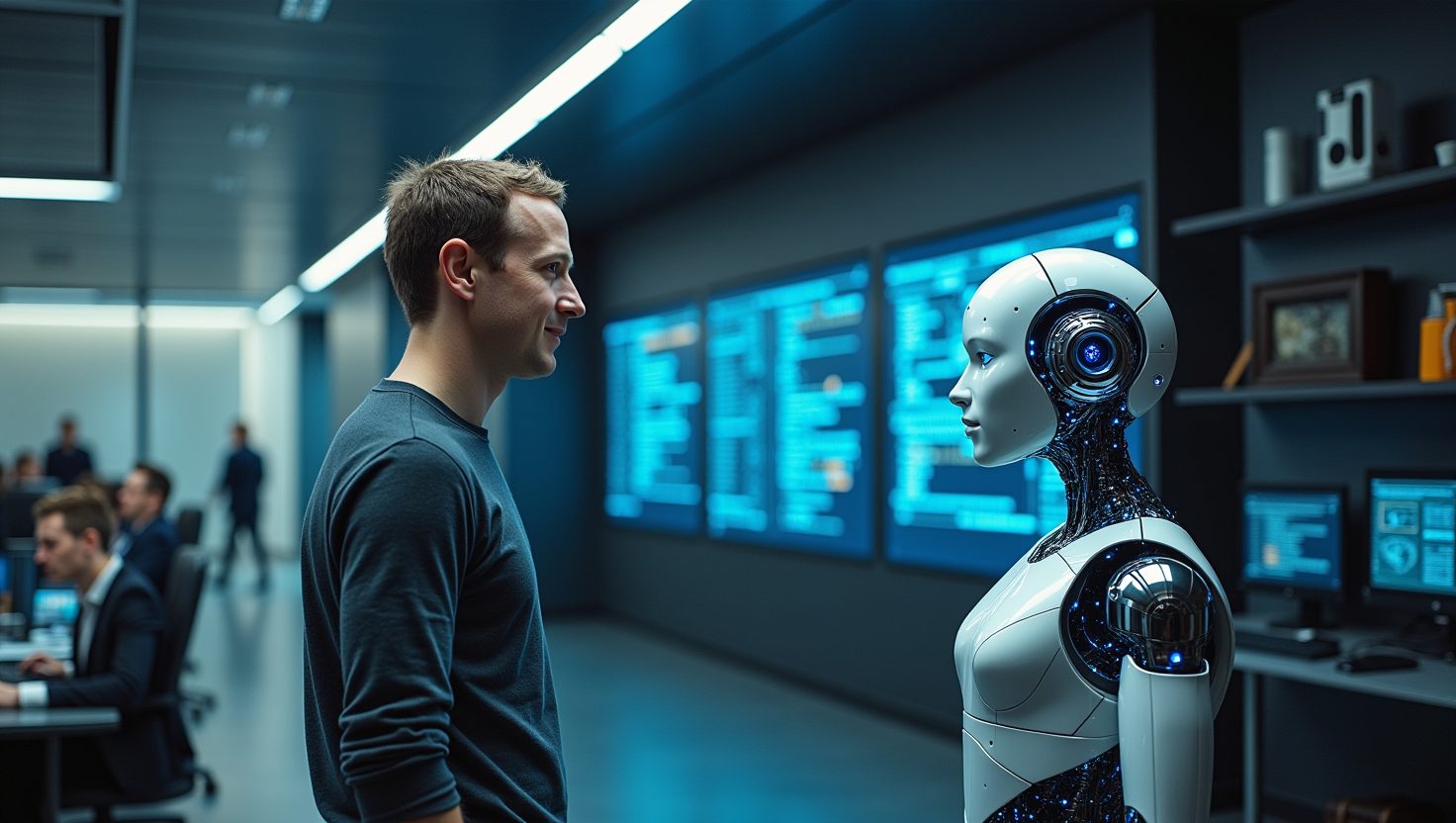
It seems the C-suite is finally getting its own AI upgrade, and it’s not just a glorified chatbot for scheduling meetings. Mark Zuckerberg, a man who knows a thing or two about shaping digital realities, is reportedly building an artificial intelligence agent to help him run Meta. This isn’t about delegation; it’s about augmentation. The CEO AI assistant Zuckerberg agent is a fascinating experiment that signals a much larger shift in how the world’s most powerful executives will operate.
For years, the promise of AI in the workplace has focused on automating routine tasks for the masses. But what happens when the user is the one at the very top of the pyramid? We’re about to find out.
The Inevitable Rise of Executive AI Tools
Let’s be honest, the modern CEO is often the Chief Bottleneck Officer. They are inundated with data, sit atop complex hierarchies, and are expected to make critical decisions at lightning speed. The traditional flow of information—up the chain, across departments, and back down again—is simply too slow for the current pace of business. This is where a new category of executive AI tools comes into play.
What Are We Really Talking About?
These aren’t just fancy dashboards. Think of them as a command centre, a data consigliere, and a direct line to the organisational hive mind, all rolled into one. At its core, this is productivity AI designed for the highest level of management automation. Instead of asking a junior analyst to pull a report, which then gets filtered through a manager and a director before landing on their desk, an executive can query an AI and get a synthesized answer in seconds.
The goal is to flatten the chaotic mountain of corporate data into a manageable, queryable landscape. This move towards corporate AI adoption at the top level isn’t just about efficiency; it’s about fundamentally rewiring the decision-making process to be faster, more data-driven, and less impeded by human latency.
Inside Mark Zuckerberg’s AI Co-Pilot
Zuckerberg’s initiative, as detailed in a Wall Street Journal report, is a prime example of this new paradigm. His AI agent is designed to grant him direct access to information that would normally be siloed away within various teams and layers of management.
How Does It Work?
Imagine the CEO wants to know the latest performance metrics for a new feature on Instagram in Southeast Asia. Traditionally, that request would trigger a chain reaction of emails and meetings. With the CEO AI assistant Zuckerberg agent, he can simply ask the question and get an immediate, data-backed response. It’s like having a direct, unfiltered conversation with the company’s collective brain.
This model allows an executive to bypass the very hierarchical structures they themselves have built, all in the name of speed and clarity. It’s a radical approach that challenges decades of management theory. The assistant isn’t just fetching facts; it’s synthesising information, potentially flagging anomalies, and providing a level of insight that would otherwise take a team of humans days to compile.
AI as an Organisational Bulldozer at Meta
This personal AI assistant isn’t an isolated curiosity; it’s a reflection of Meta’s broader strategy to embed AI into the very fabric of its operations. Zuckerberg has been vocal about this, stating, “We’re investing in AI-native tooling so individuals at Meta can get more done. We’re elevating individual contributors and flattening teams.”
Flattening the Pyramid
What does “flattening teams” actually mean? It means using AI to reduce the need for middle management and create more direct lines of communication and accountability. When individuals are empowered with AI tools that handle data analysis and project tracking, the traditional role of a manager as an information conduit becomes less critical. This fosters a flatter, more agile organisational structure where engineers and product managers can focus on building, not reporting.
This strategy is already yielding tangible results in other areas. According to a report from PYMNTS, Meta’s AI systems are uncovering a staggering 5,000 scam attempts per day that human moderators previously missed. This has contributed to a 7% reduction in views of ads associated with scams and policy violations. This isn’t just an operational win; it’s proof that AI can handle complex, nuanced tasks at a scale humans simply cannot match. Meta now plans to transition more of this enforcement work from third-party vendors to its internal AI systems, a move that speaks volumes about its confidence in the technology.
The Future of the AI-Augmented C-Suite
Zuckerberg’s experiment is an early tremor before the earthquake. The widespread adoption of sophisticated executive AI tools is not a matter of if, but when. So, what does this future look like?
The End of the All-Knowing CEO?
For one, it could change the very definition of executive leadership. The model of the charismatic leader who rules by intuition and experience might give way to the “systems thinker” who excels at asking the right questions of their AI. The CEO’s primary skill may shift from managing people to expertly managing their AI co-pilot.
This shift will force companies to rethink their entire approach to data management and internal transparency. For an AI agent to be effective, it needs access to clean, real-time data from across the organisation. This could accelerate the breakdown of data silos and foster a more integrated corporate environment.
The Human Element Remains Crucial
Of course, this isn’t a simple plug-and-play solution. The risk of over-reliance on AI is enormous. An AI can analyse data, but it can’t (yet) understand morale, gauge market sentiment with nuance, or make a courageous ethical stand. The implementation of these powerful tools must be governed by robust human oversight.
The challenges are significant:
– Data Integrity: The AI is only as good as the data it’s fed. Biased or inaccurate data can lead to catastrophic decisions.
– Security: Giving an AI the “keys to the kingdom” creates an incredibly valuable target for cyberattacks.
– Accountability: If an AI-driven decision leads to failure, who is responsible? The CEO? The engineers who built the model? This is a legal and ethical minefield that we are only just beginning to navigate.
The journey towards an AI-driven C-suite is well underway, with Meta leading the charge. The CEO AI assistant Zuckerberg agent is more than just a tool for one man; it’s a blueprint for the future of executive leadership. It promises a world of unparalleled efficiency and data-driven clarity, but it also raises profound questions about the role of human intuition and accountability in a world increasingly steered by algorithms.
What do you think? Is an AI co-pilot the ultimate executive tool, or does it risk turning leaders into mere operators of a machine?



