

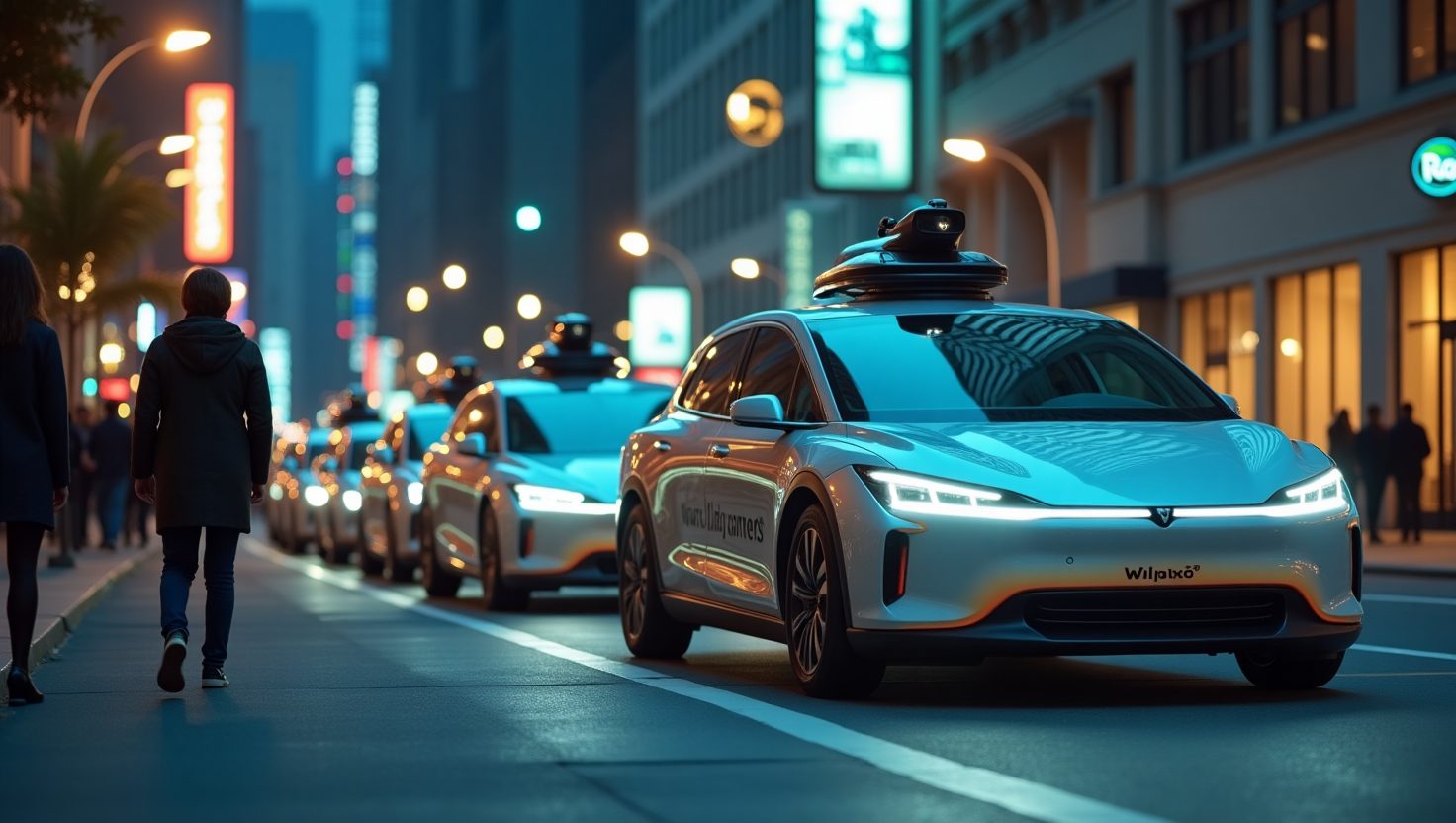
So, Alphabet is once again opening its colossal wallet for its self-driving moonshot, Waymo. This time, the price tag is a reported $16 billion, a figure that could propel the company to a staggering $110 billion valuation. Let’s be clear: this isn’t just another funding round; it’s a declaration of war in the race for autonomous dominance. But with the road to self-driving cars littered with broken promises and financial wrecks, the big question is—what does this enormous pile of cash actually buy? Is this the final push needed to make robotaxis a household name, or just more fuel for a very expensive experiment?
The sheer scale of this reported investment, detailed by sources speaking to TechCrunch, underscores a fundamental truth about this industry. The real AV funding impact isn’t just about R&D; it’s about endurance. This is a game of who can afford to lose money the longest while solving some of the hardest problems in robotics and artificial intelligence.
What is All This Money For, Anyway?
Developing autonomous vehicles isn’t like building the next viral social media app. You can’t just code your way to success in a garage. It demands a punishing amount of capital for a vast, interconnected operation. Think about it:
– World-class AI research: You need to attract and retain the brightest minds in machine learning.
– Specialised hardware: We’re talking about custom sensors, LIDAR, and powerful onboard computers for an entire fleet of vehicles.
– Operations at scale: Managing, maintaining, and cleaning thousands of cars across multiple cities requires a massive ground-level logistics network.
– Navigating the regulatory maze: Each new city and state brings a fresh set of legal hurdles and lobbying costs.
This isn’t just a tech problem; it’s a capital-intensive industrial problem. Building a fully autonomous driving service is less like launching a website and more like building a new national railway network. You have to lay all the expensive track and build all the stations long before you can start selling profitable tickets. This is why a consistent flow of autonomous tech investment is the lifeblood of any company with serious ambitions here.
Waymo’s Chequebook Diplomacy: The $110 Billion Question
Waymo is no stranger to big numbers. Back in 2024, it raised $5.6 billion in a Series C round that valued the company at a “mere” $45 billion. Today’s reported $16 billion funding round, if confirmed, would more than double that valuation to $110 billion. That’s a monumental leap in confidence. Or is it?
What’s particularly telling is where the money is coming from. According to the Financial Times sources cited by TechCrunch, more than three-quarters of this new cash injection is coming directly from parent company Alphabet. While esteemed venture capital firms like Sequoia Capital, Andreessen Horowitz, and newcomers Dragoneer are also participating, Alphabet’s dominant role sends a powerful signal. This is not just an arm’s-length venture investment; it’s a strategic imperative.
Alphabet is effectively saying that it believes Waymo is a core part of its future, an essential hedge against a world where the search-ad-driven business model might not be king forever. By leading the round so forcefully, Alphabet ensures it retains tight control and prevents Waymo from becoming overly beholden to outside investors with shorter time horizons. They are playing the long game.
From Test Case to Taxi Titan? The Push for Robotaxi Scalability
So, where does the money go? Right into the engine of robotaxi scalability. Waymo has already given over 20 million rides and claims to be generating more than $350 million in annual recurring revenue. Those are impressive numbers for a business that barely existed a few years ago. Yet, its service is still limited to a handful of cities, like Phoenix and San Francisco, with a recent expansion into Miami.
This $16 billion war chest is the key to breaking out of those sandboxes. The funding is earmarked for a massive expansion of its fleet and its operational footprint. A Waymo spokesperson, while declining to comment on financial specifics, emphasised their focus on “safety-led operational excellence and technological leadership required to meet the vast demand for autonomous mobility.”
Translation: We have the tech, now we need the cash to put thousands more cars on the roads, in dozens more cities. This is the only path towards making Waymo a genuine mobility-as-a-service (MaaS) platform—a viable, everyday alternative to owning a car or hailing an Uber.
Potholes on the Road to Autonomy
Of course, money can’t solve everything. Reality has a habit of getting in the way, as Waymo discovered during a recent power blackout in San Francisco. Reports surfaced of its vehicles getting confused and stalling, causing minor traffic jams. Incidents like these, though relatively benign, highlight the brittleness that still exists in the technology.
These aren’t just technical glitches; they are trust deficits. Every stalled car is a headline that chips away at public confidence. This is where the challenge moves beyond pure engineering and into the realm of public policy and perception. No amount of autonomous tech investment can fast-track regulatory approval or convince a sceptical public if the technology appears unreliable. The path to market readiness is paved not just with dollars, but with millions of miles of flawless, un-newsworthy operation.
Owning the Operating System for Movement
Looking ahead, this massive funding solidifies Waymo’s position as the front-runner in creating the dominant platform for transportation AI. The ultimate prize here isn’t just the revenue from taxi fares. The real value lies in creating the underlying operating system for autonomous logistics, delivery, and personal transport.
Think of it this way: Microsoft and Apple became giants not just by selling software or computers, but by owning the platforms—Windows and iOS—on which entire ecosystems were built. Waymo’s ambition is just as grand. It aims to be the foundational intelligence that powers the movement of people and goods in the 21st century. This latest injection of capital isn’t just about scaling a taxi service; it’s about cementing a strategic moat that competitors will find nearly impossible to cross. The AV funding impact, in this case, is about creating a near-monopoly on the future of mobility.
This is a high-stakes, winner-takes-most game. While the finish line is still far off, Alphabet’s $16 billion bet makes it clear they believe Waymo has the horsepower to win. The question for the rest of us is, what will a world run on Waymo’s mobility-as-a-service platform actually look like?
So, what do you think? Is Waymo’s $110 billion valuation a reflection of its unstoppable technological lead, or is this another case of Silicon Valley’s infamous reality distortion field at work? Share your thoughts in the comments below.



