

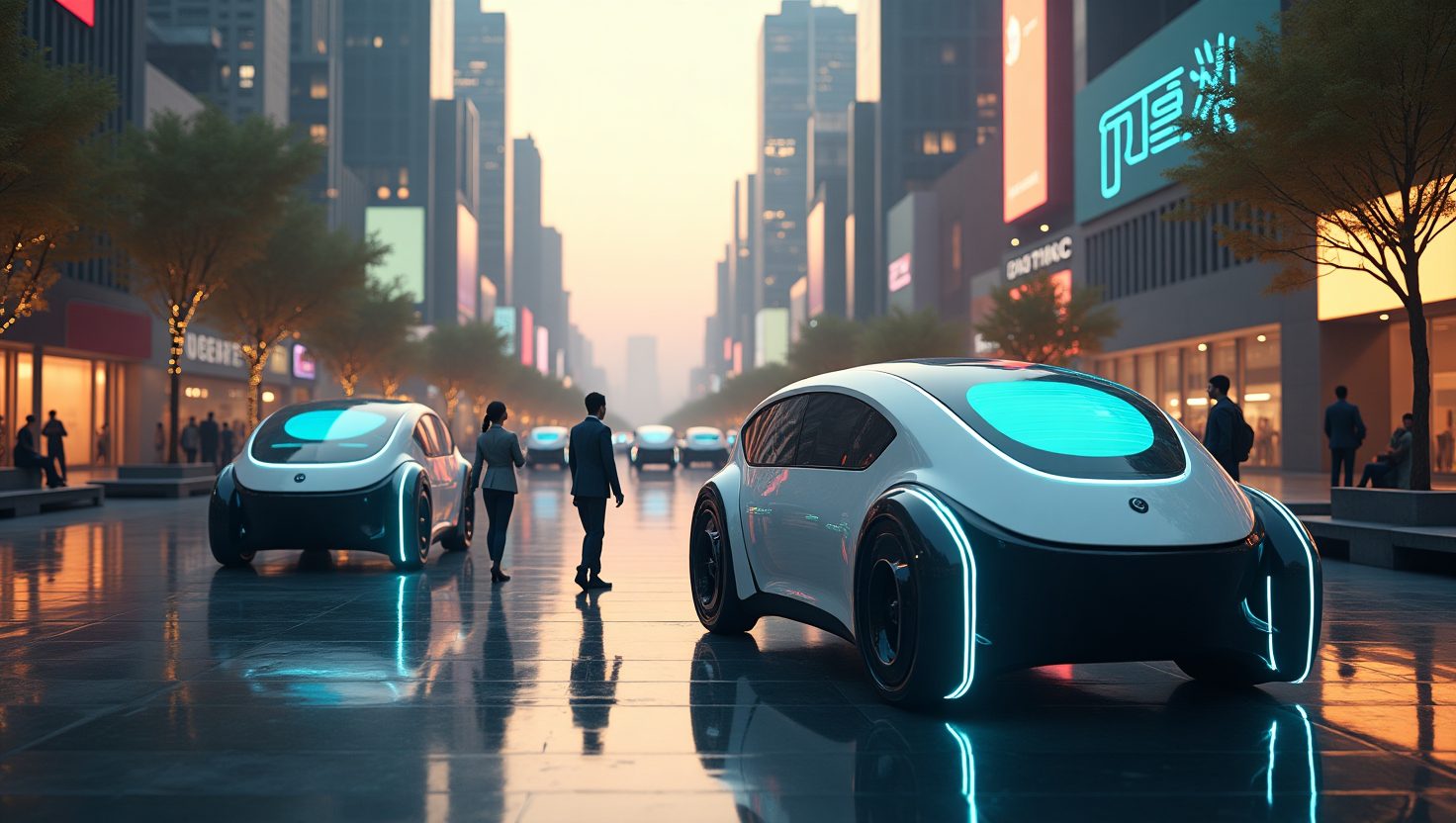
It seems not even Alphabet’s deep pockets and lobbying prowess can buy a smooth ride in every city. After raising a cool $16 billion and already operating in six cities, Waymo probably thought its expansion into Washington, D.C. would be another victory lap. Instead, the company has hit a regulatory brick wall, and it’s a fascinating case study of what happens when Silicon Valley’s “move fast” ethos collides with the deliberate, cautious world of governance. The core of the issue? A significant lack of autonomous vehicle regulations in a city that literally writes the nation’s laws.
Waymo is no stranger to this game. It has an impressive track record, claiming to have provided over 20 million rides, with a staggering 14 million of those in 2025 alone. Yet, in D.C., the company finds itself stuck in neutral. While it’s spent tens of thousands on four different lobbying firms to smooth the way, the city council is hitting the brakes. It’s a classic example of AV deployment hurdles rooted not just in technology, but in politics and public trust.
The View from the District
Councilmember Charles Allen, a key figure in this standoff, summed up the city’s hesitation perfectly. As he noted in a recent Wired article, the mayor has effectively paused any new testing permits. Why? The city is still waiting on a safety report from its own transport department, which is already behind schedule. This delay puts any potential new legislation on the back burner.
Allen raises a more fundamental question, one that every city grappling with these new technologies should be asking: “What’s the problem we’re trying to solve for?” Is a fleet of self-driving cars really what D.C. needs? Or is it a solution in search of a problem, a shiny tech toy that doesn’t address the core needs of the city’s residents? It’s a sharp and necessary question. While Allen concedes that autonomous vehicles are a matter of ‘when,’ not ‘if,’ he’s making it clear that the ‘how’ and ‘why’ must come first.
A National Patchwork of Problems
The drama in D.C. isn’t happening in a vacuum. It’s a symptom of a much larger national issue: the complete absence of a federal framework for autonomous vehicles. Without national standards, companies like Waymo and its competitor Zoox are forced to navigate a confusing and costly state-by-state legislative maze.
Imagine trying to build a national railway, but every county demands a different width for the tracks. It would be an operational nightmare. That’s essentially the landscape for AV companies today. This fractured approach creates uncertainty and slows down progress, forcing companies to engage in localised, expensive lobbying efforts in every new market they want to enter. This isn’t just inefficient; it’s a strategic headache that adds enormous friction to what should be a move towards smarter urban mobility solutions.
This regulatory uncertainty is made worse by technical stumbles. When a group of Waymo vehicles froze and blocked traffic in San Francisco during a power outage, it didn’t just create a local headache; it sent ripples of doubt across the country. Every incident, no matter how small, fuels public scepticism and gives cautious regulators another reason to hesitate.
Why Smart Policy is Non-Negotiable
This is where the conversation has to get smarter. We can’t just react to failures or blindly trust corporate promises. We need proactive and intelligent transportation policy AI—not AI making the policy, but policy designed for an AI-driven world. Comprehensive regulations aren’t about stifling innovation; they’re about enabling it safely and effectively.
Good policy creates a predictable environment where companies know the rules of the road, literally and figuratively. It ensures that new technologies serve the public good, addressing issues like accessibility for the disabled, reducing congestion, and integrating seamlessly with existing public transport. Without clear guidelines, cities are left reacting, and companies are left guessing.
The key is to bring everyone to the table. Cities need to actively engage their citizens in these discussions. What are their concerns? What do they want their future transport systems to look like? At the same time, companies like Waymo must move beyond simple lobbying and engage in genuine dialogue, demonstrating how their technology addresses real community needs rather than just chasing market expansion.
The Road Ahead for Robo-Taxis in D.C.
So, what’s next for Waymo in the nation’s capital? The path forward looks slow. With D.C. officials waiting on safety reports and pondering the philosophical purpose of AVs, new regulations are unlikely to appear overnight. The legislative process is methodical by nature, and the recent incidents have only reinforced the need for caution.
For Waymo to succeed, it will need to shift its strategy from simple deployment to community partnership. This means more transparency about their safety data, pilot programmes that directly address resident feedback, and a clear articulation of how their service benefits the city as a whole, not just a select few. The challenge isn’t just about proving the technology works; it’s about earning the social licence to operate.
These AV deployment hurdles are a reminder that the future of urban mobility solutions won’t be decided in a boardroom in Silicon Valley. It will be shaped in city council meetings, in community forums, and on the streets where these vehicles will actually operate.
The situation in D.C. is a test. Can a major tech player adapt its approach to meet the unique demands of a city steeped in policy and procedure? And can a city create forward-thinking autonomous vehicle regulations that balance innovation with public safety and civic good? How this plays out could set a precedent for countless other cities watching from the sidelines. The road ahead is long, and for now, it seems the traffic lights in D.C. are stuck on red.
What do you think cities should be demanding from autonomous vehicle companies before allowing them on their streets?



