

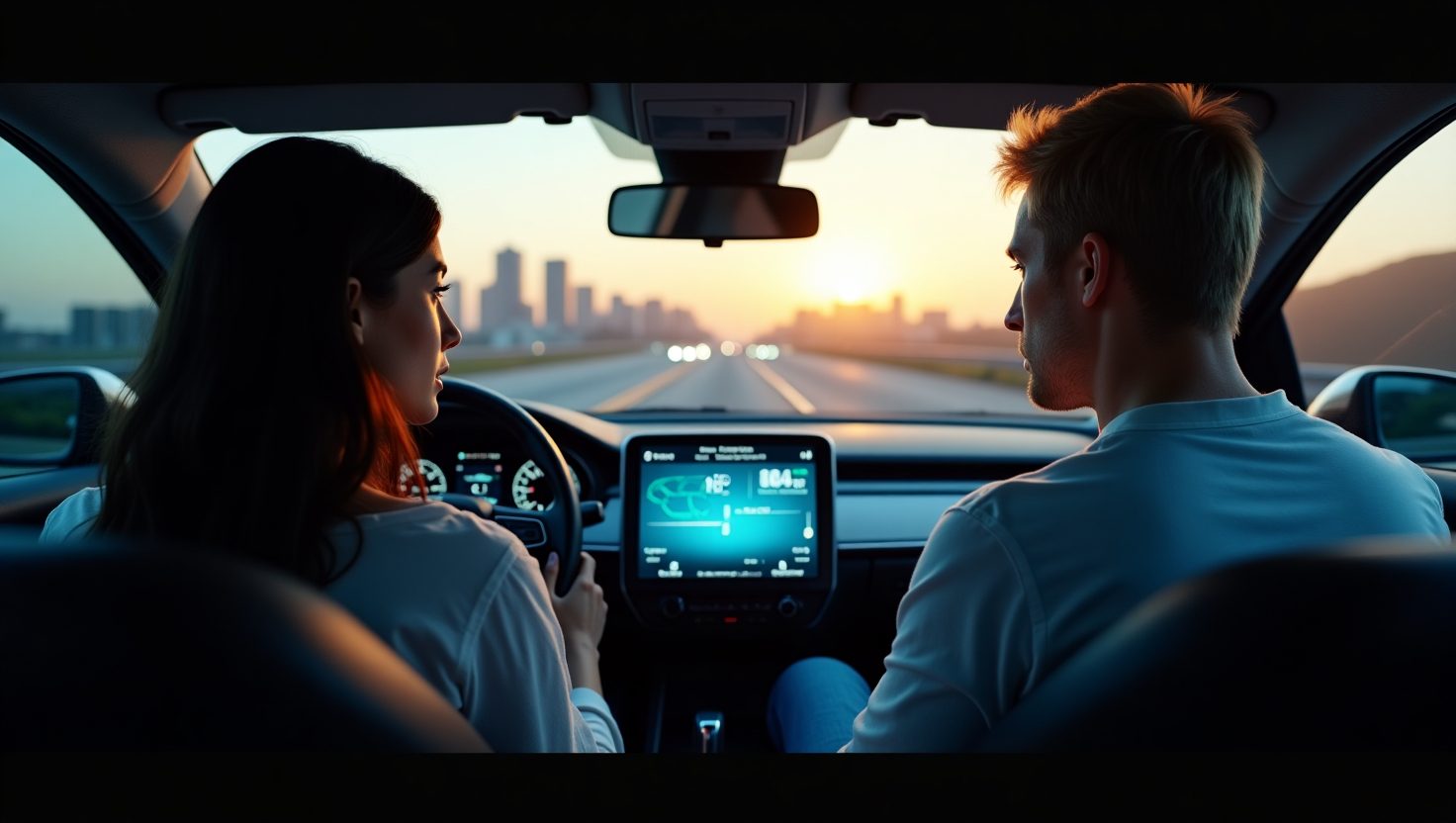
Remember the days when the most advanced piece of tech in your car was a CD player that didn’t skip? We’ve come a long way. The dashboard, once a static landscape of dials and buttons, is now a dynamic digital cockpit. At the heart of this transformation are automotive AI interfaces, shifting from clunky command-and-response systems to something far more conversational. This isn’t just about convenience; it’s a fundamental reimagining of how we interact with our vehicles.
The quality of driver interaction design has become a critical battleground for car manufacturers and tech giants alike. A great interface is seamless and safe, whilst a poor one is distracting and downright dangerous. Voice assistants are the lynchpin in this new world, promising hands-free control that keeps our eyes on the road. But let’s be honest, talking to your car has often felt like a stilted, frustrating affair. That, it seems, is about to change dramatically.
The Voice Assistant Gets a Promotion
The voice assistant evolution in cars has been a slow burn. Early systems could barely understand “Call Mum,” let alone a complex request involving navigation and music. They were less like intelligent co-pilots and more like talking parrots, capable only of repeating a very limited set of pre-programmed phrases. This forced drivers into an unnatural, robotic syntax just to be understood.
Major players like Apple and Google have been pushing the envelope for years with Siri and Google Assistant, making these systems more natural. Improvements in machine learning and natural language processing meant they could finally grasp context and nuance. The car became just another node in our personal tech ecosystem, synced with our calendars, contacts, and preferences. But even these improvements were just an appetizer. The main course is generative AI, and it’s about to be served up on your dashboard.
Vehicles Finally Joining the Conversation
This evolution is happening within the broader context of connected vehicle systems. A modern car is essentially a powerful computer on wheels, bristling with sensors and constantly connected to the internet. This connectivity allows for everything from over-the-air software updates, which can fix bugs or add new features whilst you sleep, to real-time traffic data that makes your navigation truly smart.
These systems are the central nervous system of the car, and AI is the brain that makes sense of it all. This isn’t just about infotainment. Connected vehicle systems are crucial for the development of vehicle-to-everything (V2X) communication, allowing cars to talk to each other, to traffic lights, and to road infrastructure. This constant stream of data, processed by on-board AI, is what underpins the next wave of driver assistance and, eventually, full autonomy. A smarter interface is the key to managing this flow of information without overwhelming the person behind the wheel.
Why Good Design is Non-Negotiable
This brings us to the core of the issue: driver interaction design. It’s the art and science of making technology in the car intuitive, effective, and, above all, safe. Every tap, swipe, and voice command must be designed to minimise cognitive load. The goal is to make complex functions accessible without turning the driver into a distracted systems administrator.
Think of it like this: a well-designed interface is like having a skilled human co-pilot. They anticipate your needs, provide information clearly and concisely, and handle secondary tasks so you can focus on driving. A poorly designed one is like having a talkative toddler in the passenger seat, constantly demanding your attention for trivial matters. Apple, with its obsessive focus on user experience, understands this better than most. Their CarPlay system has been a masterclass in providing a familiar, simplified interface for core phone functions. Now, they’re preparing their next move.
Apple’s Trojan Horse for the Dashboard
And what a move it is. According to a recent report from Bloomberg, detailed by sources and covered in outlets like TechCrunch, Apple isn’t just tweaking Siri. It’s working to make CarPlay compatible with third-party AI chatbots like OpenAI’s ChatGPT, Google’s Gemini, and Anthropic’s Claude. This is a huge deal.
This initiative suggests Apple is planning to let these powerful conversational AIs run the show, potentially positioning them either alongside or even in place of Siri for certain tasks. Apple’s next-generation CarPlay, sometimes dubbed ‘CarPlay Ultra’, is already designed to take over a car’s entire instrument cluster, not just the central infotainment screen. By integrating these advanced chatbots, Apple is aiming to create the definitive automotive AI interface. Imagine asking your car to summarise your latest work emails and then draft a reply, or asking complex, open-ended questions about your destination, all through natural conversation.
This is a classic Apple strategy: build a platform, perfect the user experience, and then open the doors—on their terms—to developers and partners who can make the platform indispensable. It’s also a subtle admission that Siri, in its current form, may not be equipped to compete with the sheer conversational power of today’s leading Large Language Models. Rather than lose the war for the dashboard, Apple is positioning itself as the indispensable broker of AI experiences in the car.
What Does the Commute of Tomorrow Look Like?
So, what happens next? The integration of true conversational AI into our cars will likely spark several key trends.
– Multi-Modal Interaction: The future isn’t just voice. It’s a blend of voice, touch, and perhaps even gesture. You might ask your AI to “show me the best-rated Italian restaurants near my destination,” and have the results appear on the map, ready for you to select with a simple tap.
– Proactive Assistance: The AI won’t just wait for you to ask a question. It will learn your routines and offer proactive suggestions. It might notice you have an 8 am meeting and automatically check the traffic, suggesting an earlier departure time if there’s congestion.
– Deep Vehicle Integration: This goes beyond playing music. An integrated AI could respond to, “It feels a bit stuffy in here,” by adjusting the climate control. Or you could say, “I’m heading on a long trip, run a systems check,” and get a verbal report on your tyre pressure and fluid levels.
This isn’t just a fantasy. The TechCrunch article highlights that Apple’s engineers are working on this right now. The move could cement CarPlay’s dominance and put immense pressure on competitors like Google’s Android Automotive.
The automotive world is at an inflection point. The car is transforming from a simple mode of transport into a connected, intelligent companion. This new generation of automotive AI interfaces promises a future where our commute is safer, more productive, and genuinely conversational. The race is on, and Apple just made it clear they intend to be in the driver’s seat.
What feature would you most want from a truly intelligent AI in your car? Let me know your thoughts below.



