

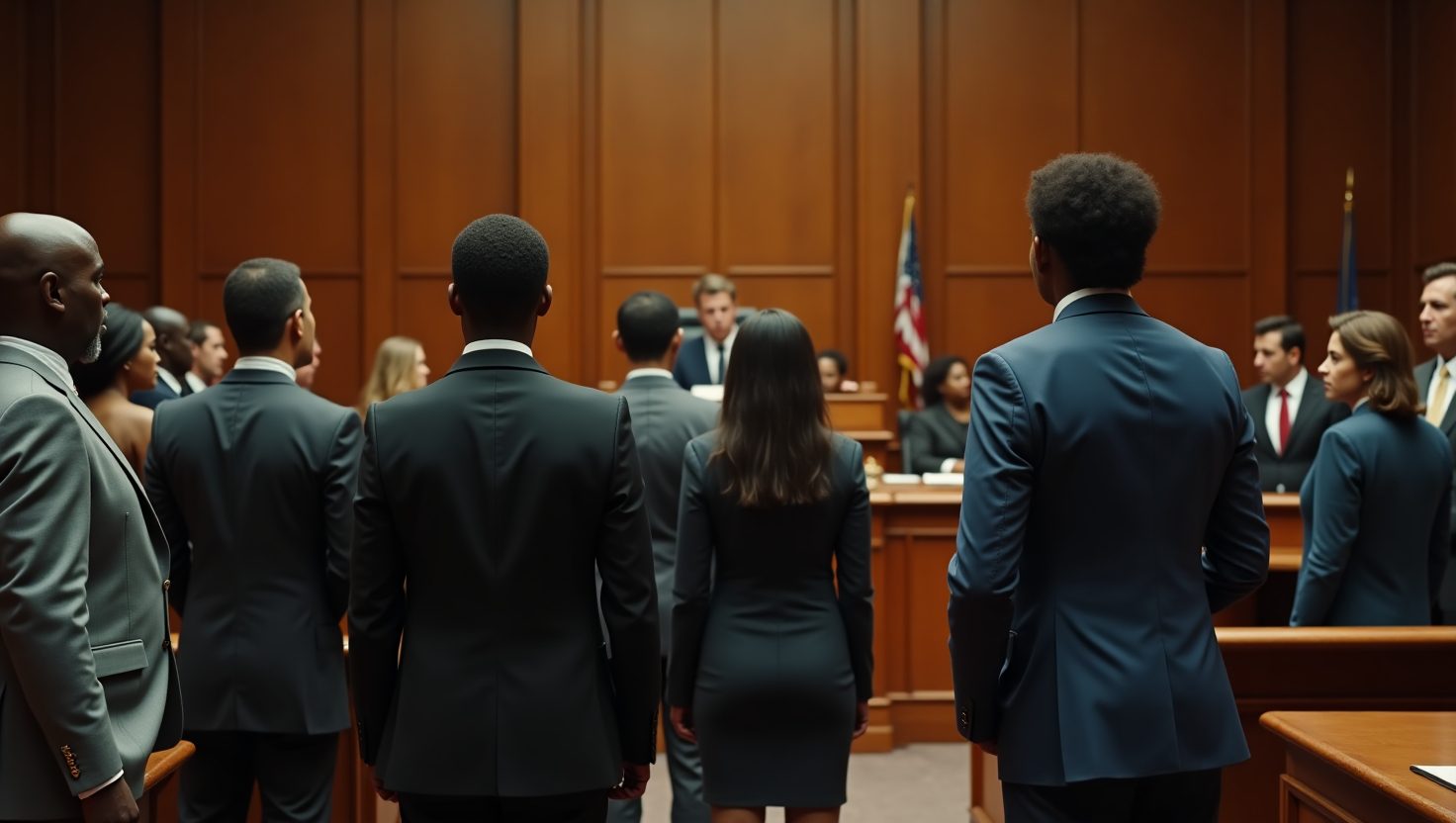
Have you ever heard a recording and done a double-take, convinced it was someone you knew? Now, what if that voice was yours, but you never spoke the words? This isn’t the opening of a sci-fi thriller; it’s the new reality fuelling a critical legal battleground over AI voice rights. The latest chapter involves David Greene, former host of NPR’s Morning Edition, who has entered the ring against none other than Google.
This isn’t just about one man’s voice. It’s a canary in the coal mine for a future saturated with synthetic media, forcing us to ask a fundamental question: who owns the very essence of how we sound?
Your Voice is Your Brand
Let’s be clear: your voice is more than just sound waves. It’s your unique identifier, a carrier of emotion, trust, and personality. For people like David Greene, it’s also their livelihood. As he put it in recently filed court documents, “My voice is, like, the most important part of who I am.” He’s not being dramatic. Think of David Attenborough’s soothing narration or Morgan Freeman’s iconic baritone; their voices are inseparable from their public personas.
This personal connection is precisely why the burgeoning field of voice cloning is so fraught with peril. When a machine can perfectly replicate your cadence, your pauses, even your “ums” and “ahs,” it’s not just mimicking you; it’s appropriating a core part of your identity. This is where the legal frameworks, frankly, are struggling to keep up.
The Law is Playing Catch-Up
For years, the legal system has relied on a patchwork of personality protection laws, often called “right of publicity” laws. These were designed to stop someone from using, say, a famous actor’s face on a coffee mug without permission. But do they adequately cover a voice that sounds like you but was generated by an algorithm? That’s the billion-dollar question.
The crux of the matter is synthetic media consent. Did you agree to have your vocal patterns studied, broken down, and reassembled by an AI? In most cases, the answer is a resounding “no.” This lack of a clear consent mechanism is creating a legal Wild West, and companies are charging ahead, seemingly hoping to ask for forgiveness later rather than permission now.
When AI Gets a Little Too Familiar
This brings us to the main event: Greene vs. Google. The dispute centres on Google’s AI-powered note-taking tool, NotebookLM, which features an audio summary function. Greene alleges that the male voice option is an uncanny-and unauthorised-doppelgänger of his own distinctive delivery, right down to the specific verbal tics he developed over years on air. According to the TechCrunch report, multiple people flagged the similarity to him.
Google’s Defence and the Systemic Risk
Google, for its part, has flatly denied the claim. A spokesperson stated, “The sound of the male voice in NotebookLM’s Audio Overviews is based on a paid professional actor Google hired.” This creates a fascinating legal showdown. It’s not just a “he said, she said” situation. The case will likely hinge on forensics: can Greene’s legal team prove that his voice data was used, or that the resulting voice is so similar it violates his rights regardless of the method?
From a strategic perspective, the NotebookLM legal exposure for Google is significant. It’s not about the potential damages from this one lawsuit. The real problem is one of process and provenance. If Google cannot definitively prove the origin of its training data and demonstrate a clean, consensual pipeline for creating its AI voices, it opens the door to countless other claims. Every AI product they release could become a new legal liability. It’s like building a skyscraper on a foundation you can’t guarantee is stable. Sooner or later, things start to crack.
Déjà Vu: Hollywood’s Fight Goes Digital
This isn’t an isolated incident. We just saw a very public spat where Scarlett Johansson called out OpenAI for a ChatGPT voice she said was “eerily similar” to her own, after she had already declined their offer to voice the system. OpenAI pulled the voice, but the incident underscored a growing pattern. These entertainment industry precedents are critically important. Hollywood has been battling over likeness and image rights for a century. Now, that fight is shifting to the digital realm, with voice as the new frontier.
The lessons from these high-profile cases will inevitably shape the legal landscape for AI voice rights. When celebrities with deep pockets and powerful legal teams draw a line in the sand, it forces tech companies to pay attention and, crucially, sets precedents that can be used by everyone else.
The Future of Your Voice
The technology isn’t slowing down. Voice cloning tools are becoming democratised, meaning it won’t just be tech giants creating synthetic voices—it could be anyone. This raises the stakes for establishing clear ethical guidelines and robust legal protections.
So, what’s the solution? We can’t simply ban the technology. The answer lies in legal reform and a new industry standard. The existing personality protection laws need an update for the digital age, one that explicitly addresses AI-generated likenesses.
The most practical path forward is to formalise synthetic media consent. Imagine a world where creating a synthetic voice requires an explicit, auditable trail of consent from the source speaker(s). This wouldn’t just protect individuals; it would also shield companies from the kind of legal ambiguity Google is now facing. It turns the creation of a voice from a murky data-scraping exercise into a transparent transaction, much like licensing a photograph or a piece of music.
Where Do We Go From Here?
The clash between rapid AI development and the fundamental right to one’s own identity is a defining challenge of our time. The outcome of cases like David Greene’s will have ripple effects, influencing how technology companies train their models and how the law protects our most personal attributes. We are in the early days of defining the rules for AI voice rights, and every lawsuit, public debate, and corporate policy is a move on the chessboard.
The real question isn’t whether AI can replicate a voice, but whether it should be allowed to without unambiguous consent. What do you think? Should our vocal patterns be protected as rigorously as our biometric data, like a fingerprint? The conversation is just getting started, and its conclusion will affect us all.



