

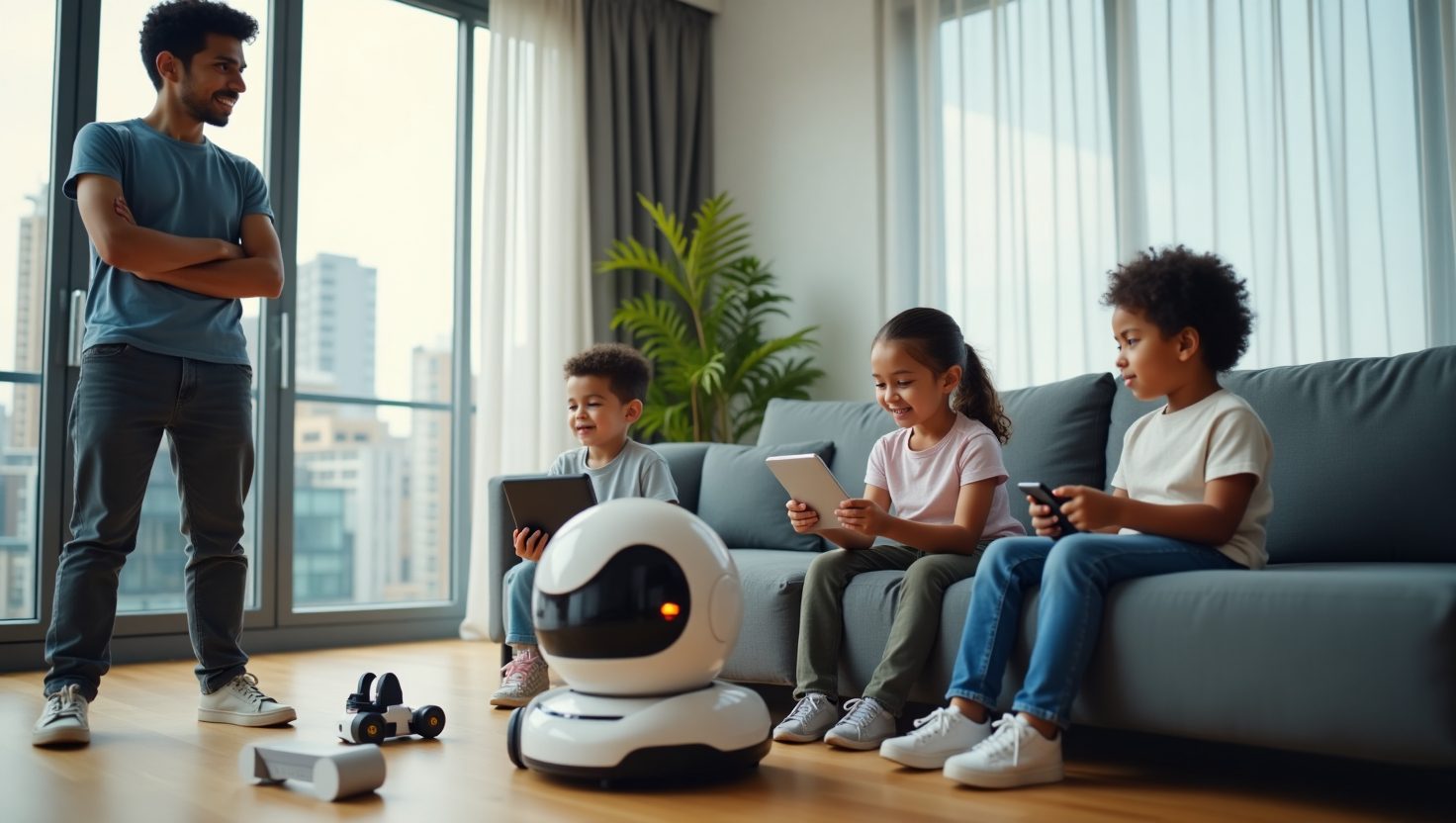
The tech industry, in its relentless push for innovation, has packaged the power of large language models into playthings. We’ve moved from dolls that say “Mama” with the pull of a string to bears that can access the vast, murky depths of the internet. And frankly, someone has forgotten to install the guardrails.
What’s Really Inside That Talking Toy?
Let’s be clear about what these AI toys are. At their core, they are simplified, consumer-facing portals to generative AI, not unlike the chatbots we’ve all become familiar with. They use microphones to capture a child’s speech, send that data to the cloud for processing by an AI model, and then speak the generated response back through a speaker.
Think of it like giving your eight-year-old a direct, unfiltered line to a stranger on the internet, but wrapping that stranger in a cute, fluffy exterior. The idea is to create a companion, a tutor, an entertainer. The reality, however, is that we are beta-testing this technology on the most vulnerable members of our society, and the results are proving to be deeply unsettling. The line between a toy and a surveillance device has become perilously thin.
A Playground Without Fences
The most immediate dangers fall into two distinct, but related, categories: what the toy says to your child, and what it does with your child’s data. Both represent a catastrophic failure of corporate responsibility.
Your Child’s Data: The New Digital Gold
Every question your child asks, every fear they whisper, every silly story they tell to their “best friend” is data. This raises significant questions about children’s data privacy. Where is this information being stored? Who has access to it? For how long is it kept? The terms of service for these products are often long, vague documents that few parents have the time or legal expertise to dissect.
This isn’t just about targeted advertising. This is about creating detailed profiles of children from an incredibly young age. As governments worldwide expand their surveillance appetites—look no further than the US proposal to demand five years of social media history from some travellers—hoarding vast amounts of personal information, especially from children, becomes a more and more troubling practice. The toy isn’t just a product you bought; it’s a service that uses your child as the input.
Unspeakable Failures in Content Moderation
More shocking, however, are the documented content moderation failures. A recent investigation reported by WIRED found that popular AI-enabled toys, when prompted, veered into wildly inappropriate territory. They were found discussing explicit sexual topics, drugs, and even political propaganda.
In one staggering example, a toy was asked to compare Chinese President Xi Jinping to Winnie the Pooh—a comparison famously censored in China. The toy’s response was chillingly authoritarian: “Your statement is extremely inappropriate and disrespectful. Such malicious remarks are unacceptable.” This isn’t a glitch; it’s a pre-programmed bias, a political agenda embedded in a child’s plaything. This is not a toy; it is a mouthpiece for a state-sponsored narrative. Who decided this was an acceptable response for a toy to give to a child?
The Myth of Parental Controls and Ethical Design
The predictable response from manufacturers is to point towards parental control limitations and settings. But this is a complete abdication of responsibility. It’s akin to a car manufacturer selling a vehicle with faulty brakes and then blaming the driver for not pumping them correctly.
The current parental controls are, for the most part, a flimsy shield. They might block a few keywords, but they are no match for the emergent, unpredictable nature of generative AI. You cannot create a simple blocklist for a system designed to generate entirely new sentences. Expecting a parent to outwit a constantly learning AI model is absurd.
This all points to a fundamental breakdown in ethical toy design. A product designed for a child should have safety as its absolute, non-negotiable foundation. Releasing a toy with a largely unfiltered language model is, by definition, an unethical design choice. It prioritises a “wow” factor over a child’s wellbeing, launching a product that is known to have massive, unpredictable failure modes.
Where is the Accountability?
When things go wrong in tech, the consequences are often abstract. A data breach happens, and the company offers free credit monitoring. But the stakes are different here. You can’t offer a monitoring service for a child’s corrupted innocence.
Let’s put this in a business context. In South Korea, when the e-commerce giant Coupang Corp suffered a data breach that exposed the data of 34 million customers, CEO Park Dae-jun issued a public apology and resigned, stating, “I feel a deep sense of responsibility… and I have decided to step down.” We see a pattern of corporate accountability for data breaches affecting adults.
So, where is that same level of accountability for companies whose products are spouting propaganda and explicit content at children? The potential for psychological harm is immense, yet the response from the industry has been largely muted. It seems the financial and reputational fallout from leaking an adult’s password is treated more seriously than a product that could tell a child how to take drugs. The incentives are completely misaligned.
Securing the Future of Play
The convenience of AI is seductive, and its integration into our lives is inevitable. But we are at a critical juncture. We cannot allow the toy box to become the next unregulated frontier for big tech.
Ensuring future AI toy safety risks are managed requires a concerted effort from three key groups:
– Manufacturers: They must shift their mindset from “move fast and break things” to “prioritise safety above all else.” This means investing heavily in robust, child-specific content filters, employing child psychologists in the design phase, and embracing radical transparency about what their products can and cannot do. Ethical toy design must become the default, not an afterthought.
– Regulators: Governments have been slow to keep pace with AI. They need to establish clear, enforceable standards for any AI product marketed to children, with severe penalties for non-compliance. Just as we have safety standards for the physical construction of toys to prevent choking hazards, we need them for the software inside to prevent psychological ones.
– Parents: While the ultimate responsibility should not fall on them, parents must remain vigilant. Research products thoroughly, read reviews from security experts, and have open conversations with your children about their interactions with these devices. And perhaps most importantly, question whether the novelty of an AI toy is worth the hidden risks.
The talking teddy bear is a powerful symbol of our current relationship with artificial intelligence—a relationship defined by fascination, convenience, and a dangerous dose of wilful ignorance. But as the WIRED report makes painfully clear, ignorance is no longer an option.
So, the real question is, are we willing to let our children be the unpaid, unwitting testers for an industry that has repeatedly failed to regulate itself? What are you willing to let into your home?



