

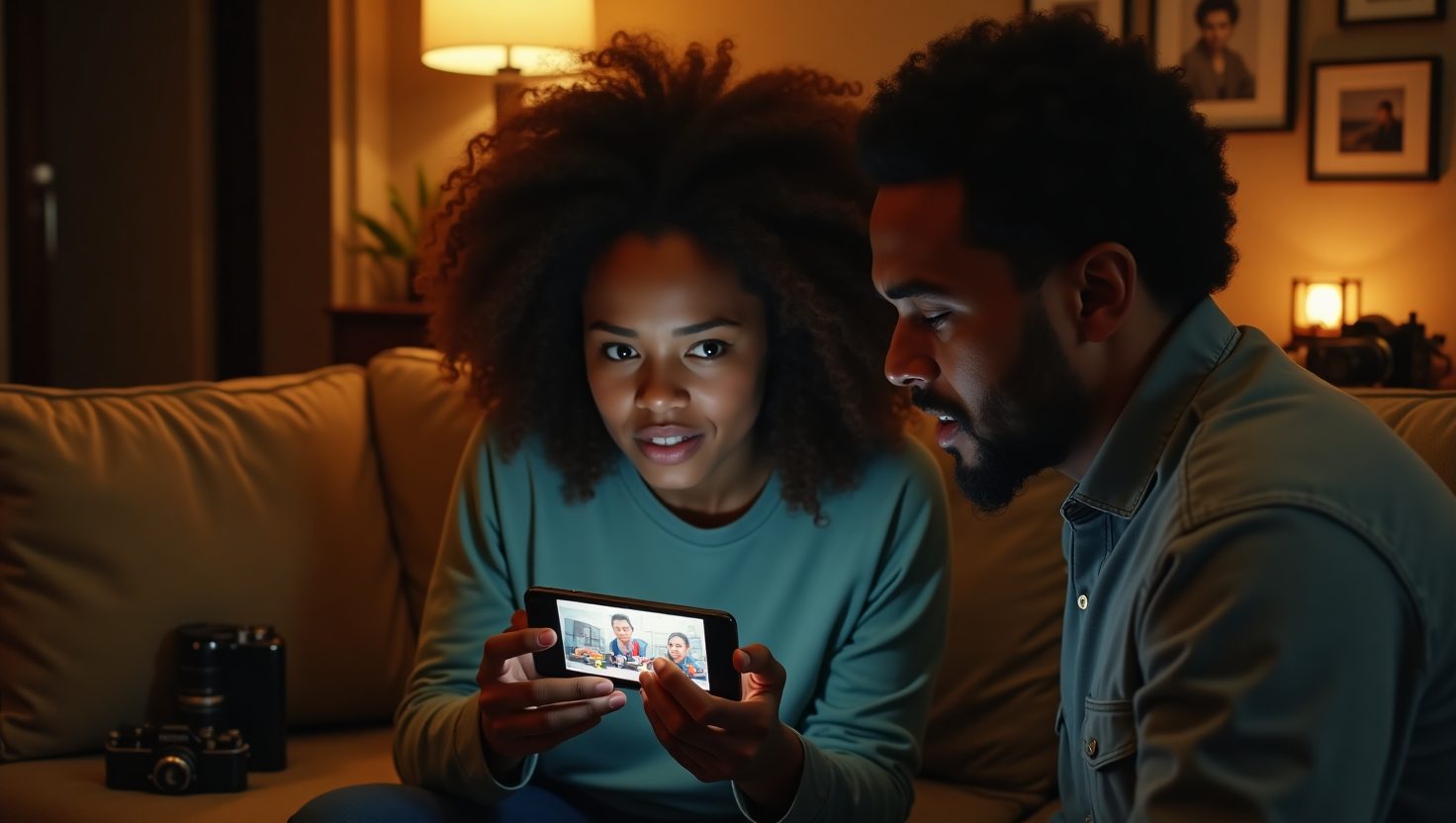
Have you looked at your phone’s photo gallery recently? I mean, really looked at it. That sunset isn’t just a bit more vibrant, is it? And in that group shot, everyone is somehow smiling and looking at the camera perfectly. It’s a little too good to be true, because, well, it isn’t true. Your smartphone has become a silent reality editor, and it’s time we had a serious talk about AI photography ethics.
The snapshot you think you took is often the end result of trillions of digital operations. Your phone isn’t just capturing a moment; it’s interpreting, rebuilding, and sometimes outright inventing it. This quiet revolution is changing more than just our pictures; it’s altering our relationship with memory and truth itself.
The Ghost in the Machine: Understanding Computational Photography
For years, we’ve accepted that our phone cameras use clever tricks to make up for their tiny lenses. This field, known as computational photography, is the art of using software to overcome physical hardware limitations. Think of it like a highly skilled chef. A traditional camera gives you the raw ingredients. Computational photography is the chef who seasons, sears, and plates those ingredients to create something more palatable.
But today’s AI has moved beyond simple seasoning. As Ziv Attar, CEO of imaging startup Glass, explained to the BBC, even a standard shot involves the phone capturing “between four to 10 images” and blending them to reduce noise and balance light. It’s no longer just enhancing your dish; it’s swapping out the carrots for a sweeter variety and adding a sauce you never asked for.
The biggest names in tech are all leaning into this.
– Apple’s Deep Fusion analyses images pixel-by-pixel to optimise for texture and detail.
– Google’s “Best Take” on its Pixel phones lets you swap out faces in a group photo with better expressions from other shots in the same burst. The result is a single image of a moment that never existed.
– Samsung’s “Space Zoom” feature for photographing the moon became infamous for adding details and craters that the camera’s lens couldn’t possibly have resolved. Critics argued it wasn’t enhancing an image of the moon; it was pasting a better moon on top of a blurry blob.
While a Samsung spokesperson insists that “AI-based features enhance image quality while preserving authenticity,” you have to ask: whose definition of authenticity are we using?
The Slippery Slope of “Authenticity”
This brings us to the thorny issue of visual authenticity. Is a photograph still a record of reality if an algorithm has decided to improve it for you? When you take a picture, the AI in your phone makes an executive decision. It brightens shadows, boosts colours, and smooths skin, all without your input.
As Rafał Mantiuk from the University of Cambridge notes, different brands now have distinct visual signatures. “Pixel phones have a style. Apple phones have a style. It’s almost like different photographers.” You’re not the sole photographer anymore; you’re co-creating with an opinionated, invisible partner.
This is particularly aggressive in some phones designed for Asian markets, where beauty filters that slim jaws, enlarge eyes, and lighten skin are often on by default. Attar doesn’t mince words, calling it “pure hallucination.” These tools are no longer about creating a good photo; they’re about enforcing a narrow, digitally-constructed ideal of beauty.
The Psychology of a Perfected Past
This constant, subtle editing has profound effects. The conversation is shifting towards smartphone psychology and its impact on how we perceive ourselves and our past. When every photo we see is algorithmically perfected, it creates an impossible standard. Our real-life reflections can’t compete with their AI-enhanced counterparts, leading to a documented rise in body dissatisfaction and anxiety.
More unsettling is the potential for memory distortion. Memory is not a perfect recording; it’s a reconstructive process that’s notoriously fragile. If our photographic records of birthdays, holidays, and milestones are systematically “improved”—skies made sunnier, smiles made wider, blemishes erased—do our memories of those events begin to warp to match the fabricated image?
We risk creating a library of false memories, a personal history curated by an algorithm optimised for engagement, not for truth. You might remember that beach holiday as idyllic and sun-drenched, not because it was, but because your phone decided that version of the story would look better on Instagram.
Navigating an Edited Future
So, where do we go from here? The genie isn’t going back into the bottle. The benefits of computational photography are real; it allows us to take incredible pictures in conditions that would have been impossible a decade ago. But the lack of transparency is a huge problem.
Manufacturers need to come clean. Instead of hiding these features or making them difficult to disable, they should be offering users a clear choice.
– Radical Transparency: Show users a “before and after” of the AI’s edits.
– A True “Off” Switch: A genuine “pro” or “raw” mode that bypasses the heavy-handed algorithmic adjustments.
– Ethical Defaults: Features that dramatically alter reality, like face-swapping or beauty filters, should be off by default, requiring a conscious decision from the user to enable them.
As users, we also have a responsibility. We need to develop a new kind of digital literacy—an awareness that our photos are no longer objective records but subjective interpretations. We must question what we see and understand the subtle influence our devices have on our perception.
The debate around AI photography ethics is not about rejecting technology. It’s about demanding a more honest relationship with it. As these tools become ever more powerful, we have to decide if we want them to be faithful chroniclers of our lives or slick marketing directors for a past that never was.
When you look back at your photos in twenty years, whose memories will you be seeing? Yours, or your smartphone’s? Let me know your thoughts below.



