

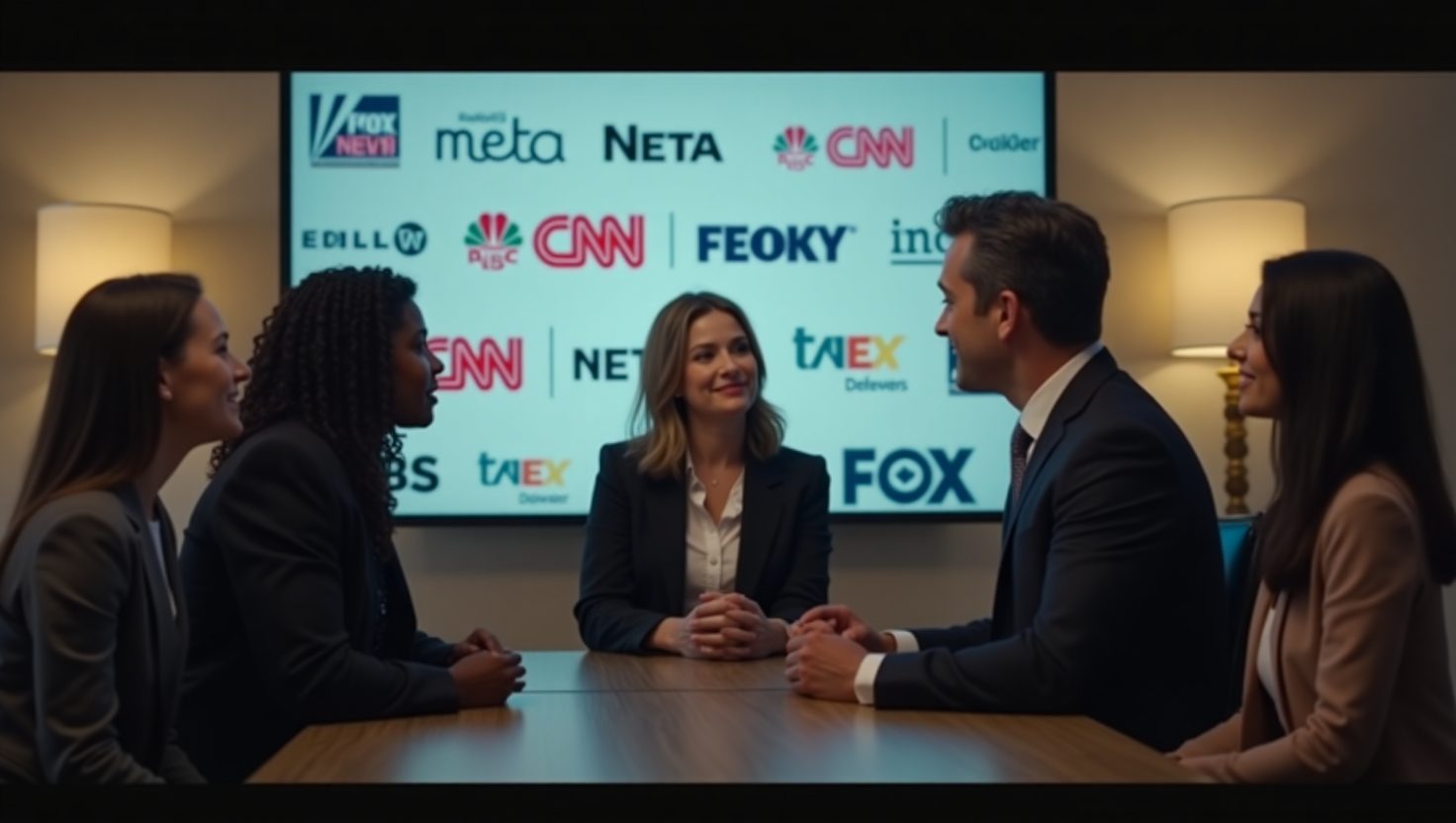
But let’s be brutally honest. This isn’t some altruistic move to save journalism. It’s a calculated, strategic play born out of necessity. Meta’s AI chatbot needs to sound smarter, and what’s the quickest way to get smart? Read everything. And to do that legally, you have to pay.
What’s Really Going on with These AI Deals?
At its heart, an AI media partnership is a simple transaction: a tech company pays a media company for the right to use its content. But that simple definition hides a world of complexity. This isn’t just about Meta’s AI being able to quote a CNN article. It’s about training its models on vast, high-quality, and timely datasets. Think of a Large Language Model (LLM) as an apprentice. You can let it wander the unfiltered, often grubby, corridors of the open internet, or you can give it curated textbooks from trusted experts. Publishers, in this analogy, are the textbook authors.
Meta’s move is a clear admission that the “scrape it all and ask for forgiveness later” approach is no longer tenable. Regulators are circling, and rivals like Google and OpenAI have already been cutting cheques for content. This is Meta playing catch-up, ensuring its AI doesn’t fall even further behind by being locked out of premium information sources. The company even said as much, stating its goal is to provide “more diverse content sources to help you discover timely and relevant content.” Translation: our AI needs better stuff to read.
The New Gold Rush: Content Licensing
For years, publishers have watched with gritted teeth as tech platforms hoovered up their content, repackaged it, and sold ads against it, offering only digital breadcrumbs in return. The dynamic is finally shifting. Suddenly, content licensing is the talk of the town, and publishers find themselves holding a rather valuable asset: trusted, human-created information.
The financial terms of these deals remain shrouded in secrecy, but you can bet they aren’t trivial. Publishers are learning from past mistakes. They are no longer just giving away the digital farm. This is a critical pivot. For AI applications to be truly useful, especially for real-time information, they need a constant IV drip of fresh data. These licensing agreements are that IV. This isn’t just about text, either; it encompasses images, videos, and archives stretching back decades—a treasure trove for training any hungry AI.
According to the CNBC report on Meta’s latest deals, these partnerships will enable the AI chatbot to deliver real-time news by linking directly to publishers. This is a crucial detail. It suggests a model that, for now, still drives some traffic back to the source, a key demand in publisher relations.
A Smarter Form of News Aggregation?
We’ve seen news aggregation before. Think Google News or even Facebook’s own beleaguered News Tab. What makes this different? The interface. Instead of a list of links, we get a conversational agent. You can ask Meta’s AI, “What’s the latest on the UK election?” and it will, in theory, synthesise information from multiple partnered sources and present it to you, complete with links.
This is both a convenience and a danger. For consumers, it’s a seamless way to get information. But for publishers, it adds another intermediary between them and their audience. Will users click the links, or will they be satisfied with the AI’s summary? This is the billion-dollar question that will define the future of publisher relations in the age of generative AI. If the AI becomes the destination, not the doorway, publishers could find themselves in an even weaker position than before.
Can Generative AI Genuinely Improve Publisher Relations?
Let’s pour some cold water on the cheery narrative, shall we? The relationship between Big Tech and journalism has been, to put it mildly, fraught. Decades of broken promises and shifting algorithms have left publishers deeply sceptical. So, are these AI media partnerships a genuine bridge-building exercise or just another transactional affair?
The answer likely lies somewhere in the middle. For now, it’s a marriage of convenience. Meta needs content to make its AI competitive. Publishers need a new revenue stream as advertising and subscription models face constant pressure. The real test will come when interests diverge. What happens when an AI summarises a sensitive, nuanced investigative piece so poorly that it misrepresents the story entirely? Who is liable? How will publishers maintain their brand identity when their content is chopped up and reassembled by an algorithm?
These aren’t abstract problems. They are the ticking time bombs at the heart of these agreements, and a true partnership will require more than just a wire transfer. It will require deep collaboration on ethics, attribution, and the very presentation of information.
The Glare of Competition
None of this is happening in a vacuum. Meta’s scramble for content is a direct response to a fiercely competitive market. The initial reception to its Llama models, whilst solid in the open-source community, hasn’t captured the public imagination in the same way as OpenAI’s ChatGPT or Google’s Gemini. As the initial report from CNBC notes, Meta is making these deals whilst also reportedly considering budget cuts to its metaverse projects. It seems the reality of the AI arms race is hitting home.
Meta is in a fight for relevance. It’s not just about building a good chatbot; it’s about creating an ecosystem. By integrating news and real-time information, Meta hopes its AI can become a daily utility, a genuine assistant rather than a novelty. These content licensing deals are a defensive moat and an offensive weapon, aimed squarely at keeping users within Meta’s world, whether that’s on Instagram, WhatsApp, or a future AI-native device.
What Does the Future Hold?
Looking ahead, we are likely to see this trend accelerate. More publishers will sign deals, and AI companies will become some of the biggest customers for news organisations. This could create a two-tier media landscape: those who have lucrative AI licensing deals and those who don’t.
We might also see the nature of content itself begin to change. Will publishers start creating “AI-optimised” content, designed to be easily parsed and summarised? It’s a slightly chilling thought. The potential for a feedback loop, where AI models are trained on content that was itself written for AI, is very real.
Ultimately, these AI media partnerships are a fascinating, high-stakes experiment. They represent a potential lifeline for a struggling news industry and a critical building block for the next generation of technology. But the balance of power remains delicate.
The question is no longer if AI and media will partner, but how. Will these be genuine collaborations that respect the value of journalism, or will they simply be another chapter in Big Tech’s long history of disruption? What do you think is the most significant risk for publishers in these deals?



