

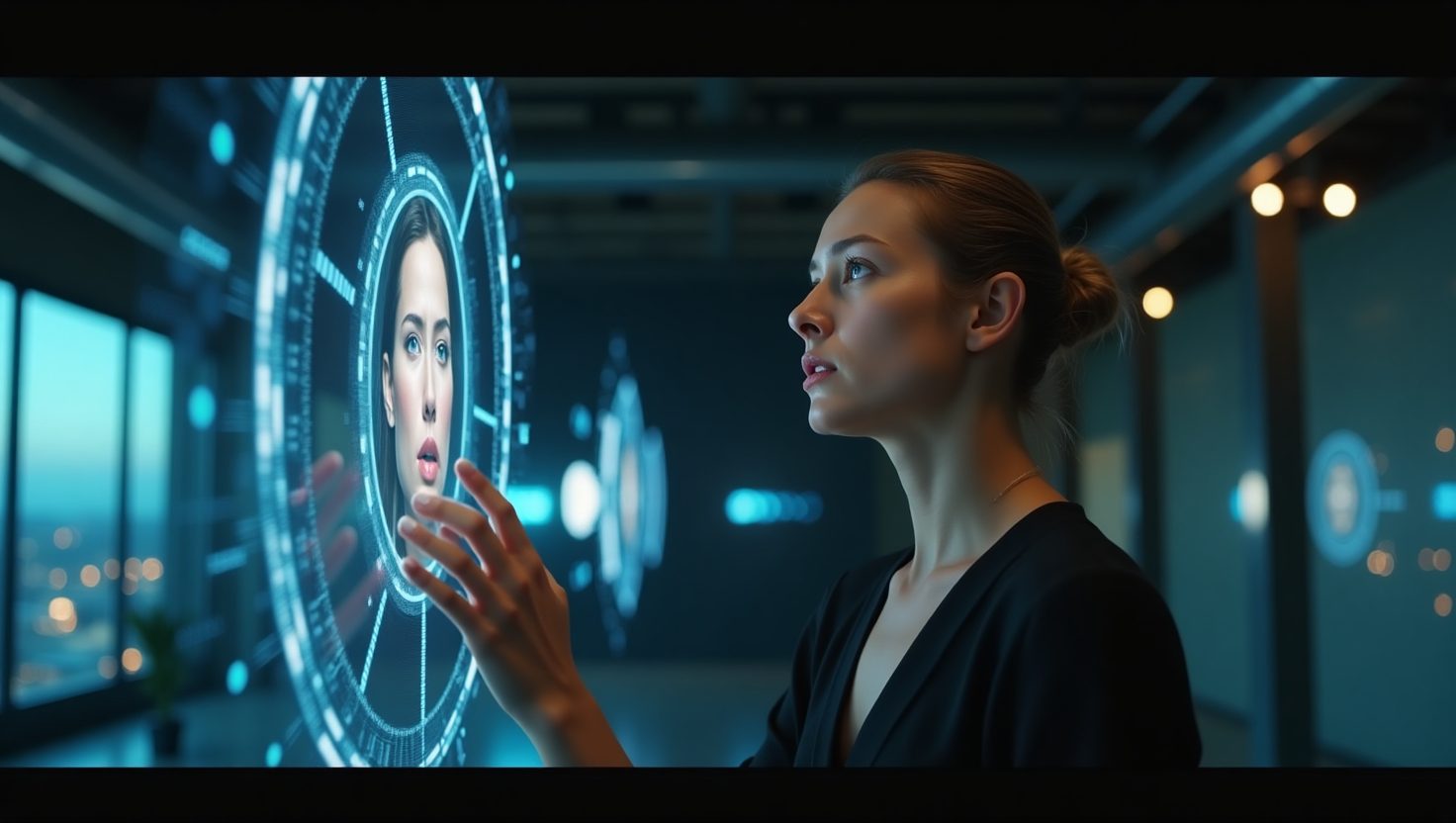
The Digital Mask: What Are AI Likeness Rights?
So, what exactly are we fighting about here? At its core, AI likeness rights refers to the control an individual has over the use of their image, voice, and mannerisms by artificial intelligence systems. Think of it as the digital extension of your very being. For centuries, an actor’s performance was ephemeral, captured only on film or stage. Now, technology allows for the creation of a digital double – a photorealistic, AI-powered replica that can be made to say or do anything, forever.
This sounds cool, right? A digital you that can work 24/7 without needing coffee or a lunch break. But what happens when that digital you is created without your permission? Or when a low-paying gig for a “body scan” turns into your likeness being sold to the highest bidder for use in commercials, video games, or worse? The entire concept hinges on consent and compensation. Without clear rules, this isn’t innovation; it’s exploitation on a scale we’ve never seen before. It morphs from a tool for cinematic creativity into a form of high-tech identity theft, where the most personal thing you own—yourself—is no longer yours.
The Rise of the Algorithmic Actor
AI’s integration into the performing arts has been creeping up on us for years. It started with de-ageing actors in blockbuster films and creating convincing CGI characters. Performance capture regulations have, to put it mildly, not kept pace. The legal frameworks in place were designed for a world of photographs and video recordings, not for algorithms that can learn and recreate a person from scratch. This technology is no longer just about touching up a scene; it’s about generating entire performances.
Imagine a musician’s work. In the early days of hip-hop, producers sampled old funk and soul records, creating new hits from snippets of the past. It was a creative wild west until the lawyers caught up, establishing a system of licensing and payments for those samples. We are now in the sampling era for human identity. Companies are hoovering up data—headshots from casting sites, vocal snippets from auditions, body movements from old roles—to train their models. This isn’t just about replacing background actors anymore. The endgame is to create AI “talent” that is cheaper, infinitely malleable, and, crucially, doesn’t have a union.
An Ethical Minefield: The Soul in the Machine
The problem runs deeper than contracts and paycheques. The debate over digital double ethics is a conversation about human dignity. Let’s say an actor, known for their work in children’s television, has their likeness scraped and used to create an AI character that promotes online gambling. Or a deceased movie star is digitally resurrected to endorse a political ideology they would have loathed in life. Where is the line? Who guards an actor’s legacy and moral compass when their digital ghost can be puppeteered by a line of code?
This is precisely the nightmare unfolding for performers. As Paul W. Fleming, the General Secretary of the actors’ union Equity, pointed out recently, companies are operating far outside the bounds of existing copyright law. In an interview with The Guardian, he stated, “Nine times out of 10, we know it’s been used completely outside of the existing copyright and data protection framework.” This isn’t a case of a few bad apples; it’s a systemic failure to respect the fundamental data and identity of performers. The technology has sprinted ahead, leaving ethics and regulations gasping for air miles behind.
The Curious Case of Briony Monroe and Her AI “Twin”
This abstract fear became frighteningly real for Scottish actor Briony Monroe. She discovered an AI-generated “actor” named Tilly Norwood, created by AI talent studio Xicoia. To Monroe, Tilly was more than just a synthetic face; she looked eerily like her. She believes her likeness, possibly scraped from her online portfolio or other professional materials, was used to create this digital entity without her knowledge or consent. This is the smoking gun that performers have been dreading—tangible proof of their image being used to train their potential replacement.
The AI production company behind the project, Particle6, has flatly denied the accusation. A spokesperson insisted, “Briony Monroe’s likeness, image, voice or personal data have not been used in any way to create Tilly Norwood.” They champion their ethical creation process, but the very existence of this dispute throws the entire industry into a tailspin. How can an actor prove their face was “stolen” and used as training data? The code is a black box. Without transparency, it becomes a performer’s word against a corporation’s, and we all know who has the deeper pockets for a legal fight.
Equity’s Gambit: Weaponising Data Law
Faced with this existential threat, the union Equity is refusing to play by the old rules. Instead of just negotiating clauses in contracts, they are planning a brilliant and frankly overdue act of “mass direct action.” They are mobilising their 50,000 members to collectively bombard tech and entertainment companies with subject access requests (SARs). Under UK data protection law, these requests legally compel an organisation to disclose all the personal data it holds on an individual, including how it was obtained and how it’s being used.
This is a genius strategic move. It’s a form of asymmetric warfare. A single SAR is an administrative nuisance for a large company. But thousands of them, all landing at once? That’s a logistical nightmare. The law requires a response within one month. It forces these secretive AI labs and production houses to either open their books and reveal their data sources or face significant legal penalties. It’s a distributed, grassroots-powered audit, designed to drag the industry’s shadowy data practices into the cold light of day. It is, as The Guardian reported, a direct threat aimed at forcing transparency where there is none.
The Billion-Dollar Question: Residuals for AI Training
This leads to the inevitable and most contentious part of the equation: money. If an actor’s likeness is a core asset being used to create value, they should be paid for it. Every time. This is where the fight for residuals for AI training comes in. Traditionally, residuals are payments made to performers for reruns and syndication of shows and films. The logic is simple: your performance is still making money for the studio, so you should get a piece of it.
Now apply that logic to AI. If an AI model is trained on an actor’s entire filmography—their expressions, their voice, their every nuance—that model then has the potential to generate infinite new performances and, therefore, infinite value. A one-time buyout fee for a body scan is fundamentally unjust in this context. What performers and unions are rightly demanding is a new framework. This could look like:
– Licensing Fees: Actors would license their likeness for specific projects or periods, with clear limitations on use.
– True Residuals: A percentage of any revenue generated by the AI model trained on their data.
– Consent at Every Step: The right to approve or reject any use of their digital double, project by project.
This isn’t a radical idea. It’s applying a century-old principle of fair compensation to a new technology. The producers’ alliance, Pact, and their counterparts need to realise that treating performers as mere data sources to be mined is not a sustainable business model. It’s a recipe for a full-scale revolt.
The Line in the Sand
The fight over AI likeness rights is more than just another Hollywood labour dispute. It is a critical battle for the future of creative work and personal identity in the digital age. Briony Monroe’s case is not an outlier; it’s a warning shot. The actions being taken by Equity are not just about protecting actors; they are about establishing a precedent that human creativity cannot be strip-mined for corporate profit without consent and fair compensation. The technology itself is neutral, but its application is currently on a trajectory that serves capital at the expense of labour.
This is the moment to draw a line in the sand. Performers, creators, and audiences need to demand better. We need robust performance capture regulations, transparent data practices, and an ethical framework that puts the human at the centre of the art.
So, what do you think? Is it possible to build an ethical framework for AI in the arts, or is the profit motive simply too strong to overcome? And perhaps more importantly, who should be the ultimate authority on how a person’s digital identity is used?



