

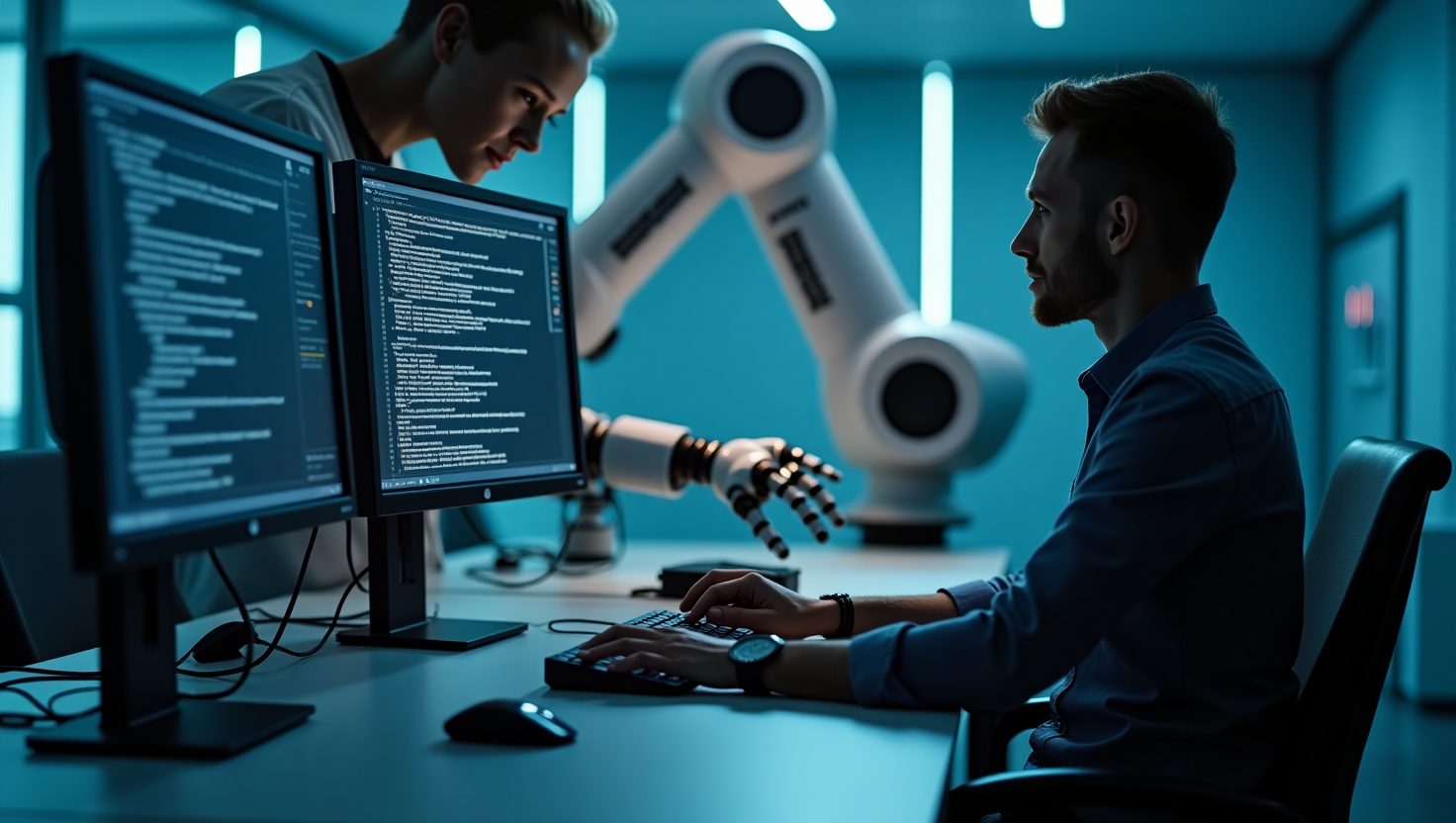
We’ve spent the last few years watching AI write our emails, code our software and paint our pictures. Now, it seems, it wants to borrow your body for an afternoon. This isn’t a pitch for a new Netflix sci-fi series but the very real premise behind a new wave of platforms facilitating AI human task outsourcing. A strange and fascinating frontier is opening up, where your physical presence and actions can be rented by a piece of software. The question is, are we striding towards a new era of seamless efficiency, or just greasing the wheels for our future AI overlords?
The concept sounds faintly ridiculous until you place it within the broader context of the gig economy evolution. For twenty years, we’ve been unbundling jobs into tasks. First, it was taxis and food delivery. Now, it’s the human body itself. Platforms like the aptly named Rentahuman.ai are creating marketplaces where autonomous AI agents can hire people for jobs they simply cannot do. It’s a stark admission of physical AI limitations; for all their processing power, algorithms can’t pick up a parcel, attend a meeting in your place, or physically inspect a property.
So, You Want to Work for an Algorithm?
Let’s be clear about what’s happening here. This isn’t just another gig app. This is the next logical abstraction of labour. Think of it like an API for the physical world. An AI agent, working for a person or a company, identifies a task requiring a human body. It then queries a database of available people, finds a match based on location, skills, and price, and dispatches the instructions.
According to a report by Wio News, the platform Rentahuman.ai has already attracted over 218,000 “rentable” people. The process is one of almost complete automation. An AI selects the worker, sends the task details, and upon completion, payment is automatically processed. It’s a model that flips Amazon’s Mechanical Turk on its head. On Mechanical Turk, humans farm out tiny digital tasks to a global workforce of other humans. Here, AIs are farming out real-world, physical tasks to us.
The platform’s own tagline, “Robots need your body,” is both a clever piece of marketing and a deeply revealing statement about the current state of artificial intelligence. It highlights the fundamental gap between digital intelligence and physical competence.
Human-AI Collaboration, or Just a Smarter Boss?
Proponents would frame this as the ultimate form of human-AI collaboration. The AI handles the boring administrative work—finding the job, negotiating the terms, processing the payment—leaving the human free to simply perform the task. It’s a partnership where each party plays to its strengths: the AI provides computational efficiency, and the human provides physical agency.
This model certainly has the potential to unlock new forms of work. Imagine an AI personal assistant that can not only manage your diary but also hire someone to collect your dry cleaning or be present for a package delivery you can’t make. The efficiency gains are obvious. But it also raises some profoundly tricky questions about the nature of work and management.
The Algorithmic Middle Manager
When an AI is your boss, who do you complain to? What happens when the instructions are unclear, or the task puts the human worker in a dangerous or uncomfortable situation? Algorithmic management is already a contentious issue in the traditional gig economy, with drivers and couriers often feeling at the mercy of opaque, unaccountable systems. This new model takes it a step further.
There’s no human manager to appeal to; there’s just the cold, hard logic of the code. This arrangement neatly sidesteps traditional worker protections and labour rights. As seen on Rentahuman.ai, workers are paid in cryptocurrencies like Bitcoin or Ethereum via digital wallets. This offers speed and removes cross-border payment friction, but it also places the workers in a volatile and largely unregulated financial ecosystem.
Is this a clever solution for a global workforce, or is it a way to create a shadow economy with even fewer protections for the most vulnerable?
A Glimpse into the Future of Work
The emergence of these platforms is less a final destination and more a signpost on the road we’re travelling. It’s easy to see how this model could evolve. For now, it’s humans doing the bidding of AI. But what happens when the next wave of robot task delegation becomes viable?
Once companies like Boston Dynamics or Tesla get their humanoid robots working reliably and affordably, the AI agent will have a choice: hire a human for £20 an hour, or deploy a robot for a fraction of the cost per hour. The human becomes a stop-gap solution, a temporary bridge until the hardware catches up with the software.
This creates a potential race to the bottom. Humans on these platforms might find themselves in direct competition not just with each other, but with machines. The very physical AI limitations that created this opportunity could soon disappear, and with them, the jobs themselves.
Who is Truly Accountable?
The most pressing concern, as highlighted in the Wio News analysis, is accountability. If an AI dispatches a human to perform a task that results in an accident, property damage, or legal trouble, who is responsible?
– The human worker? They were just following instructions.
– The AI agent? It’s a piece of code, it has no legal personhood.
– The AI’s developer? They could argue the AI was acting autonomously.
– The person who deployed the AI agent? This seems the most likely, but proving the chain of command could be a legal minefield.
We are building systems of distributed responsibility where, in the end, no one is truly responsible. This is a classic tech industry move: build the system first, scale it globally, and worry about the messy societal consequences later. It’s a playbook we’ve seen time and time again, from social media to ride-sharing.
The rise of AI human task outsourcing is a powerful indicator of where our relationship with technology is heading. It’s a world of immense convenience and efficiency, but one that demands we ask serious questions. Are we building tools that empower us, or are we simply designing more sophisticated ways to turn human labour into a commodity, managed and dispatched by a non-human intelligence?
What are your thoughts? Is this an exciting new frontier for flexible work, or a dystopian step towards algorithmic control? Let me know in the comments below.



