

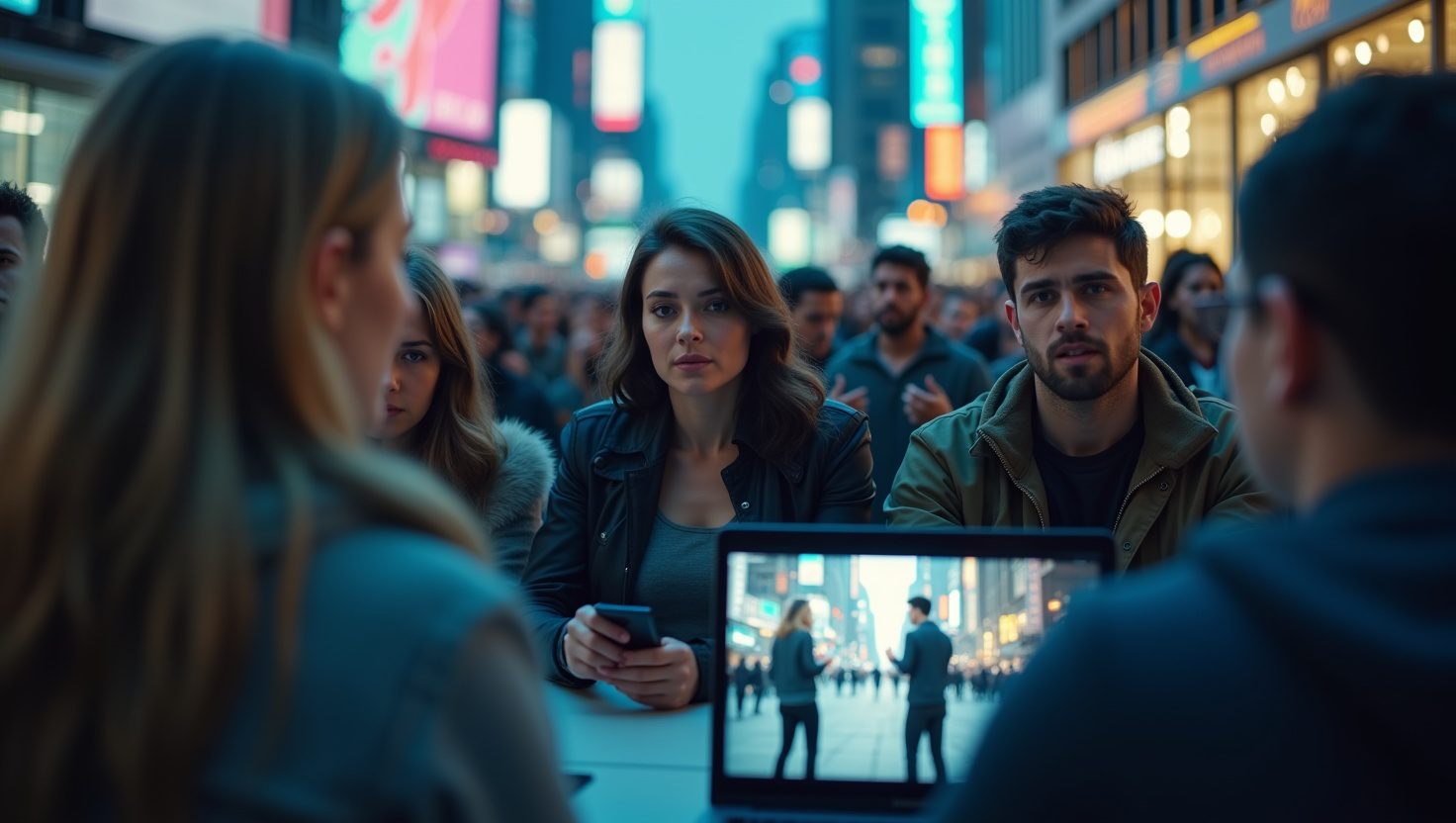
It seems the latest trend powered by generative AI isn’t some grand leap for humanity, but something far more predictable: convincing people that British towns are descending into some sort of dystopian parody. A series of viral videos have been doing the rounds, showing scenes of absurd urban decay in Croydon, London, from taxpayer-funded water parks for youths in balaclavas to lavish buffets in job centres. And people are believing it. This isn’t just a niche joke; it’s a perfect, bite-sized case study of AI-generated misinformation and the insidious way it preys on our biases.
The technology has become so good, so accessible, that anyone with a bit of savvy can create hyper-realistic fictions that are far more exciting than mundane reality. As the anonymous creator behind some of the most popular Croydon videos, ‘RadialB’, told the BBC, “If people saw it and they immediately knew it was fake, then they would just scroll. The selling point of generative AI models is that they look real.” That’s the entire business model in a nutshell. The uncanny valley has been crossed, and what we’ve found on the other side is a swamp of plausible nonsense.
The Algorithm Doesn’t Care About Truth
So how does a fake video of a water park in South London get millions of views? The answer lies in the business model of the platforms themselves. Let’s be brutally honest: social media feeds are not designed to inform you. They are designed to keep you scrolling. The engine powering this is algorithmic amplification.
Think of it like a global talent contest where the only judge is applause, regardless of whether the act is brilliant artistry or a staged train wreck. The platforms’ algorithms are built to identify and promote whatever gets the most engagement—clicks, shares, comments, and watch time. Outrage is a powerful form of engagement. Fear is another. These AI-generated videos, which tap into a grim fascination some call ‘decline porn’, are perfectly engineered to provoke a strong emotional reaction.
The system isn’t broken; it’s working exactly as intended. The platforms crave engagement. Creators like RadialB, and the countless copycats that have since emerged, provide the high-octane fuel. One of his posts depicting ‘roadmen’ in the Houses of Parliament reportedly gained eight million views in a single day. The algorithm sees those numbers, identifies a hit, and pushes it out to an ever-wider audience, creating a vicious feedback loop where the most emotionally manipulative content wins.
The Real-World Cost of Fake Videos
This might all sound like harmless, if slightly odd, internet fun. But the deepfake social impact is starting to show its teeth, and it’s far from funny for the communities being misrepresented. This isn’t just about a distorted image of Croydon; it’s about reinforcing some of the ugliest stereotypes in our society.
The videos almost exclusively feature young men, often appearing to be Black, in balaclavas and tracksuits, engaging in chaotic behaviour. It’s a high-tech caricature, a digital blackface that resurrects old, racist tropes of inner-city lawlessness and pins them on a specific demographic. As local creator C.Tino rightly pointed out to the BBC, “These videos are making people think this is real life. It’s becoming out of hand now.” He’s right. It’s a poison that seeps from the digital world into real-world perceptions.
The kicker? This engineered reality is incredibly effective. A recent YouGov poll revealed that while a staggering 81% of Londoners feel safe in their own local area, a majority of Britons believe the capital is unsafe. This chasm between perception and reality is fed by viral content like this, amplified by high-profile accounts like that of Elon Musk, who regularly promotes a narrative of Western urban decline to his 230 million followers. The fiction becomes the dominant reality for anyone whose primary window into London is their social media feed.
Developing Your 21st-Century BS Detector
So, what’s the solution? The knee-jerk answer is always more regulation or better AI detection tools. While important, these are slow, lumbering solutions to a fast, agile problem. The most immediate and powerful defence we have is media literacy. And no, that’s not some boring civics lesson. It’s a fundamental survival skill for an age of synthetic reality.
Having good media literacy is like having a digital immune system. It’s the ability to pause before sharing and ask a few basic questions:
– Who created this? Are they a credible source or an anonymous account with a motive?
– Why was it created? Is it meant to inform, entertain, persuade, or provoke? Content designed to make you instantly angry or afraid should be treated with extreme suspicion.
– What’s the context? Is this a single, shocking clip, or is there a broader, more nuanced story being ignored?
Treating your social media feed like an unmoderated firehose of information is a recipe for disaster. It requires a filter. We need to teach ourselves, and the next generation, to be healthy sceptics, to look for the tells—not just the occasionally wonky AI-generated fingers, but the emotional manipulation at the content’s core. Educational institutions have a massive role to play here, not by banning phones, but by teaching students how to critically navigate the digital spaces they already inhabit.
Ultimately, the problem of AI-generated misinformation won’t be solved by simply spotting the fakes. It requires a fundamental rewiring of our relationship with online information. The incentives driving the internet are currently geared towards outrage and division because it’s profitable. Creators are rewarded for making plausible lies, and platforms are rewarded for spreading them.
While we must all sharpen our critical thinking skills, the platforms themselves cannot be let off the hook. Tiny, often-missed disclosure labels are a pathetic fig leaf for the societal damage being done. The real question we should be asking is not “is this video real?”, but “why was this algorithmically promoted to millions of people in the first place?”.
What do you think? How much responsibility should fall on the individual to spot fakes, versus the platforms whose algorithms profit from their spread?



