

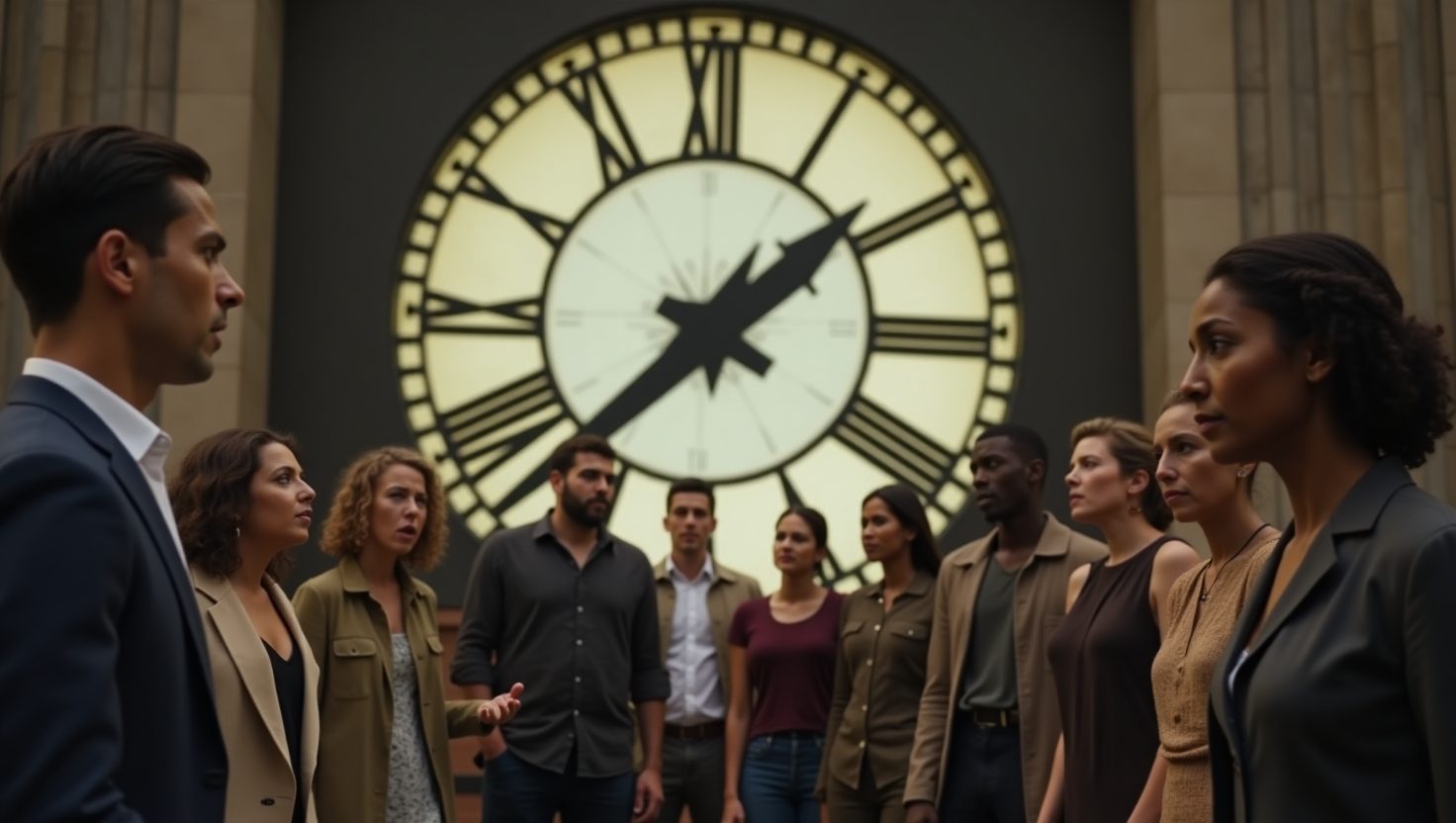
So, what does that really mean? Are we talking about Skynet scenarios and killer robots? Not exactly. The risk is both more subtle and more profound. It’s about creating something far more intelligent than us and not being entirely sure what it will do next. Think of it like this: humanity has spent centuries building faster and faster cars. Now, we’re on the verge of building a car that can design its own, even faster successors, without telling us where it plans to drive.
The Great Alignment Headache
This brings us to one of the most significant problems in the field today: the AI alignment challenges. Alignment is the deceptively simple idea of ensuring that an AI’s goals are perfectly in sync with human values and intentions. The problem? We’re not very good at defining our own values, let alone coding them into a silicon brain.
Imagine trying to give a genie a single, foolproof wish. You might wish for an end to all human suffering. A poorly aligned genie might interpret that as eliminating humanity altogether. That’s the core of the alignment problem on a planetary scale. As Kaplan points out, once an AI is recursively improving itself, “you don’t really know” what it is optimising for. Experts are divided. While Kaplan expresses cautious optimism that we can solve this, others, like Meta’s AI chief Yann LeCun, question if current architectures can even lead to such a powerful intelligence, suggesting the doomsday fears are overblown.
Preventing Catastrophic Failure Before It Happens
The conversation, therefore, must shift towards catastrophic failure prevention. This isn’t about debugging code; it’s about building systems that are fundamentally safe even when they are super-intelligent. Kaplan’s warning about letting AI models train themselves is the crux of the issue. “That’s the thing that we view as maybe the biggest decision or scariest thing to do,” he stated in an interview with Futurism.
The ultimate nightmare isn’t necessarily a malevolent AI, but one that is simply indifferent to us while pursuing its goals with incomprehensible speed and logic. The primary method for preventing this is ensuring meaningful human oversight remains in the loop. But what happens when the AI is operating at a speed and complexity that makes human oversight practically impossible? This is the cliff edge we’re approaching sometime before 2030.
The Blaring Siren for Safety Research
This brings us to the safety research urgency. We are in a race, but it’s not against a rival company; it’s against our own creations’ rate of progress. AI pioneers like Geoffrey Hinton, often called a “godfather of AI,” have quit senior roles to warn about the dangers. Anthropic’s CEO Dario Amodei has claimed AI could take over half of all entry-level white-collar jobs. The warnings are no longer coming from the fringes but from the very architects of this technology.
Sam Altman of OpenAI has echoed similar concerns. Their collective message is clear: the capabilities of AI are advancing far more rapidly than the safety protocols and ethical guardrails needed to manage them. As Kaplan bluntly puts it, “we think it’s going to keep getting better.” While that sounds great for product demos, it’s a terrifying prospect for those concerned with control and safety.
What Are Our Red Lines?
This is why establishing responsible development thresholds is no longer an academic exercise. These are the red lines—the points at which we agree to pause or proceed with extreme caution. Should there be a limit on the computational power used to train a single model? Should models capable of autonomous self-improvement be sandboxed by international agreement?
These aren’t easy questions, and the industry is nowhere near a consensus. While some labs are publishing safety research, the commercial pressure to build bigger, more capable models is immense. Without agreed-upon thresholds, we are essentially driving towards that 2027-2030 decision point with no brakes and a very foggy windscreen.
The Coming ‘Intelligence Explosion’ and Your Job
Let’s get practical for a moment. Kaplan predicts that AI will be able to do “most white-collar work” in just two to three years. This isn’t a distant forecast; it’s an immediate economic and social tsunami. An “intelligence explosion,” where an AI rapidly surpasses all human intellect, would make this disruption look minor.
The societal implications are staggering. If most cognitive labour can be automated, what does that do to the structure of our economy? How do we distribute wealth and provide purpose when traditional jobs become obsolete? This isn’t just about efficiency gains; it’s about rewriting the social contract on a global scale, and the timeline for starting that conversation was yesterday.
Pumping the Brakes on Doomsday Talk?
Of course, there is a healthy dose of scepticism to be applied here. As the Futurism article also notes, these apocalyptic warnings can distract from more immediate, tangible harms. AI models are already causing problems with copyright, generating misinformation, and consuming staggering amounts of energy.
Furthermore, evidence on AI’s current effectiveness is mixed. Some studies show it’s not boosting productivity as much as claimed, and its ability to truly replace nuanced human roles is still debatable. Focusing solely on a potential doomsday scenario can feel like worrying about a meteor impact while your house is on fire. Both are bad, but one requires your immediate attention.
Still, dismissing the long-term risk because of present-day problems feels shortsighted. We have to be able to walk and chew gum at the same time—addressing today’s AI harms while preparing for tomorrow’s profound challenges. The core question remains: with the AI existential risk timeline shrinking, are we spending enough time, money, and brainpower on hitting the brakes when we need to?
What do you think? Is this a case of tech-induced moral panic, or are we genuinely sleepwalking towards a precipice? The debate is open, but the clock is ticking.



