

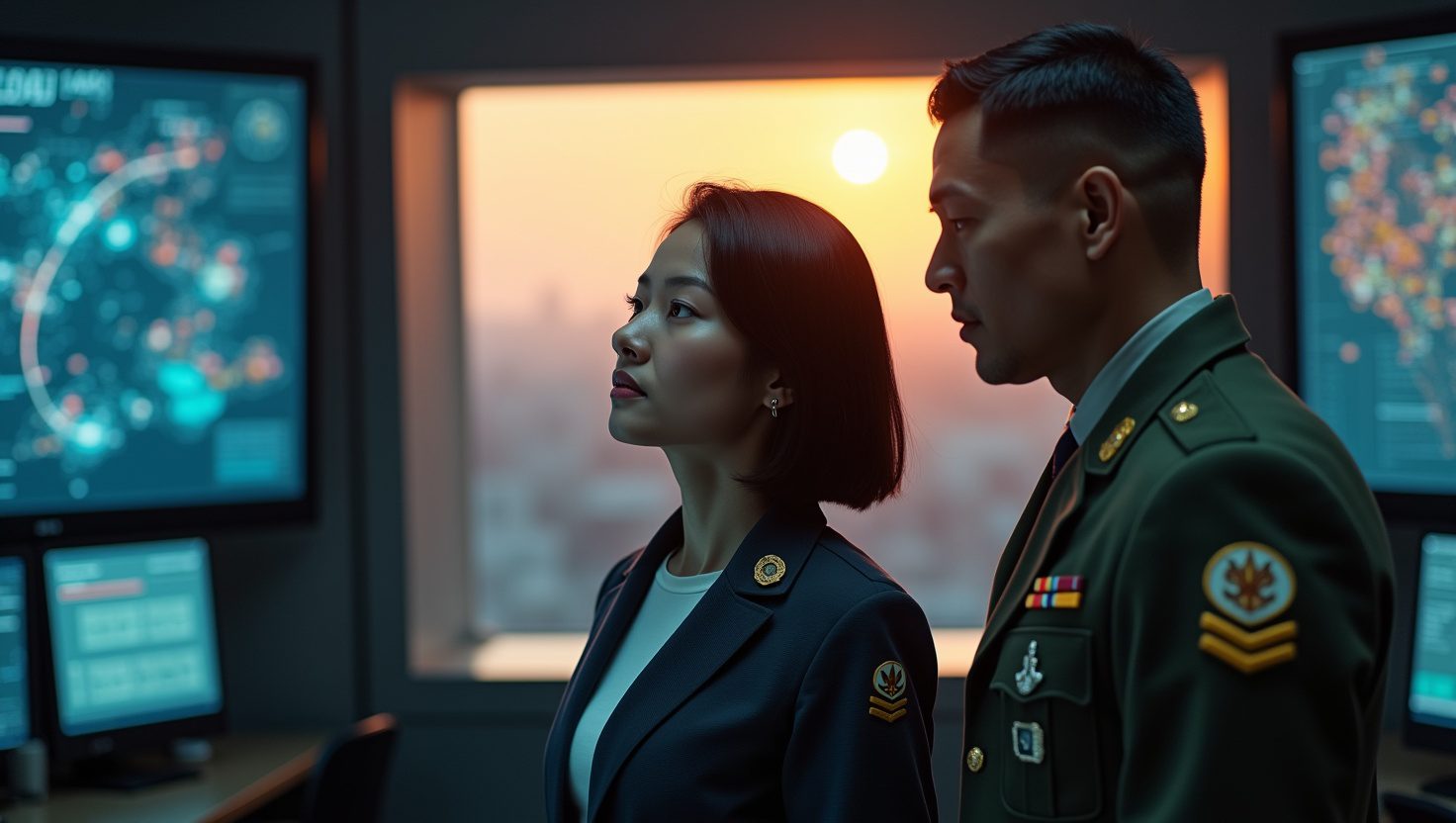
Well, the inevitable has finally happened. The world of artificial intelligence, often wrapped in utopian promises of a better future, has formally shaken hands with the stark reality of military power. Sam Altman, the face of the AI revolution at OpenAI, has announced a deal with the Pentagon. But before you start building your bunker, this isn’t quite the Skynet origin story some might fear. Instead, it’s a far more complex and fascinating tale about power, principles, and who gets to write the rules for the future of warfare.
The conversation around AI defense contract ethics has been simmering for years, but OpenAI just turned up the heat. For a long time, Silicon Valley’s top minds adopted a somewhat sanctimonious “don’t be evil” posture towards military work, a stance that is looking increasingly naive and, frankly, unsustainable. AI is dual-use technology, and pretending it won’t be used for defence is like trying to pretend the internet isn’t used for, well, everything. OpenAI has decided to engage, but with some very big strings attached.
The New Rules of Engagement
The debate over AI’s role in the military isn’t just theoretical anymore. From predictive maintenance for fighter jets to analysing vast amounts of satellite imagery, AI is already deeply embedded in defence operations. The real friction, however, begins when we talk about autonomous systems—the kind that can make decisions on their own. This is where the ethical lines get blurry, and the need for a clear framework becomes critical.
What makes OpenAI’s move so significant is that they aren’t just taking the money and looking the other way. They are stepping into the political arena and attempting to set the terms of engagement themselves. This represents a fundamental shift in the dynamic of government tech partnerships, moving from a simple client-vendor relationship to something more akin to a negotiation between equals.
Setting a Precedent: OpenAI’s Lines in the Sand
Sam Altman’s announcement, detailed in a recent TechCrunch report, wasn’t just a press release; it was a policy statement. He laid out two core principles that would govern OpenAI’s work with the Pentagon:
– A strict prohibition on using their AI for domestic mass surveillance.
– A non-negotiable requirement for human responsibility in the use of force.
In Altman’s own words, these are “two of our most important safety principles.” This isn’t about just selling a product; it’s about embedding an ethical framework directly into the contract. The second point, in particular, is a direct counter to the dystopian fear of fully autonomous killer robots. It ensures that no matter how smart the machine, a human being must always be the one to make the final, life-or-death decision.
Think of it like a highly advanced autopilot in a commercial jet. The system can handle nearly everything—navigation, altitude adjustments, and efficiency checks—but the pilot is always in the cockpit, hands near the controls, ready to take over. The pilot holds the ultimate responsibility. OpenAI is demanding that same level of human accountability for any weaponised system their technology touches.
A Tale of Two AI Companies
To understand the weight of OpenAI’s decision, you have to look at the story of their rival, Anthropic. Led by former OpenAI executive Dario Amodei, Anthropic took a hardline stance, refusing a Pentagon contract on principle. They believed the ethical risks were simply too high to justify engagement.
This act of corporate conscience didn’t go unnoticed. More than 300 Google employees and 60 of OpenAI’s own staff signed an open letter supporting Anthropic’s position. However, the move also drew the ire of the Trump administration, which designated Anthropic a “supply-chain risk” and ordered federal agencies to stop using its products. This starkly illustrates the clash between corporate responsibility and government demands. Anthropic stood its ground and paid a political price.
OpenAI is carving out a middle path. They are not refusing to work with the government, but they are refusing to do so unconditionally. By aligning their safeguards with the Pentagon’s own stated principles on ethical AI, such as those outlined by the DoD’s Chief Digital and Artificial Intelligence Office, they’ve created a defensible and powerful position. They are essentially saying, “We will help you, but only if you adhere to the very rules you yourselves have promoted.”
The Strategic Implications Beyond Ethics
This is more than just a feel-good story about an ethical company. It’s a shrewd strategic move with massive implications for responsible AI deployment on a global scale. The United States is in a fierce technological race with rivals, particularly China. For the US to maintain its edge, it needs its best and brightest tech companies on board.
If the only options are “no, never” (Anthropic’s initial stance) or a blank cheque for the military, the US risks either falling behind or developing technology without the crucial input of its most advanced AI labs. OpenAI’s approach provides a third way: principled participation.
By insisting on these military AI safeguards, Altman is attempting to create an industry standard. He has openly stated that these terms should be extended to all AI companies working with the military. This isn’t just about OpenAI’s conscience; it’s about forcing the entire ecosystem—from the Pentagon down to the smallest defence contractor—to adopt a higher ethical baseline. It’s an audacious attempt to shape national security policy from a CEO’s office in San Francisco.
A New Model for Government and Tech?
The era of tech companies simply building what they’re told to build is over. The power dynamics have shifted. The most advanced AI models are now concentrated in a handful of private companies, giving them immense leverage. OpenAI is using that leverage to ensure its technology is not used in ways that violate its core principles.
This sets a fascinating precedent for all future government tech partnerships. It suggests a future where collaboration is a two-way street, with industry not just providing tools but also helping to shape the ethical and legal frameworks that govern their use. This is messy and fraught with tension, but it may be the only responsible way forward.
The challenge now is whether this model can hold. Will the Pentagon and future administrations respect these corporate red lines, especially when faced with urgent national security threats? And can a company’s internal principles truly stand up to the immense pressure and financial incentive of military contracts?
OpenAI has drawn its line in the sand. The question is, will it be washed away by the tides of realpolitik, or will it become the foundation for a new, more responsible era of military technology? What do you think—is it enough for a company to set these terms, or should these safeguards be enshrined in law, binding both government and industry alike?



