

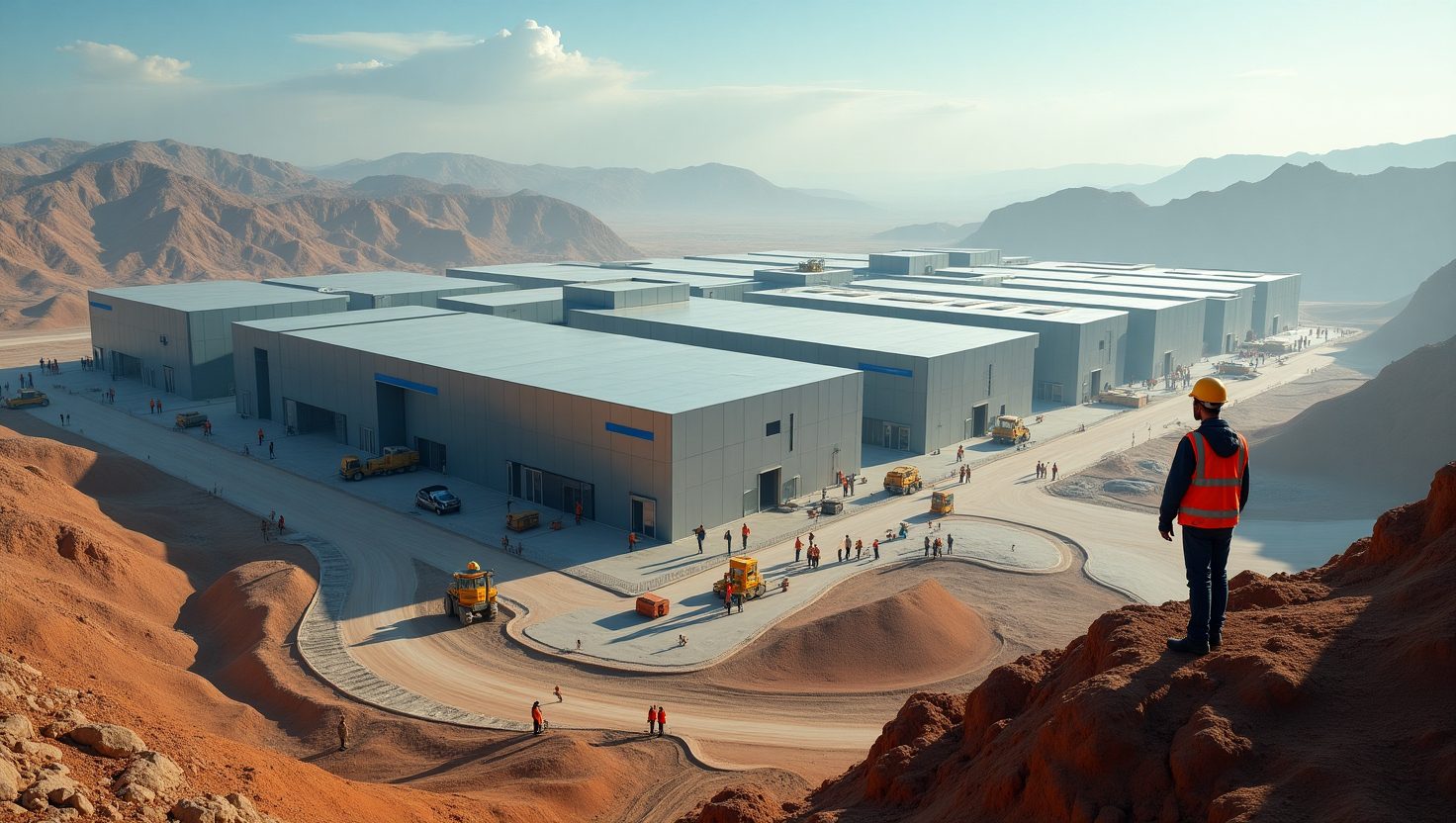
The digital revolution, it turns out, is built on concrete and steel. The question we’re now forced to ask is a stark one: in the furious race to build the infrastructure for artificial intelligence, are we neglecting the infrastructure for human beings?
The Great Resource Scramble
When we talk about AI data center resource allocation, it’s easy to get lost in abstractions about cloud capacity and processing power. But the reality is far more grounded. We’re talking about a finite pool of skilled labour, raw materials, and, crucially, public funds. These are the same resources your local council needs to fix potholes, build a new school, or upgrade the tube line you take to work every day.
The scale of this competition is staggering. According to a recent analysis highlighted by TechCrunch, private spending on data center construction in the US has hit an annualised run rate of £32 billion ($41 billion). To put that into perspective, data from Bloomberg and the Census Bureau shows this figure now roughly equals the entire government spending on transportation construction. The AI gold rush isn’t just a digital phenomenon; it’s a physical one, and it’s competing directly for the same builders, engineers, and materials as vital civic projects.
Computing vs Civic Needs: A Zero-Sum Game?
This isn’t a theoretical problem looming on the horizon; it’s happening right now. State and local governments are set to issue a record amount of debt to fund public works, with some predictions topping £470 billion ($600 billion) next year. But what good is the funding if the resources to actually build are being hoovered up by the private tech sector?
Andrew Anagnost, the CEO of the design and engineering software giant Autodesk, put it bluntly. He said there is “‘absolutely no doubt'” that the demand from the data center industry “‘sucks resources from other projects'”. Think of it like this: there’s a finite number of specialist electricians in the country who can handle complex, high-voltage installations. When a new hyperscale data center project comes along, offering top-tier rates and long-term contracts, where do you think those electricians are going to go? They’re certainly not going to be wiring up a new public library.
This creates a brutal dynamic of computing vs civic needs, where the immediacy and immense capital of the tech industry can easily muscle out the slower, more deliberate pace of public sector development. Anagnost’s forecast is grim: “‘I guarantee you a lot of those [infrastructure] projects are not going to move as fast as people want'”. That delay isn’t just an inconvenience; it’s a drag on the economy and a blow to quality of life.
The Insatiable Thirst for Power
Beyond the competition for construction materials and labour, there’s an even more fundamental resource at stake: energy. The energy consumption trade-offs associated with the AI boom are becoming one of the defining challenges of our time. These aren’t just big warehouses full of computers; they are colossal, power-hungry cathedrals of computation.
A New Class of Energy Consumer
Training a single large language model can consume more electricity than hundreds of homes use in a year. As organisations rush to deploy their own AI models, the collective demand on national grids is skyrocketing. This places an extraordinary strain on energy infrastructure, which in many countries is already creaking under the pressure of the transition to renewables and the electrification of transport.
The debate then becomes one of priorities. Should a megawatt-hour of electricity go towards cooling a server processing social media algorithms, or should it be used to power a hospital or keep the lights on in schools? While many data center operators are making genuine strides in efficiency and investing in renewable energy, the sheer growth in demand often outpaces these gains.
The Path to Sustainable Growth
This is where sustainable expansion planning moves from a corporate responsibility buzzword to an absolute strategic necessity. It’s no longer enough for a tech giant to simply build a data center wherever land is cheap. A truly sustainable approach involves a radical rethinking of where and how these facilities are built.
This means:
– Location, Location, Location: Siting data centers in regions with an abundance of renewable energy, such as geothermal or wind power, rather than simply adding demand to already-strained fossil-fuel-powered grids.
– Integrated Design: Working directly with utility companies and local governments from day one to plan for energy needs, rather than presenting them with a sudden, massive new demand.
– Waste Heat Re-use: Innovating to capture the vast amount of waste heat generated by servers and channelling it into local district heating systems, turning a waste product into a community asset.
Without this kind of integrated, forward-thinking planning, we risk creating a future where our digital lives flourish while our physical world struggles with power shortages and an over-burdened grid.
A Tale of Two Regions
The explosive growth of data centers isn’t happening uniformly. It’s clustering in specific areas that offer the right combination of cheap land, plentiful water for cooling, and robust fibre-optic connectivity. This clustering effect is creating a significant regional development imbalance.
Boom Towns and Left-Behind Towns
Some regions are experiencing a construction boom, but one that looks very different from historical industrial booms. While a new car factory might create thousands of diverse jobs, a hyperscale data center, once built, often employs only a few hundred highly-specialised technicians. The influx of construction capital is temporary, but the strain on local resources—water, power, and public services—is permanent.
Meanwhile, regions without the specific geographic or infrastructural advantages to attract data centers are not only missing out on the investment but are also indirectly affected. The national drain on specialist construction labour and materials means their own local infrastructure projects become more expensive and take longer to complete. This creates a two-tier system: regions struggling to cope with the demands of the tech boom, and regions struggling because the resources have been diverted elsewhere.
A Call for Smarter Policy
Policymakers can no longer afford to take a passive role, simply offering tax incentives and hoping for the best. A more balanced and strategic approach is needed to ensure the benefits of the AI revolution are shared more equitably and its costs are managed more effectively.
This could involve policies that tie planning permissions for new data centers to direct, measurable investments in local infrastructure. For example, a developer could be required to fund an upgrade to the local electricity grid or contribute to a technical college to train the next generation of engineers. The goal must be to align the expansion of digital infrastructure with the needs of the physical communities that host it.
The intelligence we are building may be artificial, but the resources it consumes and the impact it has on our towns and cities are profoundly real. The critical test for governments and tech giants alike will be to manage the AI data center resource allocation puzzle with foresight and a sense of civic responsibility. We can either allow this digital gold rush to create a vicious competition that leaves our public infrastructure in the dust, or we can forge a new partnership where technological progress and community well-being advance hand in hand.
What do you think? How can we better balance the immense promise of AI with the practical needs of our communities?



