

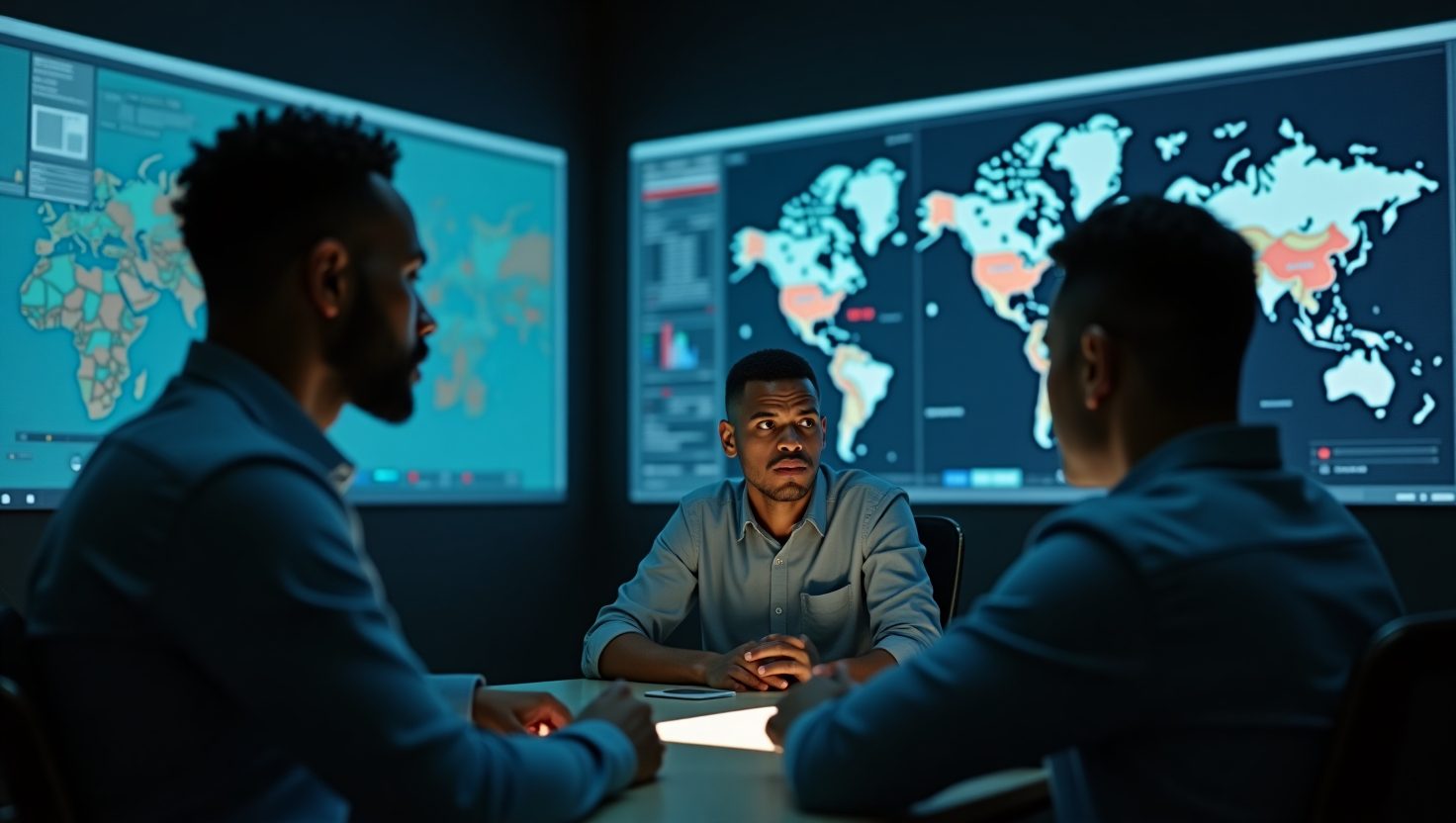
What Are We Even Protecting?
Before we get into the nuts and bolts, let’s be clear on the stakes. When we talk about critical infrastructure, we’re not just discussing company servers. We’re talking about the industrial control security for national power grids, water treatment facilities, transport networks, and the financial systems that underpin the global economy. For years, the defence strategy has been reactive. A breach happens, alarms blare, and a team of very clever people scrambles to patch the hole and clean up the mess.
This is fundamentally an unsustainable model. It positions defenders in a perpetual state of disadvantage. An attacker only needs to find one flaw, one unpatched vulnerability, one moment of human error. The defenders have to be perfect, all the time. It’s a fool’s errand. The sheer volume and cleverness of modern attacks, often state-sponsored and fiendishly complex, mean that something, eventually, will get through. The question is no longer if a breach will happen, but how catastrophic it will be when it does.
The AI Lifeguard for a Digital Tsunami
This is where the conversation shifts, moving from a discussion of bigger walls to one of smarter defences. This is the essence of AI critical infrastructure protection: embedding intelligence directly into the fabric of our core systems, teaching them not just to repel attacks but to anticipate them, adapt to them, and even heal themselves.
Think of it this way. A traditional firewall is like a bouncer at a club with a simple list of troublemakers. It’s effective, but only against known threats. An AI-powered security system, on the other hand, is like a team of medically-trained security experts who can spot signs of trouble before a punch is even thrown. They can see a subtle change in someone’s behaviour, predict their intent, and intervene seamlessly. They can also perform first aid on the spot. This is the leap from reactive to predictive, from brittle to resilient.
From Patching Holes to Predicting Them
One of the most compelling aspects of this new approach is predictive vulnerability patching. Instead of waiting for a software company to announce a flaw that sends every IT department into a frenzy, AI models analyse vast datasets of code, network traffic, and past attacks to forecast where the next weakness is likely to emerge. They can flag it, and in some cases, even deploy a temporary fix automatically, buying precious time for a permanent solution.
This concept extends to building self-healing networks. Imagine a section of the power grid’s control network comes under a novel attack. Instead of shutting down power for thousands while engineers figure it out, the AI detects the anomalous behaviour, isolates the compromised section in milliseconds, and reroutes essential commands through a secure, redundant pathway. The system doesn’t just block the attack; it absorbs the blow and carries on, often with no perceptible disruption to the end-user. The lights stay on.
Unifying the Defence: A Collective Intelligence
For too long, cybersecurity has been a profoundly lonely endeavour. A bank in London might get hit with a novel piece of malware, learn a painful lesson, and update its defences. Meanwhile, an energy company in Houston remains completely unaware of this new threat vector, leaving them vulnerable to the exact same attack a week later. This siloed approach is a gift to attackers.
A core tenet of modern AI critical infrastructure protection is the integration of cross-sector threat intelligence. By using AI to analyse anonymised threat data from different industries—finance, healthcare, energy, telecoms—we can build a far richer, more comprehensive picture of the threat landscape. A pattern that seems innocuous in one sector might be the missing piece of the puzzle that exposes a major campaign targeting another. Companies like AWS, JPMorgan Chase, and Siemens Energy are no longer just defending their own fortresses; they are contributing to and benefiting from a shared, intelligent defence network.
The Research Powering the Revolution
This isn’t just theoretical. A recent article in Citi Newsroom highlighted two groundbreaking research papers by Shaban Somah Amadu and his collaborators that lay out a practical blueprint for these next-generation defences. The work detailed in “How global industries can benefit from next-generation AI cybersecurity models” is not some far-off academic fantasy; it outlines deployable frameworks with staggering results.
One framework demonstrated:
– 97% accuracy in threat detection using advanced neural networks (CNNs).
– 91% accuracy in automatically translating complex regulatory rules into machine-enforceable security policies.
– Predictive models that could forecast system risks with an R² value of 89%—a remarkably high degree of accuracy.
These aren’t just incremental improvements. This is a step-change in capability. It means moving from a world where compliance is a manual, error-prone nightmare to one where it’s largely automated and continuous.
The Digital Twin: A Cybernetic sparring partner
Perhaps the most forward-thinking concept from Amadu’s research is the use of a secure “digital-twin” architecture. What does that mean in plain English? It means creating a perfect, living, virtual replica of a physical system—an entire power plant, a water distribution network, or a trading platform.
This digital twin isn’t just a static diagram. It’s a dynamic simulation. The researchers combined this twin with AI-based anomaly detection and a formal modelling technique called Colored Petri Nets (CPNs). The CPNs provide a mathematically rigorous way to model and verify every process. The AI acts as the brains, constantly watching the twin for anything out of the ordinary.
You can then unleash hell on this digital twin. You can simulate every known attack, and even invent new ones, without ever risking the real-world system. When the AI learns to defeat an attack on the twin, it instantly updates the security posture of the actual physical infrastructure. It’s like having a world-class sparring partner who knows every move your opponent is going to make before they even step into the ring. This is the future of industrial control security.
Are We Ready for an AI Arms Race?
The inevitable conclusion is that the future of cybersecurity is an AI-driven arms race. As defenders adopt these intelligent systems, attackers will respond with AI-powered attacks designed to fool them. The battle will be fought at machine speed, in a domain far beyond human capacity to manage manually.
For leaders at organisations like HSBC, the NHS, or Duke Energy, the message is clear. Clinging to reactive, human-centric security models is no longer a viable strategy; it’s a form of negligence. The cost of inaction isn’t a line item in an IT budget; it’s the potential for widespread societal disruption. The technology and the frameworks are here. The question now is one of will and vision.
Adopting AI critical infrastructure protection isn’t just another tech upgrade. It’s a fundamental shift in mindset from defence to resilience. But as we hand over the keys to our most essential systems to these autonomous agents, we must also grapple with the immense responsibility that comes with it.
What do you see as the biggest barrier to widespread adoption of these AI security models? Is it the financial investment, the lack of in-house expertise, or a cultural resistance to trusting AI with such critical decisions? The conversation is just getting started.



