

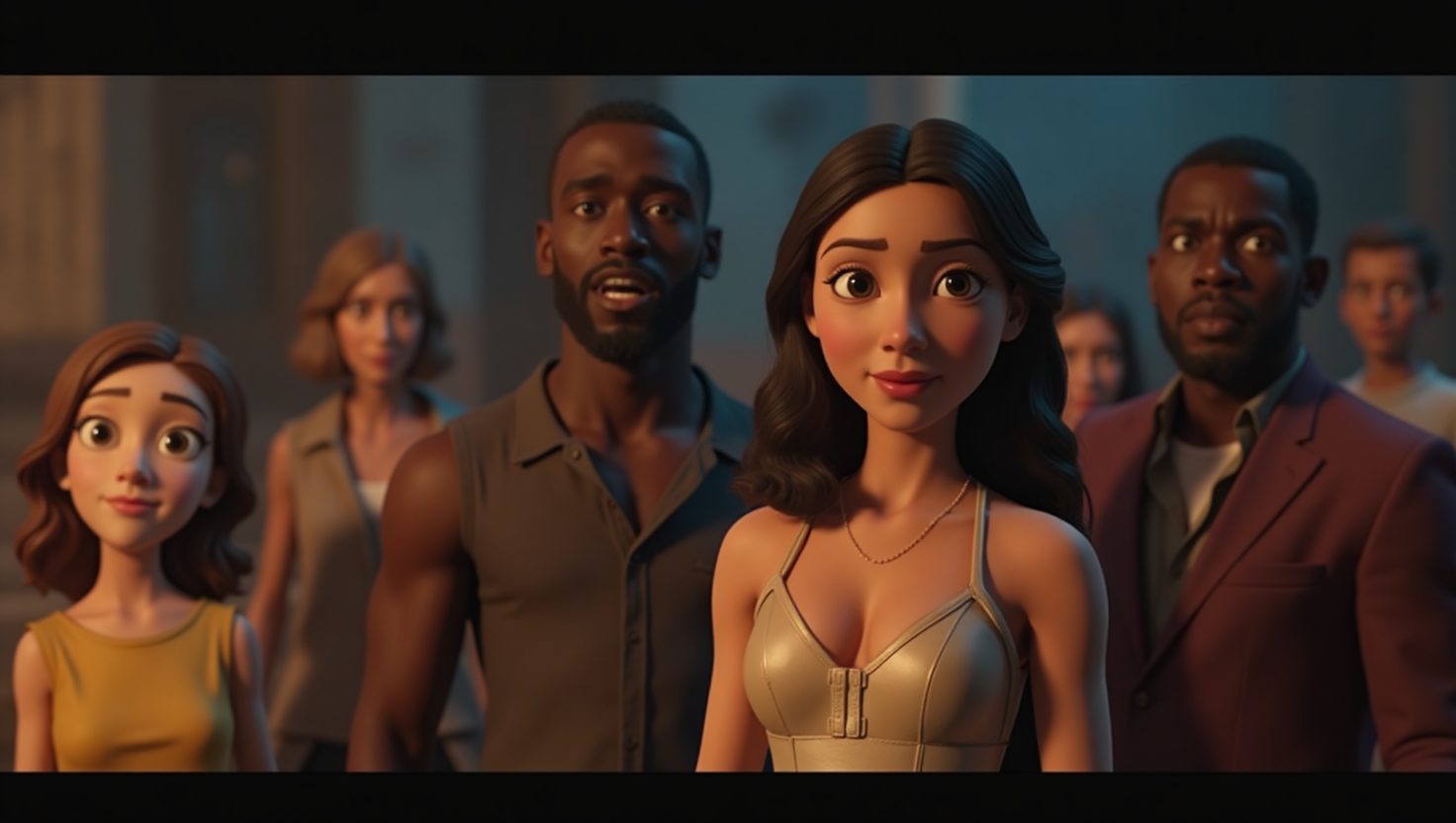
This deal means that by early 2026, you, me, and anyone with a ChatGPT account will be able to engage in AI character generation. We’re talking about creating images and videos featuring over 200 characters from the hallowed archives of Marvel, Star Wars, and Pixar. The implications are staggering, and frankly, a little terrifying.
So, What Is This AI Character Generation Anyway?
Think of it less as a simple image editor and more as a digital storytelling engine. Tools like OpenAI’s Sora video tool don’t just find a picture of Captain America; they can create a brand-new, entirely synthetic video of him doing… well, almost anything you can imagine.
It’s like giving an infinitely creative, and slightly unpredictable, jazz musician the sheet music to every Disney song ever written. They know the source material—the characters, the worlds—but the performance is entirely new each time. This is where the magic, and the potential for chaos, truly lies. You’re not just recolouring a picture; you’re co-creating a new scene, a new moment.
The Billion-Dollar Handshake: When Mickey Met the Machine
This is the first major studio deal of its kind, and it’s a monster. The agreement licenses a vast catalogue of beloved characters for use in OpenAI’s generative tools. But here’s the crucial caveat: the deal explicitly excludes the likenesses and voices of human performers. A smart, lawyer-driven line in the sand, but is it enough?
Why would Disney, a company famously litigious about a nursery school painting a mural of Mickey Mouse, do this? It’s a classic case of “if you can’t beat them, join them, but make sure you own the rulebook.” Disney CEO Bob Iger called the advancement of AI “an important moment for our industry,” which is corporate-speak for “we can’t ignore this, so we might as well monetise it.”
It’s a defensive strategy wrapped in an offensive one. By controlling the platform where its characters are used, Disney hopes to tame the wild west of generative AI. It’s an attempt to build a walled garden before the jungle grows too thick to manage.
The Copyright Maze Just Got a Minotaur
The Copyright implications here are a tangled mess. When a user prompts ChatGPT to create an image of Spider-Man swinging through London, who owns the resulting artwork?
– Is it the user, who provided the creative spark?
– Is it OpenAI, whose model did the heavy lifting?
– Or is it Disney, who owns the very essence of Spider-Man?
The law hasn’t caught up, and this deal forces the issue into the spotlight. What makes this particularly fascinating is Disney’s recent behaviour. According to a report from BBC News, Disney’s lawyers fired off a cease-and-desist letter to Google, accusing its AI model of copyright infringement “on a massive scale.” So, suing one tech giant while hopping into bed with another? It’s a bold, if slightly hypocritical, strategy. They are essentially saying you can’t use our IP… unless you pay us a billion dollars for the privilege.
Creative Expression or Creative Extinction?
For fans, this is a dream come true. Imagine crafting a short film where Grogu from The Mandalorian meets Wall-E, or creating a comic strip where Elsa has a conversation with Doctor Strange. This technology unlocks a new frontier for fan-fiction and creative expression, turning passive viewers into active creators.
But for the people who do this for a living, it’s a nightmare. Unions like Sag-Aftra and Equity, representing 170,000 media professionals worldwide, are sounding the alarm. Duncan Crabtree-Ireland, national executive director of Sag-Aftra, put it bluntly: “Everyone in the entertainment industry… are incredibly worried about what the implications are… nobody wants to see human creativity given away to AI models.”
They fear this is the first step towards automating creativity, devaluing the skills of writers, animators, and designers. While the current deal protects actors’ likenesses, the line between a character’s design and the artist who created it is blurry at best.
A New Era of Brand Partnerships
This alliance between Disney and OpenAI is a masterclass in modern brand partnerships. Disney gets to position itself at the forefront of the AI revolution, gaining invaluable data on how users interact with its characters. OpenAI gets a stamp of legitimacy and access to the most valuable character library in the world. It’s a powerful symbiosis, echoing other recent moves like Warner Music Group’s deal with the AI music generator Suno.
This partnership sets a powerful precedent. You can bet that executives at every other major studio are in emergency meetings right now, trying to figure out their own AI strategy. Do they build their own models? Or do they partner with an existing tech giant? Disney has made the first move on the chessboard, and now everyone else has to react.
The Ethical Minefield of Deepfakes and Job Security
Let’s not forget the darker side of this. The Sora video tool has already faced criticism for its ability to create convincing deepfakes. While the initial uproar was about historical figures, the potential for misuse with beloved characters is immense. What stops someone from generating offensive or brand-damaging content featuring Elsa or Mickey Mouse?
OpenAI and Disney will need a moderation system of Herculean proportions to police this. They will be walking a tightrope between enabling creativity and preventing a PR disaster. It is a monumental challenge of content moderation that makes YouTube’s struggles look like child’s play.
Beneath it all lies the very real fear for creative jobs. This deal is a signal that industries are looking to AI for efficiency and scale, and that often comes at a human cost. The unions’ concerns aren’t just about protecting the famous faces; they’re about protecting the entire creative ecosystem that brings these stories to life.
So, is this the dawn of a new age of interactive entertainment, or is Disney opening a Pandora’s Box it can’t close? This billion-dollar gamble will define the next decade of media, and we’re all going to be part of the experiment.
What do you think? Is this an exciting new tool for creativity, or a worrying step towards automated art? Let me know your thoughts below.



