

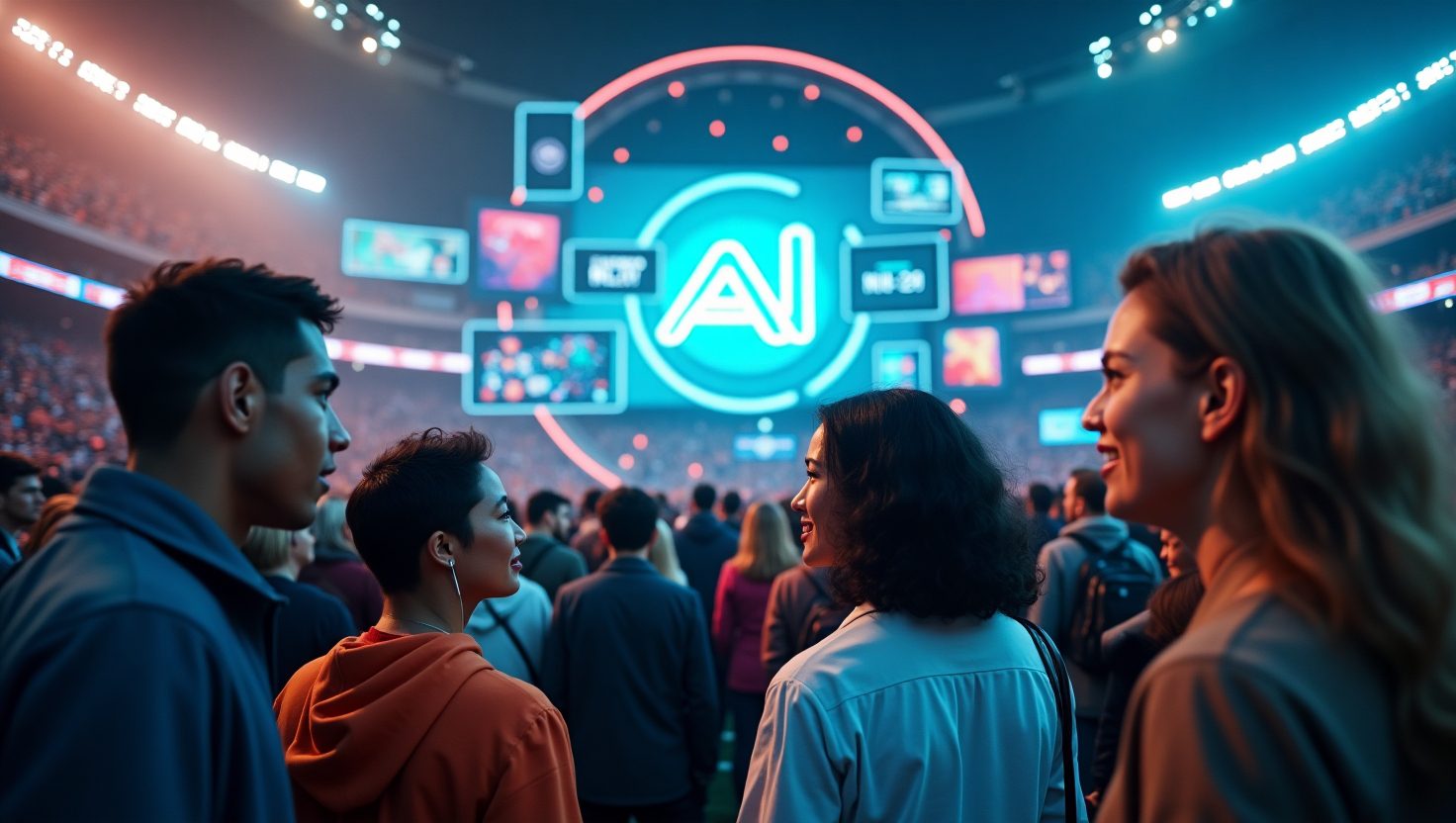
Of all the places for the artificial intelligence wars to erupt into a public street fight, I wouldn’t have put the Super Bowl high on my list. And yet, here we are. This year’s a gameday wasn’t just a showcase for athletic prowess and eye-wateringly expensive commercials; it was a loud declaration that AI brand marketing has moved out of the research lab and onto the world’s biggest advertising stage. The line between the technology being sold and the technology used to sell it is blurring faster than a running back on an open field.
For years, we’ve talked about technology commercials as a category. But 2026 was different. It wasn’t just brands showing off their shiny new AI features; it was AI itself taking a seat in the director’s chair and, in one memorable case, throwing a haymaker at a direct competitor. Welcome to the new front line of advertising.
So, What on Earth is AI Brand Marketing Anyway?
Let’s not get bogged down. At its core, AI brand marketing is about using artificial intelligence to shape how a company is perceived. For a long time, this meant behind-the-scenes work: crunching data to find the perfect customer or optimising ad spend. That’s the boring, plumbing part of the job.
The real shift, the one we just saw played out between tortilla chip ads, is the rise of generative AI advertising. This is about using AI to create the content itself—the images, the scripts, the videos. It’s like the difference between using a calculator to do your accounts and having an accountant who also happens to be a world-class artist, ready to paint you a masterpiece on demand. The potential is enormous, promising a future of hyper-personalised experiences. But right now, its biggest impact is in creating novel, headline-grabbing mass media moments.
Svedka’s Fembot: A Glimpse of the AI-Generated Future
And what a moment it was. Svedka, the vodka brand, made headlines by airing what it claims is the first Super Bowl commercial created primarily with AI. According to a TechCrunch report, they resurrected their iconic “Fembot” from the 90s, a process that took a dedicated team “roughly four months to reconstruct the Fembot and train the AI.”
Four months. Let that sink in.
This wasn’t a case of typing “futuristic robot sells vodka” into a prompt and calling it a day. This was a painstaking effort to guide and refine an AI model. The result was… interesting. A bit uncanny, a bit clunky, but undeniably a first.
The Real Value of an AI Ad
Was it the best commercial of the night? Probably not. But Svedka wasn’t just selling vodka; it was selling a story. The story is: we are so innovative, we had an AI make our ad. In a crowded market, that narrative is arguably more valuable than the 30-second spot itself. It generated press, got people talking, and positioned them as a forward-thinking brand. The ad’s quality was secondary to the method of its creation.
The New Canvas for Technology Commercials
Svedka may have used AI to build its commercial, but most other tech giants used their pricey ad slots to sell their AI-infused products. And the list was long:
– Meta showed off its Oakley-branded AI glasses.
– Amazon promoted Alexa+ and its Ring “Search Party” feature, which it claims has “helped reunite more than one lost dog with its owner every day.”
– Google had a spot for its supposed “Nano Banana Pro” (let’s be honest, who can keep up?).
– Even B2B players like Ramp and Rippling got in on the action, alongside consumer brands like Wix and Hims & Hers.
This flurry of activity signals a strategic pivot. AI is no longer a niche feature for early adopters. It’s the central pillar of the product. The challenge for these brands is transforming a complex, often invisible, technology into a simple, compelling message for millions. That’s the core job of mass media tech messaging today.
The Bare-Knuckle Brawl: Anthropic vs. OpenAI
But the real drama, the moment that had everyone in tech leaning forward, was Anthropic’s masterful piece of corporate trolling. While everyone else was showing what their AI could do, Anthropic focused on what its AI wouldn’t do.
Their ad was simple, stark, and brutal. The tagline landed like a punch to the jaw: “Ads are coming to AI. But not to Claude.”
This was a direct, unambiguous shot at rival OpenAI and its rumoured plans to introduce an ad-supported tier for ChatGPT. In the high-stakes, venture-capital-funded world of AI, this is the equivalent of pulling a fire alarm in your competitor’s headquarters. As TechCrunch noted, OpenAI chief Sam Altman was reportedly furious, calling the ad “clearly dishonest.”
Whether it’s dishonest or not is beside the point. It’s a brilliant strategic move. Anthropic positioned itself as the premium, user-focused, and trustworthy alternative. While OpenAI is wrestling with the messy business of monetisation, Anthropic is seizing the narrative, defining itself against its rival on the biggest stage imaginable. This is brand warfare, and generative AI advertising is the new weapon of choice.
What Happens Next?
This Super Bowl felt like a tipping point. So, what can we expect in the coming years?
First, the Svedka experiment will be refined. The novelty of an “AI-made ad” will wear off quickly. The next stage will be AI-assisted creation, where human creatives use these powerful tools to produce stunning work faster and cheaper than ever before. The line between human and machine-generated content will become impossible to see.
Second, the brand rivalries will only intensify. The Anthropic-OpenAI spat shows that the battle for AI dominance won’t just be fought over model performance and benchmarks. It will be a war of narratives, fought in public, for the trust of consumers. Ethics, privacy, and business models are now key brand differentiators.
Finally, we have to prepare for the inevitable endgame of AI brand marketing: true personalisation at scale. Imagine next year’s ads being subtly tailored to you, with different products, different voiceovers, maybe even different actors, all assembled on the fly by an AI that knows your viewing history, your recent purchases, and your emotional state. It’s both a marketer’s dream and a privacy advocate’s nightmare.
This year’s game has given us a clear message. AI isn’t just changing the products we use; it’s fundamentally changing how we’re sold on them. The companies that master this new form of mass media tech messaging will have a powerful advantage. The rest might find themselves on the losing side.
What do you think? Is an AI-driven ad future exciting or unsettling? Let me know your thoughts below.



