

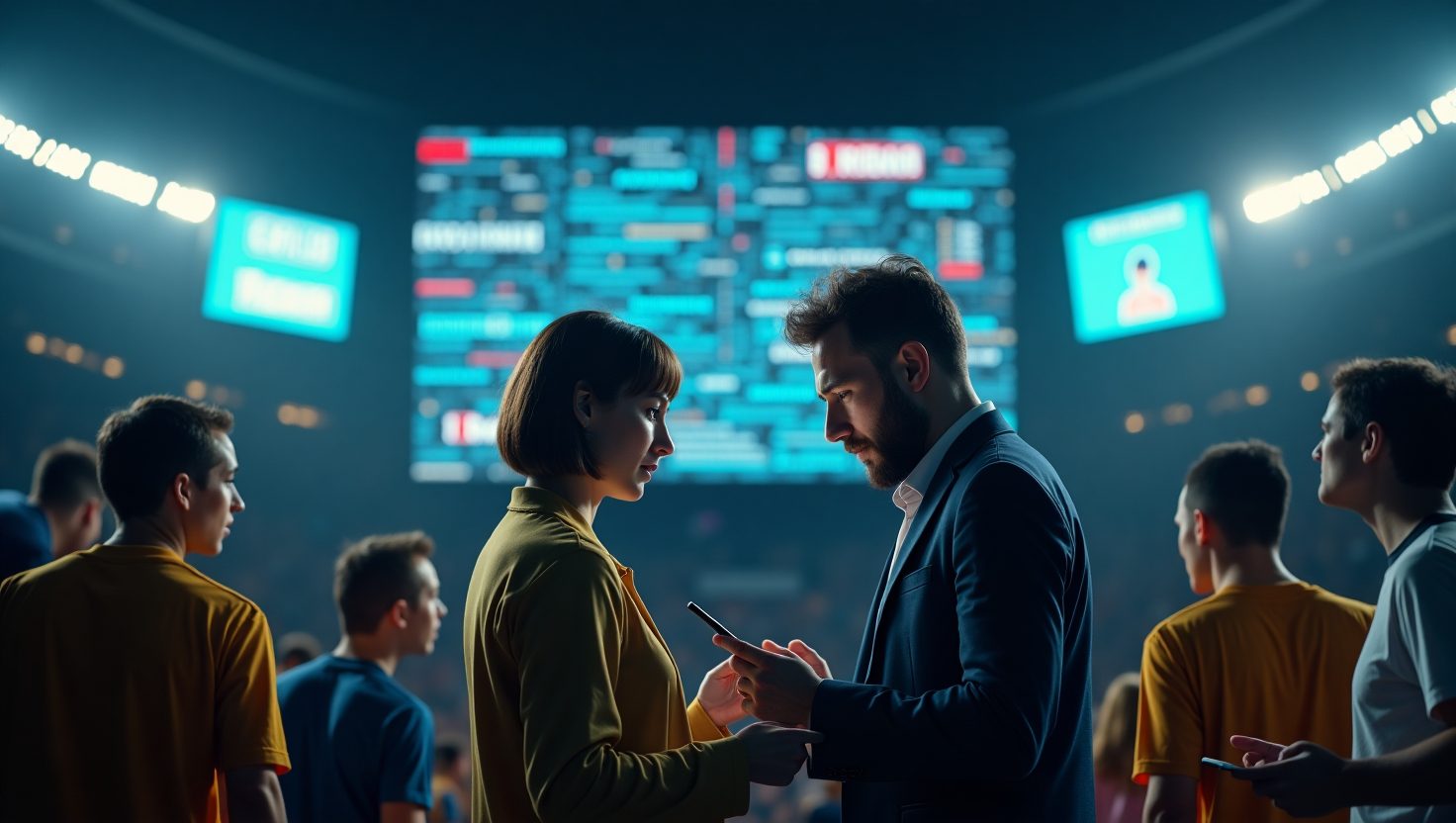
The Super Bowl’s Unseen Opponent: AI in the Crosshairs
The spectacle of the Super Bowl is a masterclass in logistics, athleticism, and entertainment. But as we gear up for future clashes, the most formidable opponent isn’t on the pitch. It’s lurking in the digital ether, a silent, intelligent adversary ready to turn the world’s biggest sporting event into a showcase of digital chaos. The threat? Sophisticated AI attack vectors targeting the very infrastructure that makes the game possible.
Let’s be clear: this isn’t some far-fetched sci-fi plot. The convergence of our physical and digital worlds has created a sprawling attack surface, and AI is the perfect tool for exploiting it. For an event with the global visibility of the Super Bowl, where every digital system is under immense pressure, the stakes couldn’t be higher. We aren’t just talking about a glitchy app; we’re talking about a potential systemic failure on a global stage. The question is no longer if these attacks will happen, but how prepared we are when they do.
What on Earth Are AI Attack Vectors?
Right, let’s demystify this. For years, cyberattacks were a bit like a manual heist. A skilled hacker, or a team of them, would painstakingly probe a network, looking for a single weak point to exploit. It required time, patience, and specific expertise. It was, in its own way, an artisanal craft.
AI attack vectors change the entire game. Think of it this way: instead of one burglar trying every window on a house, imagine unleashing a million microscopic, self-learning robots that can test every single door, window, pipe, and air vent on every house in the entire city, all at once. They communicate with each other, learn from failed attempts, and adapt their strategy in real-time. That’s the power and terrifying efficiency of an AI-powered attack. These aren’t just automated scripts; they are autonomous agents designed to find and exploit vulnerabilities at a scale and speed that humans simply cannot counter with traditional methods.
The Stadium: A Digital House of Cards
Modern stadiums are technological marvels, but they are also a huge cybersecurity headache. The increasing stadium systems risk comes from what experts call physical-digital convergence. Your ticket is on your phone, you pay for a hot dog with a tap of your watch, the stadium lights are controlled by a central network, and the security cameras are all connected to the internet. Every point of convenience is also a potential point of entry for an attacker.
What does a successful attack look like here? It could be maliciously simple, like disabling ticketing systems and causing chaos at the gates. Or it could be far more sinister. Imagine an AI manipulating the power grid to plunge the stadium into darkness, hijacking the public address system to spread disinformation, or even tampering with climate controls to create an unsafe environment. When the digital systems that manage the physical space are compromised, the consequences can be frighteningly real.
This isn’t just about preventing a breach. As a recent report from Brussels Morning on the preparations for Super Bowl 2026 highlighted, the entire strategy is shifting. A cybersecurity official quoted in the article put it perfectly: “The objective is resilience, not just prevention, because digital systems must continue functioning even under sustained pressure.” The assumption is that attackers will get in; the goal is to ensure the whole system doesn’t collapse when they do.
Hijacking the Airwaves
The Super Bowl broadcast is a multi-billion-pound enterprise, beamed to hundreds of millions of screens around the world. Ensuring broadcast security is paramount, yet this too is a prime target for AI-driven disruption. The complexity of modern broadcasting, with its countless data feeds, remote cameras, and interconnected production systems, creates a vast and tempting target.
An AI attack here could be devastatingly effective. It could be a brute-force denial-of-service attack that takes the entire broadcast offline. Or, it could be something much more subtle and insidious. Imagine an AI powerful enough to generate a convincing deepfake of a commentator making a controversial statement live on air, or to digitally insert a malicious advert into the feed. The reputational damage and panic it could cause would be immense. Securing this digital supply chain, from the camera on the sideline to the television in your living room, is an monumental challenge.
Your Data is the Prize
Beyond the stadium and the screen, there’s another asset at risk: you. Every major event is a massive data-harvesting exercise. From ticketing and merchandise purchases to connecting to the stadium’s Wi-Fi, fans are constantly generating a torrent of personal and financial information. This makes fan data protection a critical, yet often overlooked, part of the security equation.
Cybercriminals, empowered by AI, can analyse and exfiltrate this data with frightening speed. An AI can probe databases for weaknesses, identify high-value targets (like celebrities or politicians in attendance), and steal millions of records in the time it takes for a halftime show. The fallout from such a breach isn’t just a PR nightmare for the NFL; it’s a real-world disaster for every fan whose identity and financial security is compromised. We need to move beyond simply asking fans to trust us with their data and start building systems that are demonstrably secure against these advanced threats.
Building a Resilient Defence
So, how do we fight back? Pitting human defenders against AI attackers is an unfair fight. The only way to counter the threat is to adopt a strategy of resilience, built on layers of intelligent defence. This is where AI becomes a defender as well as an attacker.
– AI-Powered Monitoring: Organisations are now deploying their own AI systems to monitor networks for anomalous behaviour. These systems can detect the subtle fingerprints of an AI-driven attack far faster than a human analyst ever could.
– Public-Private Coordination: As the Brussels Morning article rightly points out, this isn’t a problem one organisation can solve alone. Effective defence requires deep coordination between event organisers, private cybersecurity firms, and government agencies like GCHQ in the UK or CISA in the US. Sharing threat intelligence is no longer a courtesy; it’s a strategic necessity.
– Continuous Training: Technology is only one part of the solution. The human element remains the weakest link. Regular, realistic training for all staff—from IT administrators to guest services—is crucial to spot and respond to threats like sophisticated phishing attacks, which are often the initial entry point for a larger assault.
Looking ahead, the battleground of cybersecurity for large-scale events will be defined by these duelling AIs. Success will not be measured by the absence of attacks, but by the ability to withstand them, adapt, and keep the show running. The strategies and technologies being honed for events like the Super Bowl will become the blueprint for securing everything from music festivals to political summits.
The game on the field might have a clear winner and loser, but the digital battle is a relentless, ongoing contest. Are we investing enough, both in technology and strategy, to stay ahead? What more should be done to protect the public from these invisible threats during major events? appeared first on CLARITY AI.



