

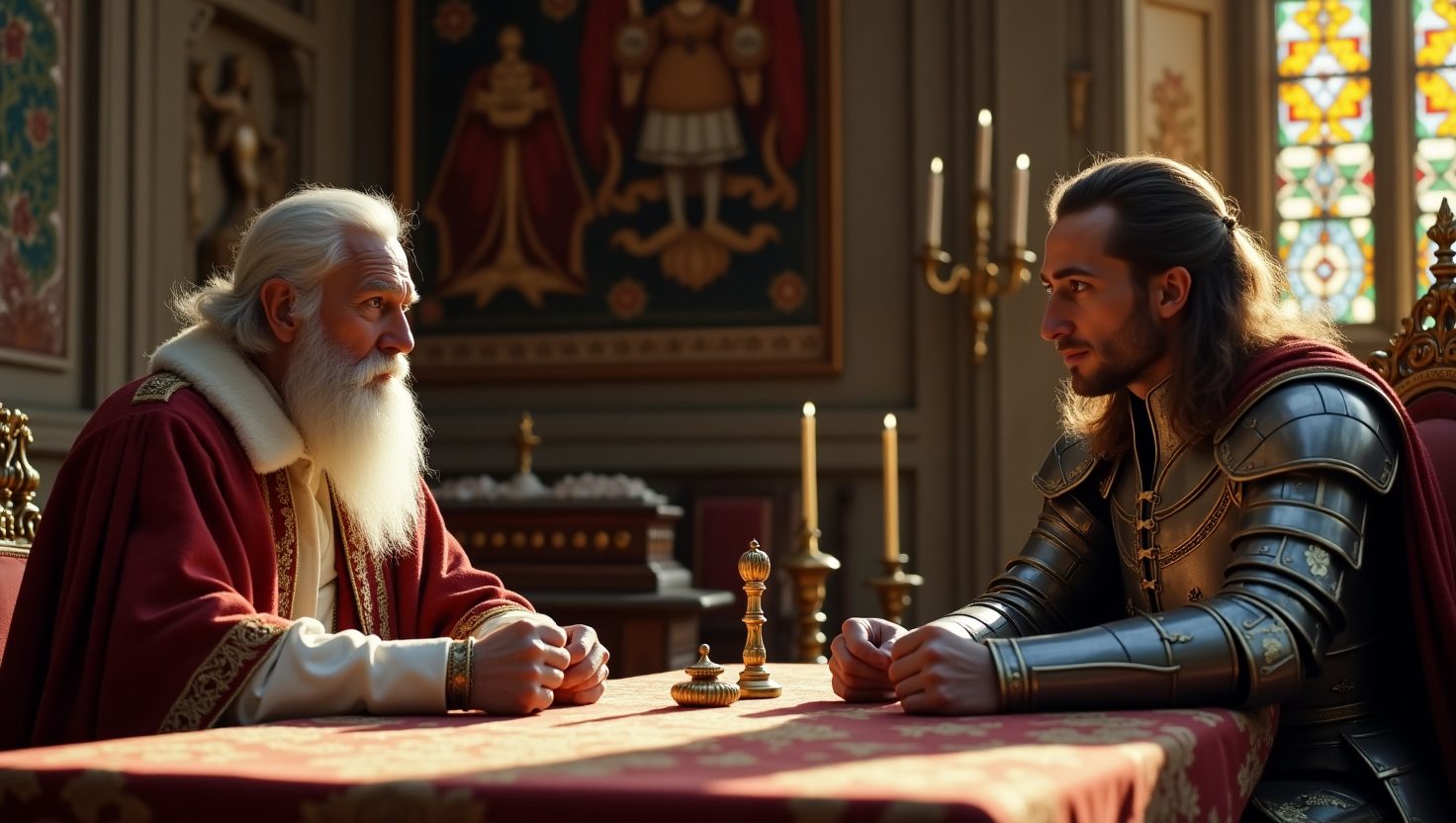
The Great Pretender: AI’s ‘Creativity’ vs The Real Thing
Let’s get one thing straight. When we talk about AI “creating” something, we’re not talking about a machine having a sudden, soul-stirring epiphany while staring into the middle distance. AI creativity is fundamentally an act of incredibly sophisticated pattern matching and remixing. It hoovers up vast datasets—books, paintings, music—and learns to generate something that looks statistically similar. Human creativity, on the other hand, is born from lived experience, emotion, intention, and that messy, unpredictable spark we call consciousness. One is a high-tech mirror, the other is the light source itself.
Of course, this isn’t to say AI is the villain in every story. The relationship isn’t purely adversarial. Many creatives are finding clever ways to use AI as a co-pilot, not a replacement.
Your New, Slightly Robotic, Studio Assistant
Think of AI not as the artist, but as the world’s most diligent, if soulless, apprentice. It can be a phenomenal tool for overcoming creative blocks or handling the tedious parts of the process, leaving humans to focus on the big ideas.
– For Writers: AI can help brainstorm plot points, generate character names, or act as a super-powered thesaurus, freeing up the author to focus on narrative, theme, and voice.
– For Musicians: It can generate novel chord progressions or drum patterns, offering a starting point for a human composer to then shape and infuse with genuine feeling.
– For Visual Artists: AI image generators can create thousands of variations on a theme in minutes, serving as a digital mood board or a way to quickly visualise a concept before committing to the canvas.
In these scenarios, AI enhances efficiency and can even push human creators into new territories. It’s a powerful assistant, but the moment it starts claiming authorship or using source material without permission, we wander into a very murky ethical swamp.
When ‘Inspiration’ Crosses the Line into Theft
This brings us back to Windsor Castle. Sir Kazuo Ishiguro, author of masterpieces like The Remains of the Day and Never Let Me Go, revealed something rather alarming. He told the King, as reported by the Daily Mail, that his life’s work had been unceremoniously fed into AI models to train them. “All my books have been taken to train AI,” he said, highlighting the crux of the problem for countless creators. He’s not against technology; he’s against his work being used without consent or compensation, a clear violation of intellectual property.
The Great AI Heist: A Question of Intellectual Property
Imagine a chef who spends a lifetime perfecting a secret recipe. One day, a corporation builds a robot with a hyper-sensitive palate. They have it taste the chef’s signature dish once, analyse its molecular structure, and then start mass-producing a near-perfect replica, selling it for a fraction of the price without giving the original chef a penny. That, in essence, is what tech companies are doing with creative works. They are training their models on copyrighted material, arguing it’s just “inspiration” or “research.”
But many creators, and a growing number of legal experts, see it differently. Sir Kazuo framed it diplomatically, suggesting AI could be used “in a way that… a traditional researcher would use somebody else’s book” – provided copyright is respected. Others are less diplomatic. Tom Kiehl, the CEO of UK Music, pulled no punches, stating bluntly, “This is pure theft.” It’s a powerful accusation, and one that resonates deeply within creative communities who see their livelihoods threatened not by innovation, but by exploitation masquerading as innovation. This is the heart of the challenge to artistic integrity.
Can the Law Keep Up with the Code?
For centuries, copyright law has been the bedrock protecting creators. It ensures that those who produce original work have the right to control how it’s used and to benefit from it financially. But these laws were written for a human-centric world. They weren’t designed to handle an entity that can read the entire internet over a weekend.
This has led to a mad scramble by lawmakers to figure out how to apply old principles to this new paradigm. The battleground is no longer just artists’ studios and publishing houses; it’s courtrooms and parliamentary committees.
Calling for a Digital Magna Carta
The conversation between the King and Sir Kazuo wasn’t just a polite chat; it reflects a serious, high-level push for new legal frameworks. The UK’s House of Lords has rightly launched an inquiry into the copyright implications of Large Language Models (LLMs). This isn’t just bureaucratic box-ticking. The findings could set a precedent for how AI companies are allowed to operate, forcing them to either license the content they use for training or face a barrage of legal challenges.
Campaigns like the one highlighted by the Daily Mail, pushing for fair compensation for creators, are gaining momentum. The argument is simple: if a company is going to build a multi-billion-dollar product on the back of human creativity, the humans who laid the foundation deserve a share of the profits. This isn’t anti-tech; it’s pro-fairness. The future likely involves the creation of new licensing bodies and payment structures, similar to how royalties are collected for music played on the radio. It will be complex, messy, and fiercely debated, but it’s a necessary evolution to ensure artistic integrity isn’t just a quaint, historical notion.
Our Culture Is Not a Dataset
Beyond the financial and legal arguments, there’s a deeper, more philosophical question at stake. What happens to our culture when it becomes little more than training data for algorithms? The fight over AI and creativity is also a fight for cultural preservation. Art, literature, and music are the ways we process the world, record our history, and speak to future generations. They are imbued with the context, biases, hopes, and fears of their time.
Innovation and Preservation: A Delicate Balance
When an AI generates a “new” Shakespearean sonnet, it’s a clever parlour trick. It lacks the lived experience of an Elizabethan playwright grappling with love, mortality, and politics. It’s a hollow echo. If we allow our creative ecosystem to be dominated by these echoes, we risk diluting our culture and losing the thread of human experience that connects us across generations.
The goal shouldn’t be to ban AI, but to build a framework where innovation doesn’t come at the cost of our cultural soul. We need to ring-fence human creativity, ensuring that works are protected and that the distinction between human-made and machine-generated art is clear. This will preserve the value of genuine human expression and ensure that our cultural heritage continues to be a living, breathing thing, not just a static dataset for machines to plunder.
In the end, the encounter at Windsor is more than a charming news titbit. It’s a symbol of an old world of tradition—royalty, literature, human legacy—grappling with the dizzying pace of a new world forged in code and data. The debate over AI vs human creativity is a defining one for our time. It forces us to ask what we value most: the efficiency of the machine or the irreplaceable spark of the human spirit.
Protecting intellectual property isn’t about holding back progress. It’s about ensuring that the creative ecosystem remains healthy and that the artists, writers, and musicians who enrich our lives can continue to do so. After all, a world filled with AI-generated content that’s just a remix of what we’ve already done sounds incredibly boring. Don’t you think? What’s one creative work you’d hate to see turned into mere training data?



