

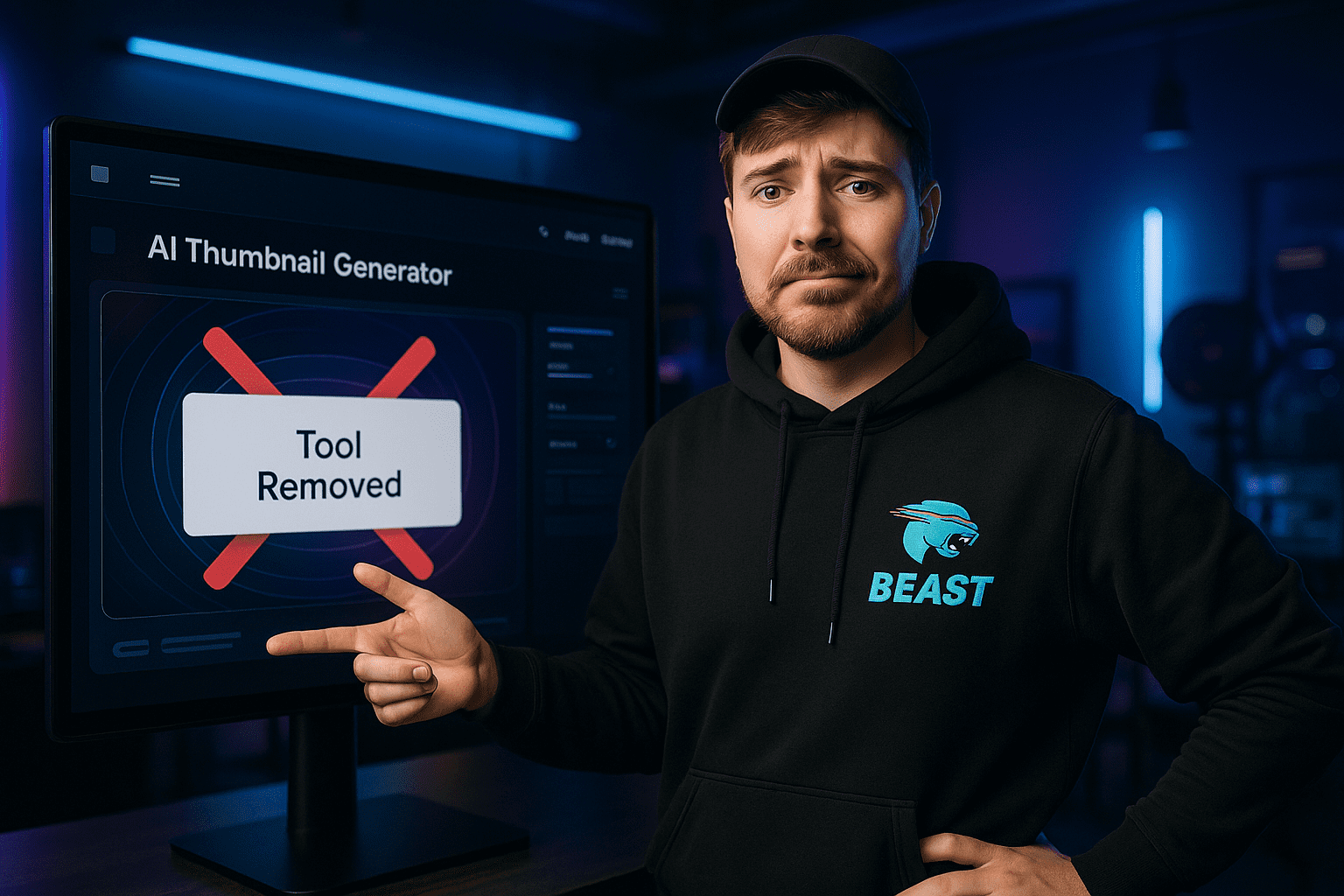
MrBeast, the YouTube titan known for his elaborate stunts, eye-watering giveaways, and relentless pursuit of the perfect thumbnail, recently found himself in hot water. It wasn’t for burying a friend alive or giving away an island, but for something far more mundane yet, in this age, potentially more perilous: a new AI tool. His team launched something called ‘Viewstats Pro’, pitched as a helper for creators to conjure up snappy titles and eye-catching thumbnails – essentially, giving others a sprinkle of that MrBeast magic. But shortly after its debut, ‘Viewstats Pro’ sparked significant controversy. Why the backlash? Turns out, the tool’s features raised serious ethical questions, particularly regarding the unauthorized use or replication of other creators’ content and styles.
The Promise of AI in the Creatorverse
Let’s be honest, the world of online content creation, especially on platforms like YouTube, is brutally competitive. Getting noticed is everything, and that tiny square image – the thumbnail – is often the first, and sometimes only, chance you get to grab someone’s attention as they scroll through a feed. It’s an art form in itself, a blend of psychology, graphic design, and sometimes, pure clickbait.
Enter AI. The promise is intoxicating: a tool that can analyse trends, predict what works, and whip up variations faster than any human designer. For creators juggling filming, editing, promotion, and trying to have a life, an AI thumbnail generator sounds like a godsend. Imagine feeding it your video concept and getting back a dozen options instantly. That’s the power the Viewstats Pro AI tool was supposed to unlock, promising to democratise a piece of the optimisation wizardry that fuels top channels.
AI Sparks Controversy
But this particular AI experiment quickly ran into trouble. Almost immediately after the launch, users and prominent creators started raising alarming concerns. The issue wasn’t the generation of inappropriate content like sexualized imagery; instead, the controversy centered on the tool’s ability to replicate the style and even specific elements of existing, successful thumbnails, potentially without the original creator’s explicit consent. Features like face-swapping were highlighted, raising questions about the ethical boundaries of using AI to mimic or alter people’s likenesses and creative work.
Think of it like giving someone a powerful tool that makes it incredibly easy to borrow heavily from or directly mimic the unique style and branding of others. It sparked a debate about originality, copyright, and the very nature of creative effort in the age of AI. The backlash was swift and severe, as it rightly should have been when ethical and copyright issues arise. MrBeast’s team acknowledged the reports and concerns raised by the community.
Why Does This Keep Happening?
This isn’t the first time an AI tool has sparked controversy regarding ethical implications or content sourcing, and sadly, it likely won’t be the last. So, what’s going on? Are we just rushing these tools out the door without enough thought?
One big challenge lies in the training data. Generative AI models learn from massive datasets scraped from the internet. And let’s face it, the internet contains *everything*, including vast amounts of copyrighted material and personal likenesses. While the core issue with Viewstats Pro appears to be its *functionality* related to replication rather than generating harmful content from polluted data, the incident still highlights how AI trained on internet-scale data can easily run into ethical or legal issues related to copyright, attribution, and consent if not designed with extreme care. Ensuring an AI respects existing creative works and personal rights while being a powerful creative assistant is incredibly difficult. It requires robust ethical frameworks, careful feature design, constant monitoring, and sophisticated safeguards – things that are clearly still works in progress for many developers, including, it seems, those behind the Viewstats Pro AI tool.
There’s also the immense pressure in the tech world and the creator economy to move fast. “Launch quickly, iterate later” is often the mantra. But with AI that interacts with sensitive areas like personal likeness, creative work, and community dynamics, this approach carries significant risks. The potential for ethical missteps, backlash, and damage to community trust is high. This incident serves as a stark reminder that when dealing with AI, especially tools that build upon or interact with human-created content, ethical considerations and anticipating community reaction aren’t just checkboxes; they are fundamental requirements.
The Broader Implications of AI Controversy
This incident involving a tool linked to such a prominent figure like MrBeast highlights several crucial points about the current state of AI in creative fields:
- Speed vs. Ethical Safeguards: The rush to deploy AI tools can mean ethical considerations and anticipation of community impact play catch-up, with consequences ranging from reputational damage to serious ethical breaches.
- Developer Responsibility: Even when building tools for others, the onus is on the developers to implement stringent safeguards against unauthorized use of content, infringement of likeness, and other ethical pitfalls. Linking your name, particularly a massive one like MrBeast’s, to a tool perceived as ethically questionable carries significant risk.
- AI Ethics is Not Optional: Incidents like this underscore the urgent need for comprehensive ethical frameworks and rigorous testing before deploying AI tools that interact with potentially sensitive content (like existing creative works) or personal data (like faces).
The goal of using YouTube AI tools for AI content creation is understandable – efficiency and optimisation are key to growth. But releasing tools without fully anticipating ethical dimensions proved challenging. It’s a cautionary tale for anyone looking to jump on the AI bandwagon without thoroughly understanding the potential ethical pitfalls and building in robust safeguards and community feedback loops.
It also makes you wonder about the pressure on smaller developers. If even a team backed by MrBeast faces significant ethical scrutiny with an AI tool, what hope do independent developers or individual creators have when trying to build or use these complex tools responsibly? The access to powerful AI models is increasing, but the understanding of their ethical dangers and the tools/frameworks to manage them aren’t keeping pace.
What Next for Creator AI?
The dream of helpful AI assistants for creators is far from over. The potential benefits – faster workflows, better optimization, new creative possibilities – are too significant to ignore. But this incident must serve as a wake-up call. The focus needs to shift, or at least balance, from speed and capability to ethical design, transparency, consideration for community impact, and responsible implementation.
Perhaps future AI thumbnail generators or similar tools will need features that explicitly require consent for style mimicry, offer clear attribution options, provide granular control over how elements from training data are used, and involve human oversight stages for outputs that could be perceived as replicative or infringing. Developers need to anticipate not just how users *will* use the tool, but how features *could* be used to potentially disrespect or infringe upon the work of others, intentionally or otherwise.
MrBeast’s team responded to the backlash and concerns raised by the community, promising changes and addressing the feedback. This shows a level of responsibility in iterating based on real-world ethical challenges, albeit after the initial controversy. But the incident itself highlights the challenges developers face in deploying powerful AI technologies with adequate ethical foresight and consideration for community impact and existing creative ecosystems.
This isn’t just a story about a YouTube star and a controversial app feature. It’s a micro-story within the much larger narrative of how we, as a society, grapple with the power and the peril of artificial intelligence as it rapidly integrates into every corner of our lives, from how we get our news to how we create content. The peril here wasn’t harmful *generated* content, but the ethical and community disruption caused by features that seemed to facilitate the mimicry or unauthorized use of existing human creativity.
So, as AI continues its march into the creative industries, who is ultimately responsible for ensuring these tools respect creators and their work? The developers? The platforms? The users? Or is it a shared responsibility that requires better collaboration, clearer guidelines, and potentially, regulation?
What are your thoughts on this incident? Have you experimented with AI tools for content creation? Were you aware of the potential for such ethical controversies and community backlash?



