

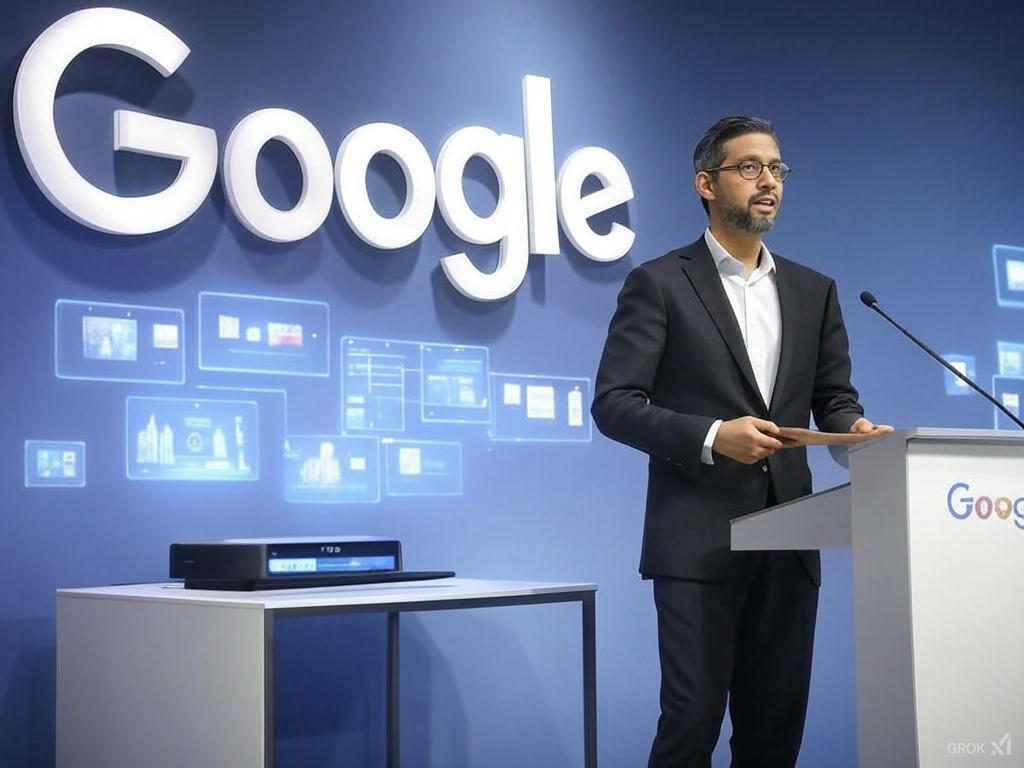
Right then, let’s talk about Google and chips, shall we? It seems even the giants of Silicon Valley are feeling the pinch these days. Word on the street, or rather, whispers from the ever-reliable sources in Taiwan, is that Google might be turning to MediaTek – yes, that MediaTek – for its next generation of AI processors. Now, before you choke on your morning cuppa, let’s unpack why this is actually quite a big deal, and what it tells us about the ever-shifting sands of the tech world.
Google and MediaTek: An Unlikely Chip Romance?
For years, Google has been flexing its silicon muscles, designing its own Google chips, particularly for those power-hungry AI workloads in its vast data centres. Think about it – the engine behind search, YouTube recommendations, and now, the ever-present AI chatbot craze. That’s a lot of processing grunt needed, and Google, like many of its Big Tech brethren, has been on a quest for custom silicon to give them an edge. But designing and manufacturing your own chips? Let’s be honest, it’s a pricey business, and perhaps even Google is starting to think about the bottom line a bit more closely.
The Cost Conundrum of AI
Let’s face it, AI processors aren’t cheap. We’re talking about bleeding-edge technology, complex designs, and manufacturing processes that make watchmaking look like child’s play. And with the explosion of AI applications, the demand for these chips is going through the roof. This is where MediaTek AI processors enter the frame. Traditionally known for smartphone chips – decent ones, mind you, powering millions of devices – MediaTek isn’t usually mentioned in the same breath as data center AI chips. But times, they are a-changin’.
Why MediaTek for Google? Think Chip Cost Reduction
The rumour mill suggests that Google is looking at MediaTek chips specifically to bring down the cost of its AI processors. Now, this isn’t to say MediaTek is just about cheap and cheerful. They’ve been steadily climbing the performance ladder, and their expertise in Arm processors is nothing to sniff at. In fact, the article points to these being Arm processors from MediaTek, which is increasingly the architecture of choice for efficiency and scalability in data centres. So, it’s not just about being cheap; it’s about being smart about chip cost reduction.
Diversifying the Chip Supply Chain: Not Putting All Eggs in One Basket
Another plausible angle to this story is supply chain resilience. Relying on a single or even a small group of Google chip suppliers can be risky, as the past few years have shown us with chip shortages and geopolitical uncertainties. By potentially bringing MediaTek into the fold, Google is looking to Google diversify chip supply for AI. It’s a sensible move, really. Having more options on the table gives you more leverage, more flexibility, and frankly, a bit more peace of mind in a world that feels increasingly unpredictable.
The Strategic Implications for Google’s Data Center Chip Strategy
So, what does this all mean for Google’s grand Google data center chip strategy? Is this a sign that they’re scaling back on their in-house chip ambitions? Probably not entirely. Google is still likely to continue developing its own top-of-the-line, custom silicon for the most demanding AI workloads. But for a significant chunk of their data center processors needs, especially where cost sensitivity is important, MediaTek Arm AI processors for Google could be a very shrewd move. It allows Google to balance performance with cost, and to have a more robust and diversified supply chain.
MediaTek: From Phones to Data Centers?
For MediaTek, this potential deal with Google is a massive opportunity. It’s a clear signal that they are serious players in the AI processors market, and not just for your pocket gadget. It’s a validation of their technology and their ability to compete in the big leagues of data center AI chips. If they can pull this off, it could catapult MediaTek into a whole new realm of chip design and manufacturing, moving beyond the smartphone market and into the lucrative world of data center processors.
Cheaper AI Processors: Good News for Everyone?
Ultimately, the pursuit of cheaper AI processors for Google, and indeed for the entire industry, has broader implications. Lower costs can democratise AI, making it more accessible to more businesses and developers. It can accelerate innovation and drive down the price of AI-powered services and products that we all use every day. Of course, performance can’t be sacrificed at the altar of cost, but finding that sweet spot – where you get good enough performance at a more palatable price – that’s the holy grail. And Google exploring MediaTek Arm AI processors for Google suggests they are seriously hunting for it.
Questions Still Lingering
Of course, this is all still in the realm of rumour and report. Neither Google nor MediaTek are exactly shouting this from the rooftops just yet. But the whispers are persistent, and they make a lot of strategic sense. Will this partnership actually come to fruition? Will MediaTek chips become a significant part of Google’s data center processors landscape? And what does this mean for other chipmakers vying for a piece of the AI pie? These are all questions we’ll be watching closely in the coming months. One thing is for sure: the AI processors market is heating up, and the game is changing faster than ever.
What do you reckon? Is Google making a smart move by considering MediaTek? Is this the beginning of MediaTek’s data center dominance? Let us know your thoughts in the comments below!



