

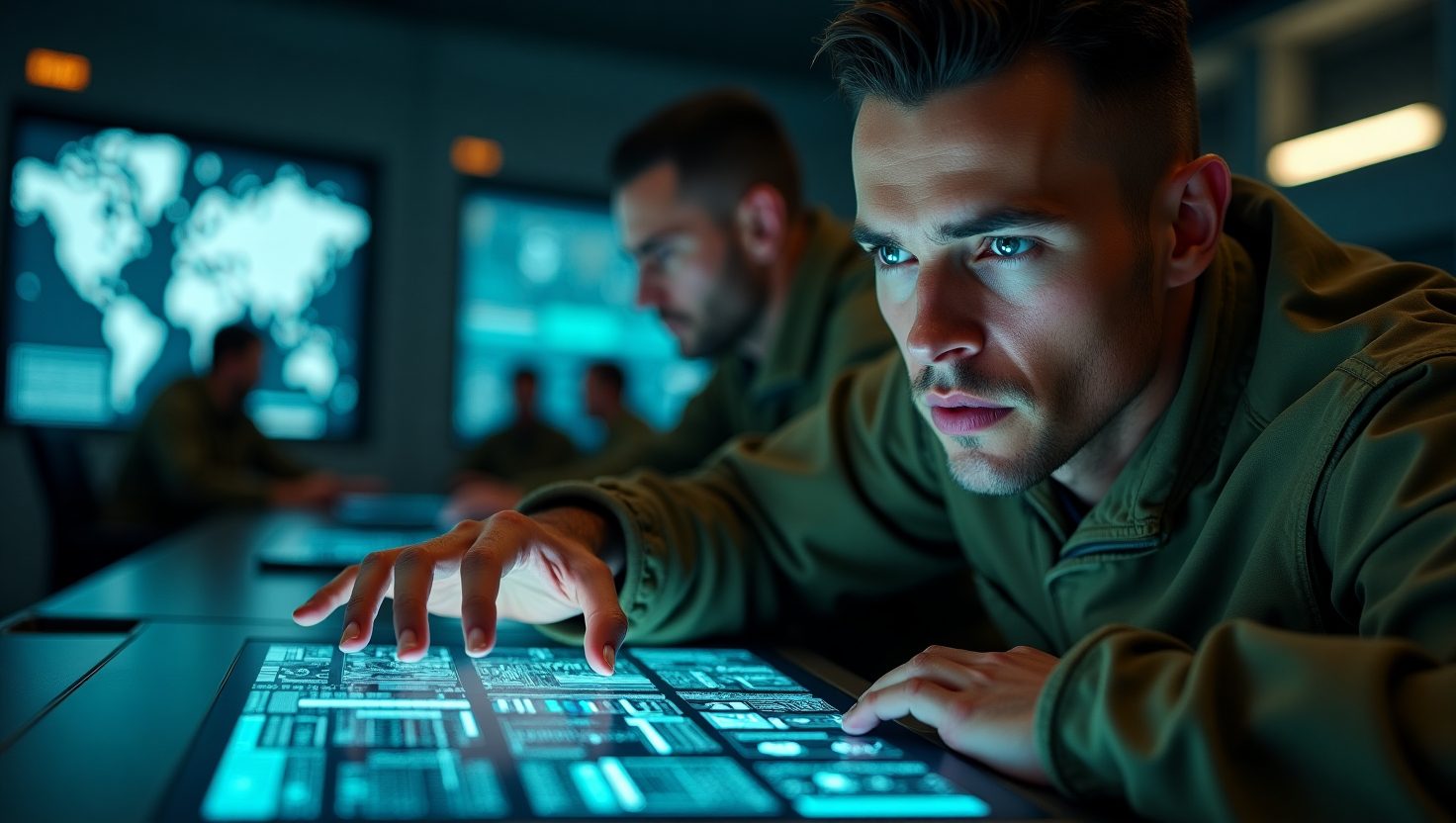
The age of artificial intelligence in warfare isn’t some far-off concept from a science fiction film. It’s happening right now, in the servers and systems that underpin modern national security. The real question isn’t if AI will reshape defence, but whether governments and military organisations are truly prepared for the profound changes it brings. This isn’t just about killer robots; it’s a fundamental shift in strategy, security, and the very nature of conflict.
What we’re seeing is a mad dash to gain a strategic advantage, with nations pouring resources into defense AI. But as with any powerful new tool, haste can lead to catastrophic mistakes. Getting this right means navigating a minefield of technical challenges and ethical dilemmas, especially in the realms of military applications and cyber warfare.
So, What Are We Really Talking About?
When people hear defense AI, their minds often jump to autonomous drones and Hollywood-style terminators. While those are part of the long-term picture, the reality today is both more subtle and more impactful. At its core, defense AI is about using machine learning and data analysis to make better, faster decisions than a human ever could.
Think of it less as a soldier and more as the world’s most brilliant, tireless staff officer. It’s an engine for processing unimaginable amounts of data—from satellite imagery and signals intelligence to logistics reports and threat assessments. Its job is to spot patterns, predict enemy movements, identify vulnerabilities, and suggest courses of action in milliseconds. For today’s defence strategies, that speed and insight isn’t just helpful; it’s becoming essential.
The Double-Edged Sword: AI on the Frontline
The integration of AI into military applications is where the potential for a genuine strategic advantage becomes crystal clear. We’re already seeing this in action. AI algorithms are being used to pilot reconnaissance drones on long, dull surveillance missions, freeing up human pilots for more complex tasks. They’re helping to manage the immense logistical challenge of supplying a modern army, predicting maintenance needs for vehicles and optimising supply chains to prevent critical shortages.
These systems offer a distinct edge. An AI-powered command and control system can analyse incoming missile threats and recommend the best defensive action far quicker than a human crew. This isn’t about replacing human judgement but augmenting it, allowing commanders to make critical decisions with more information and more speed than their adversaries. The nation that masters this cycle of data, analysis, and action will hold a significant upper hand.
But there’s always a catch, isn’t there? Every new capability brings a new vulnerability.
The Digital Battlefield: AI as Shield and Target
Nowhere is this double-edged nature more apparent than in cyber warfare. On one hand, AI is a game-changer for cyber defence. AI-powered security tools can monitor networks for unusual activity, identifying novel threats and zero-day exploits that would slip past traditional signature-based antivirus software. They can learn the ‘normal’ behaviour of a network and instantly flag any deviation, essentially acting as a digital immune system.
However, the rush to deploy these tools comes with a heavy price, a point a senior US official recently highlighted. Alexandra Seymour of the Office of the National Cyber Director (ONCD) put it perfectly in a recent statement reported by CyberScoop: “We want to ensure that as Americans, companies and agencies deploy AI to defend themselves, they are not inadvertently making themselves more vulnerable by widening the attack surface.”
This is the central paradox. It’s like installing a dozen new high-tech smart locks on your fortress. It feels more secure, but if each lock has a tiny, hidden software flaw, you’ve just given an intruder a dozen new ways to get in. Every AI system you add to your defence network is another piece of complex code that can be attacked, manipulated, or fooled. Balancing the innovation of AI with the risk of creating new security holes is the defining challenge in cyber warfare today.
The People Problem: Who Is Going to Run This Thing?
You can have the most advanced AI on the planet, but it’s utterly useless without smart people to build, manage, and correctly interpret it. This is arguably the biggest bottleneck for Western nations: a critical shortage of talent. The challenge isn’t just about hiring more coders; it’s about building an entire ecosystem of workforce development.
The US government seems to understand this. According to the same CyberScoop report, a key part of the forthcoming national cyber strategy is a focus on consolidating training programmes. The goal, as Seymour explained, is to “build a workforce pipeline that is clear, accessible and responsive to cyber skill gaps, including those related to emerging technologies such as AI and quantum.”
This isn’t just bureaucratic shuffling. It’s a strategic necessity. They are looking at models like Israel’s famous Unit 8200, an elite intelligence corps that acts as a de facto national technology academy. This unit identifies the brightest young minds in the country and immerses them in cutting-edge technology and problem-solving. This creates not only a pool of highly skilled military personnel but also a generation of tech entrepreneurs who go on to found major companies after their service. Building a similar, cohesive pipeline is crucial if a nation wants to maintain a long-term strategic advantage.
The Real Prize: The Unassailable Strategic Edge
When you pull all these threads together—superior technology, robust cyber defences, and a highly skilled workforce—you see the true endgame. The ultimate goal of defense AI is to create a compounding strategic advantage that makes a nation’s military more effective, resilient, and formidable.
This isn’t just about winning a single battle. It’s about achieving a level of operational and informational dominance that can deter conflicts before they even begin. It’s about having a military that can think, adapt, and react faster and more intelligently than any rival. The implications are enormous, potentially altering the global balance of power for decades to come.
The future of national security will be defined by how well nations integrate AI. Those that do it clumsily, without addressing the security vulnerabilities or the talent pipeline, will find themselves at a severe disadvantage. Those that get it right, however, will secure their position on the world stage.
This is a technological arms race, but the finish line isn’t a weapon; it’s a fully integrated, AI-driven defence ecosystem. The race is on, and failing to compete isn’t an option.
What do you think is the biggest hurdle to successfully implementing defense AI: the technology itself, the ethical concerns, or finding the right people?



