

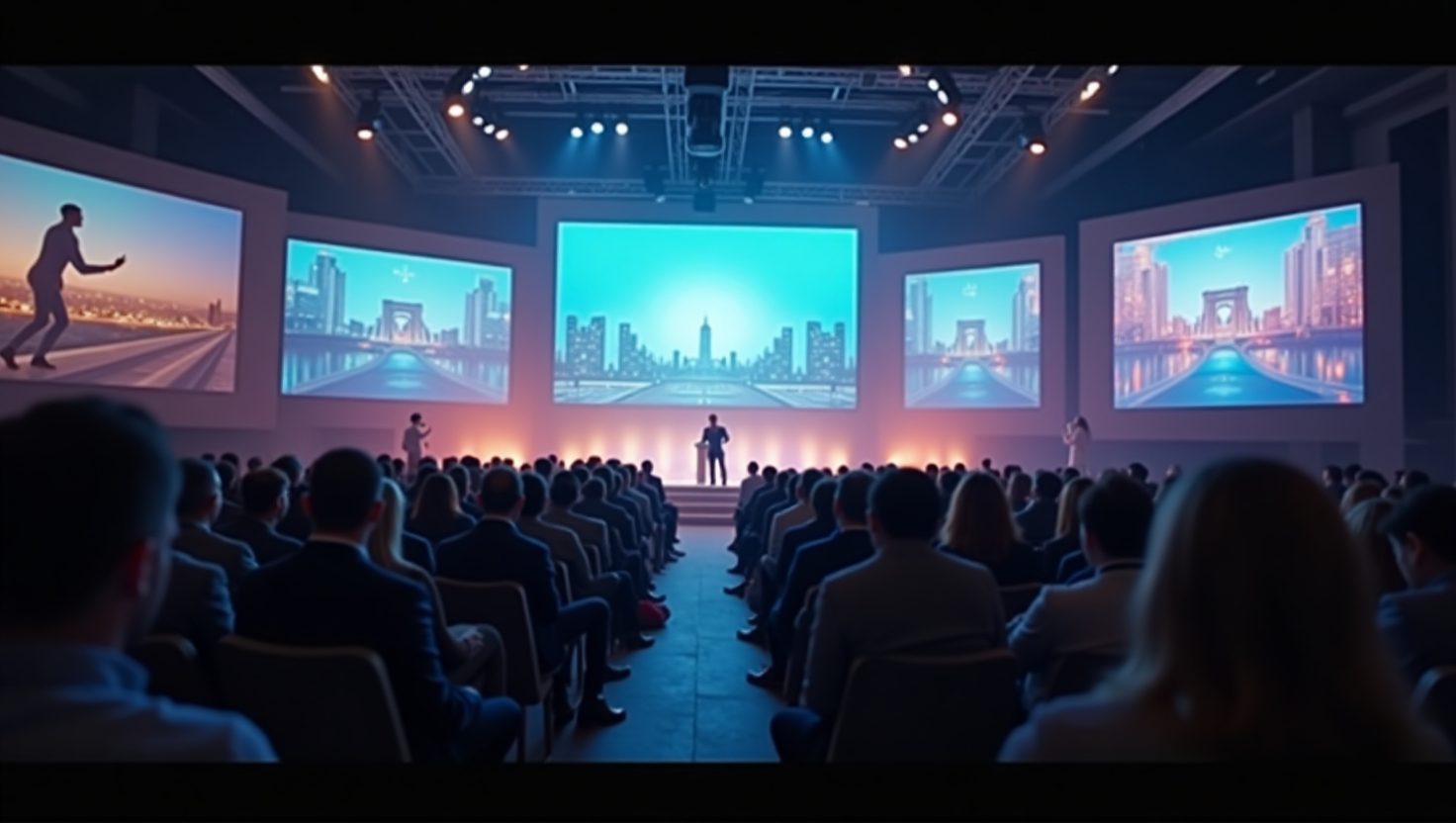
You’ve spent months, perhaps years, planning a global summit. You’ve corralled delegates from over 100 countries, secured the Indian Prime Minister, and landed the biggest names in tech. Then, days before the curtain goes up, your star keynote speaker, Bill Gates, becomes entangled in a high-profile controversy. What on earth do you do? This isn’t a hypothetical; it’s precisely the mess that unfolded at India’s AI Impact Summit in Delhi, as reported by the BBC. It serves as a masterclass in the brutal reality of modern summit management.
This incident rips the polished veneer off big tech events, revealing the chaotic, high-stakes game of crisis communication and damage control happening just behind the stage. It’s a stark reminder that even the most meticulously planned event can be derailed by something completely outside its control.
When PR Strategy is Your Only Life Raft
The art of summit management is no longer just about logistics and lining up impressive speakers. It’s now deeply intertwined with a robust PR strategy tech contingency plan. When the news broke about Gates’ name appearing in newly released documents related to Jeffrey Epstein, the summit’s organisers faced a critical choice.
Letting Gates speak could have turned their AI-focused event into a referendum on his personal associations, completely overshadowing the intended message. His withdrawal, explained by his foundation as a move to “keep the focus on the event’s priorities,” was the only logical play. But it left a gaping hole in the schedule and a cloud of controversy. This is where your PR strategy moves from promoting an event to protecting it. It’s about navigating the storm without sinking the ship.
The Myth of Perfect Stakeholder Alignment
In theory, stakeholder alignment means getting everyone—from government partners to tech billionaires—pulling in the same direction. In practice, it’s more like herding cats in a hurricane. India’s goal was clear: position itself as a global AI hub. To do this, it needed buy-in from global leaders.
– The Government Agenda: Indian Prime Minister Narendra Modi spoke of using AI as “a medium for inclusion… particularly for the Global South,” setting a tone of democratic empowerment.
– The Tech Visionary View: OpenAI’s Sam Altman echoed this, stating, “Democratisation of AI is the best way to ensure humanity flourishes,” while also making an urgent call for regulation.
– The Unforeseen Complication: Bill Gates, once a symbol of philanthropic tech leadership, suddenly became a liability.
The Gates situation demonstrates that stakeholder alignment is fragile. When a key stakeholder’s public perception shifts overnight, the entire coalition can be threatened. The summit survived because other powerful figures, like French President Emmanuel Macron and Google’s Sundar Pichai, held the line, but the incident exposed a critical vulnerability.
Leadership Decisions Under Fire
In moments of crisis, leadership decisions are magnified tenfold. The choice to have Ankur Vora from the Gates Foundation speak instead was a quiet, pragmatic solution. It fulfilled a commitment without inviting a media circus. This was a critical piece of event recovery.
Think of it like this: staging a global summit is like producing a live West End show, not a pre-recorded film. In a film, you can edit out mistakes. On a live stage, if your lead actor suddenly gets food poisoning, the understudy has to go on, the lights must come up, and the show must continue. The audience knows, the critics know, and the success of the performance hinges entirely on how the rest of the cast and crew handle the disruption.
The summit’s leadership had to make that call in real-time. Simultaneously, other leaders used the platform to make their own strategic moves. Sam Altman’s dual push for open access and urgent regulation is a classic example of using a crisis to frame a debate. These aren’t just speeches; they are calculated leadership decisions played out on a global stage.
The Long Road to Event Recovery
Event recovery isn’t just about plugging a hole in the speaker list. It’s about wrestling back control of the narrative. The organisers of the AI Impact Summit were, frankly, fortunate. While one billionaire was stepping back, another was stepping up in spectacular fashion.
Mukesh Ambani’s pledge to invest a colossal $110 billion (£81.4 billion) over seven years into AI and computing infrastructure was the ultimate distraction. An investment of that magnitude doesn’t just change the conversation; it builds a new one entirely. It helped pivot the story from “summit in crisis” to “India’s monumental AI ambition.”
This, combined with the summit’s pre-existing organisational stumbles—including, as the BBC notes, false claims about a home-grown robot dog—paints a picture of an event teetering on the edge. Ambani’s announcement provided a much-needed stabilising force, proving that sometimes, the best path to event recovery is an overwhelmingly positive piece of news.
The Future of Summit Management is AI Itself
So where do we go from here? Ironically, the very subject of the summit—Artificial Intelligence—holds the key to better summit management in the future. Imagine AI-powered tools that can perform real-time sentiment analysis, flagging potential PR crises before they explode. Or platforms that can seamlessly re-configure complex schedules and communication chains when a key speaker pulls out.
Ambani’s massive investment is not just about data centres; it’s about building the foundational layer for this next generation of technology. As India pours capital into its AI infrastructure, it will inevitably create tools that could help future event organisers avoid the very pitfalls this summit faced. The future of running complex global events will depend on using AI to manage the human chaos that comes with them.
Ultimately, the Delhi AI summit will be remembered not just for its ambitious goals, but for the drama that threatened to consume it. It underscores a fundamental truth: in the world of high-tech, high-stakes gatherings, your success is defined not by your perfect plan, but by how you react when that plan inevitably goes sideways.
What do you think is the single most important factor in saving a major event from a last-minute crisis? Is it money, swift leadership, or just pure luck?



