

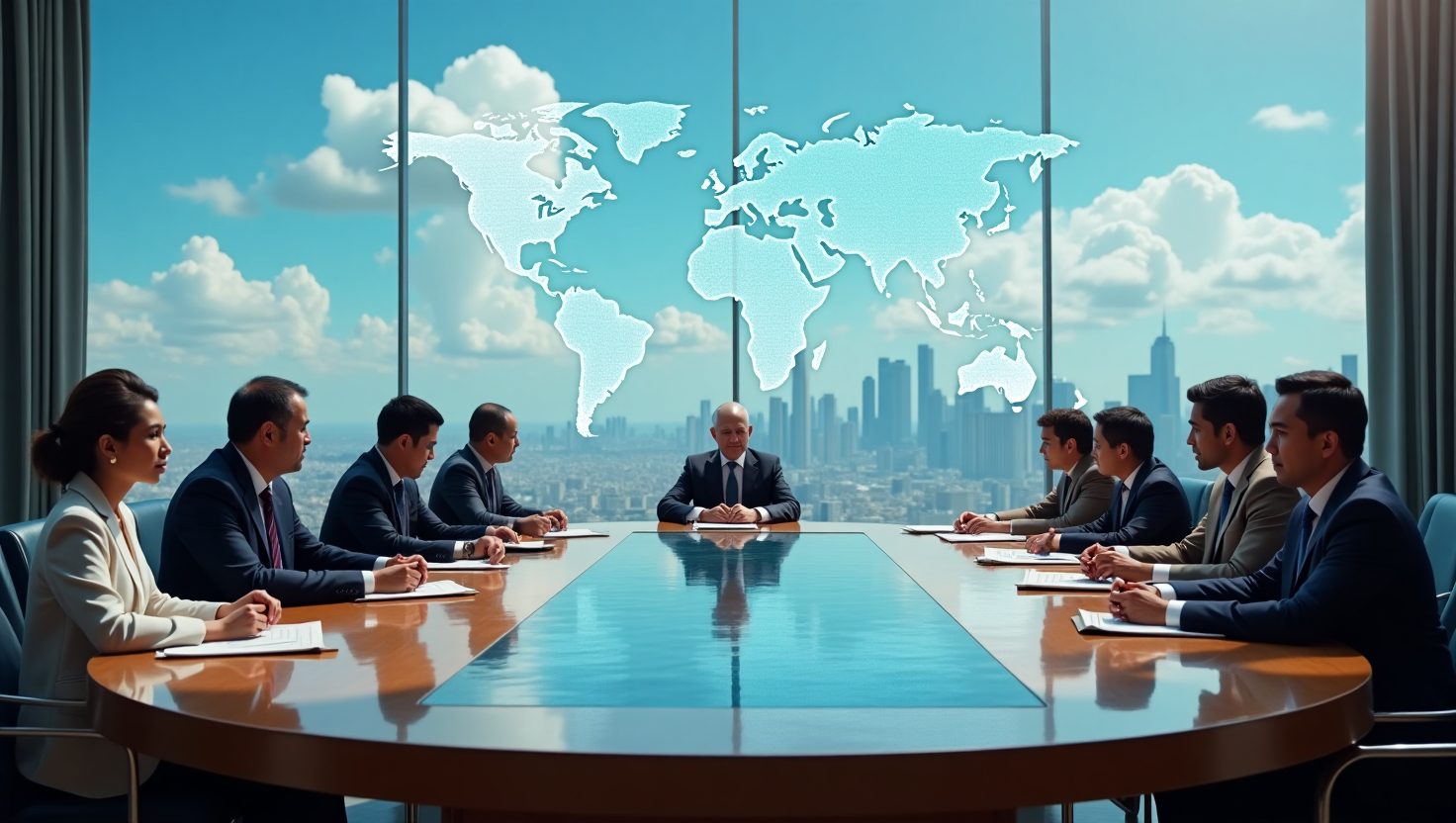
Another year, another global summit announcement. This time, the grand circus of international diplomacy is setting up its tent in Geneva, with Switzerland officially slated to host the 2027 World Summit on Artificial Intelligence. At a recent gathering in New Delhi, Swiss President Guy Parmelin declared his country “ready to host,” standing alongside leaders from India and Brazil. It’s all very proper and predictable. But behind the polite handshakes and prepared statements, a far more urgent and messy reality is unfolding. The world’s governments are waking up, rather late in the day, to the fact that they need a plan for AI. This scramble is what we’re now calling AI diplomacy.
The core question is simple: can these carefully choreographed meetings actually keep pace with a technology that evolves while policymakers are still debating the breakfast menu? Or are we just watching political theatre while a handful of tech companies in California and China write the real rules?
The Strategic Dance of Summit Diplomacy
Let’s be clear about what summit diplomacy is, and what it isn’t. It isn’t a quick fix. It’s a slow, deliberate process where heads of state gather to signal intent and, if they’re lucky, forge a consensus. Think of it less as a productive board meeting and more as the first, tentative attempt to form a neighbourhood watch in a town that’s just had a massive crime wave. Everyone agrees something must be done, but nobody can quite agree on what, who pays for it, or who gets to be in charge.
This current series of AI summits—kicked off in the UK in 2023, with stops in South Korea and France—represents the world’s most powerful nations trying to get their story straight. According to reports from swissinfo.ch, the goal is to grapple with AI’s immense societal opportunities and its equally immense risks. The prize they’re all chasing is the creation of effective tech policy frameworks that can guide AI’s development without stifling its potential. It is a monumental task, akin to trying to build a dam with teaspoons while a tsunami is visible on the horizon.
The New Faces at the Table
What’s interesting about this latest announcement isn’t just the location—Geneva, which Parmelin rightly calls the “epicentre of multilateralism”—but the people standing on the stage. The presence of Indian Prime Minister Narendra Modi and Brazilian President Lula da Silva alongside a Swiss leader signals a crucial shift. This isn’t just the old G7 club dictating terms.
Emerging economies are demanding a seat at the table, and rightly so. They understand that the architecture of future AI governance will have profound implications for their economic development and national sovereignty. These leaders aren’t just there for a photo opportunity; they are actively participating in global standards development. They want to ensure the AI rulebook reflects a global perspective, not just the commercial interests of Silicon Valley or the geopolitical aims of a single superpower. The decisions made in these rooms will determine whether AI becomes a tool for global progress or a new form of digital colonialism.
We’re All in This Together, Apparently
The announcement also highlighted a collaboration between Switzerland and the United Arab Emirates, the host of the 2028 summit. On the surface, it’s an intriguing partnership: the quiet, neutral hub of traditional diplomacy teaming up with a dynamic, future-focused Gulf state pouring billions into technology.
This is a textbook example of how modern multilateral agreements are being forged. They are no longer just the domain of Western powers. This strategic cooperation acknowledges that expertise and influence in the 21st century are distributed globally. Switzerland brings its long history of neutrality and consensus-building, while the UAE brings its aggressive investment in AI and its position as a growing hub for global business. Together, they represent a more pragmatic and inclusive approach to building a global consensus.
The Framework Is Everything
So, what are they actually trying to build? The ultimate product of all this talk is supposed to be robust tech policy frameworks. This is the critical, and frankly, the most boringly-named part of the entire process. But it’s everything.
Imagine trying to agree on the rules for self-driving cars. Summit diplomacy is where world leaders agree that, yes, we need rules for the road. But the framework is where the real work happens. It’s the detailed blueprint that decides the speed limits, who is liable in an accident, what data the car can collect, and how to ensure the car’s software isn’t biased against certain pedestrians. The challenge is that they are trying to write this rulebook while the cars are already on the road, getting faster and more unpredictable every day.
The Double-Edged Sword of Progress
No one in these meetings denies the incredible promise of AI. The potential to revolutionise medicine, combat climate change, and optimise agriculture is very real. These are not hypothetical benefits; they are tangible opportunities that could improve billions of lives.
But the risks are just as real, and they are what keep policymakers up at night. We’re not just talking about job displacement. We’re talking about the potential for algorithmic bias to entrench inequality, the use of AI in autonomous warfare, the erosion of privacy on an unprecedented scale, and the proliferation of hyper-realistic disinformation that could destabilise societies. As the swissinfo.ch article notes, these summits are explicitly designed to address both sides of this coin. The goal of global standards development is to create guardrails that maximise the upside while mitigating the catastrophic downside.
Is This All Just Talk?
It’s easy to be cynical. International summits are notorious for producing vague communiqués that are forgotten by the time the private jets have taken off. And yet, what’s the alternative? Leaving the governance of the most powerful technology humanity has ever created to a handful of unelected CEOs and venture capitalists? That seems far more reckless.
The slow, grinding process of AI diplomacy is frustrating, but it may be our only hope of asserting some form of democratic control over our technological future. These summits, for all their flaws, are creating a space for a global conversation that is absolutely essential. They are forcing nations to articulate their values and their fears, and to begin the difficult work of translating those values into workable multilateral agreements.
The future will not be decided by one grand treaty signed in Geneva in 2027. It will be shaped by a continuous, evolving process of negotiation, compromise, and adaptation. The real test is whether our political institutions can learn to move at the speed of innovation.
So, as we look towards Geneva, the question for all of us is not just what will be decided, but if it can be decided in time. Can this global effort in summit diplomacy outpace the exponential curve of technological progress? What do you think is the biggest hurdle these leaders face in creating a truly global AI rulebook?



