

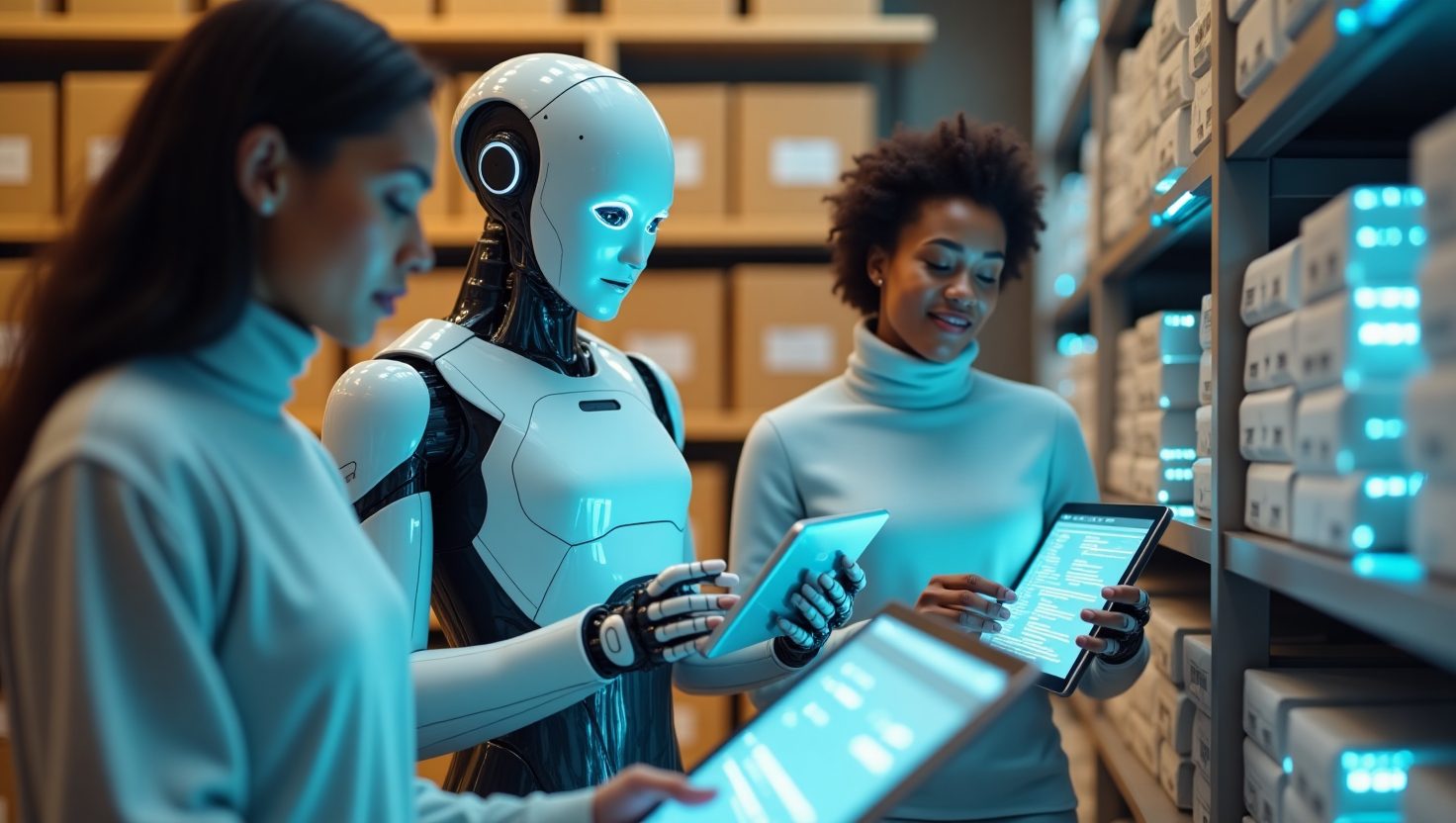
Every so often, a piece of technology comes along that promises to change everything, and the retail sector seems to get more than its fair share of these promises. Yet, for all the talk of drone deliveries and checkout-free stores, the day-to-day reality for many is still wrestling with creaking inventory systems and inefficient development cycles. The real revolution isn’t always the flashy consumer-facing gadget; sometimes, it’s the engine humming away in the background.
Enter the rise of retail AI agents. These aren’t your simple, scripted chatbots. We’re talking about autonomous systems capable of reasoning, planning, and executing complex tasks. Think of them less as a helpful shopping assistant and more as a tireless, hyper-efficient software engineer working to streamline the very technology that powers the business. For retailers battling tight margins and fierce competition, getting this right is less of an innovation and more of a survival imperative.
So, What Exactly Are We Talking About?
At their core, retail AI agents are sophisticated software programs designed to operate autonomously within a defined set of boundaries. They can take a high-level objective—say, “ensure the new checkout software is bug-free”—and break it down into a series of smaller, actionable steps. They can read project requirements, write test cases, run those tests, analyse the results, and even suggest fixes for any bugs they find.
This is a world away from traditional automation. It’s like the difference between a self-service checkout machine, which just follows a rigid script, and an experienced store manager who can diagnose why the queues are building up, redeploy staff, and fix the underlying problem. This leap is a cornerstone of successful enterprise AI adoption, moving from isolated tools to integrated, intelligent systems.
The transformation is already happening behind the scenes. According to a recent discussion featured in an MIT Technology Review-cited podcast from the Infosys Knowledge Institute, Prasad Banala, a director of software engineering at a major US retailer, described how his team is using these agents to overhaul their software development process. They aren’t just speeding things up; they’re fundamentally changing how quality is managed.
The Assembly Line for Modern AI
Building one of these agents isn’t a weekend project. To operationalise them reliably and at scale requires a robust industrial process. This is where SDLC automation—automating the Software Development Life Cycle—becomes absolutely critical.
For those not steeped in software engineering, the SDLC is the blueprint for creating software: from initial idea to final deployment and maintenance. Automating it means creating a seamless, efficient production line.
– Requirement Validation: An AI agent can read a 200-page document outlining a new feature and instantly flag ambiguities or contradictions that a human might miss.
– Test Case Generation: Instead of engineers spending weeks writing thousands of test scenarios, an agent can generate them in minutes, ensuring far greater coverage.
– Results Analysis: The agent runs the tests and doesn’t just give a pass/fail. It analyses the data to pinpoint the exact source of a problem, dramatically cutting down on debugging time.
To make this assembly line work, you need rigorous quality control. This is the role of AI validation frameworks. These frameworks are essentially the rulebooks and inspection criteria that ensure the AI agents are performing as expected. Without them, you’re flying blind, hoping the AI is doing the right thing. Banala’s team, for instance, implemented stringent governance to ensure their agents’ outputs were consistently reliable, a step that is absolutely non-negotiable when deploying this technology.
The Human in the Machine
Now, does this mean a tidal wave of developer redundancies is on the horizon? Not quite. The narrative of AI replacing humans wholesale is tired and, frankly, misses the point entirely. The most successful implementations are built on a foundation of human-AI collaboration.
The goal here is augmentation, not replacement. The AI agent acts as a force multiplier, handling the repetitive, time-consuming tasks with superhuman speed and accuracy. This frees up human engineers to focus on what they do best: creative problem-solving, strategic thinking, and handling the complex, nuanced edge cases that AI still struggles with.
Effective human-AI collaboration requires two key things:
1. A Clear Division of Labour: Humans set the strategic direction and the ‘definition of done’. The AI executes the granular tasks needed to get there. The human is the architect; the AI is the master builder with a team of a thousand.
2. Robust Governance and Oversight: You cannot simply “set and forget” an autonomous agent. This is where human-in-the-loop governance comes in. It ensures that a human expert is always there to review, approve, or override the AI’s decisions, particularly at critical points. It’s the essential safety net that builds trust in the system.
If You Can’t Measure It, You Can’t Manage It
The promise of AI is tantalising, but boardroom executives don’t sign cheques based on promises. They need to see a return on investment. To justify the significant effort of building out these systems, retailers must establish clear, measurable quality outcomes.
What does that look like in practice? It means moving beyond vague goals like “improving efficiency” to hard, quantifiable metrics.
– Time to Resolution: How much faster are bugs being identified and fixed? A reduction from days to hours is a clear win.
– Test Coverage: What percentage of the software’s functions are being tested? Pushing this from 70% to 95% drastically reduces the risk of failures in the live environment.
– Deployment Frequency: How quickly and reliably can new features be released to customers?
These metrics provide the concrete data needed to prove the value of retail AI agents. They also create a feedback loop for continuous improvement. By constantly monitoring performance, engineering teams can refine the agents, tweak the validation frameworks, and steadily improve the entire development pipeline.
The future here isn’t a static one. As these agents get more sophisticated, we can forecast their expansion beyond software testing into areas like automated infrastructure management, proactive cybersecurity threat detection, and even optimising supply chain logistics code in real-time based on live data. The potential is enormous, but it all rests on the foundational work being done today.
So, the next time you hear about AI in retail, try to look past the shiny objects on the shop floor. The real, foundational shift is happening in the engine room, where a new partnership between human ingenuity and artificial intelligence is being forged. For the retailers that get this right, the advantage will be profound and lasting.
The question is, how many are truly ready to hand over the keys to their development pipeline? What do you think is the biggest barrier for retailers in trusting these autonomous systems?



