

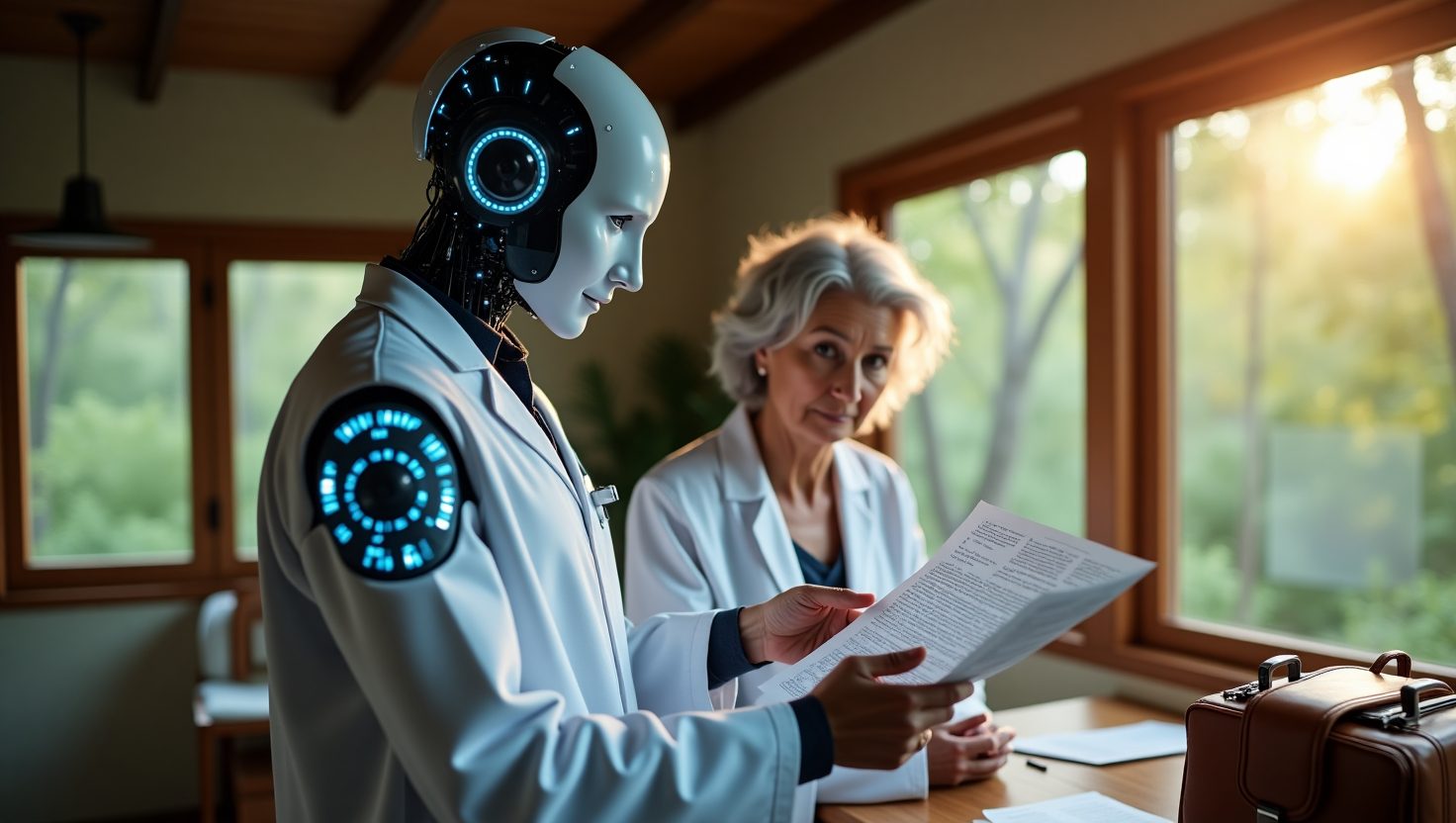
It seems you can’t keep a good TV doctor out of the headlines. Dr. Mehmet Oz, now at the helm of the US Centers for Medicare and Medicaid Services (CMS), has floated a plan that sounds like it was ripped from a science fiction script: a $50 billion modernisation of American rural healthcare, with artificial intelligence at its core. The proposal aims to tackle a genuine crisis, but it asks a profound question: when it comes to our health, what’s the right balance between a silicon chip and a human touch?
For years, the story of rural healthcare has been one of slow decline. As reported by KFF, a nonpartisan research organisation, more than 190 rural hospitals have shut their doors since 2005. That represents a staggering 10% of all rural hospitals in the country. Residents in these areas are, according to the CDC, more likely to die prematurely from the five leading preventable causes. The system is bleeding, and Dr. Oz is proposing a high-tech tourniquet. But is it the right one?
A High-Tech Prescription for the Heartland
So, what exactly is on the table? The plan, part of a wider Trump administration initiative, is bold. It envisions a future where the shortage of rural doctors is mitigated by technology. We’re talking about using telemedicine avatars to multiply a single doctor’s reach, allowing them to consult with patients in multiple locations without burning out.
Think of these avatars not as sentient robots from a film, but as highly advanced digital front doors. A patient might interact with an AI-powered avatar that can handle initial questions, gather symptoms, and triage their case. A real doctor could then “beam in” for the crucial parts of the consultation, having already been briefed by the AI. The idea is to streamline the process, making healthcare more efficient.
Beyond avatars, the proposal includes other rural health tech solutions like drone medication delivery to remote homes and AI-guided ultrasound machines that could be operated by a local nurse with remote expert supervision. The stated goal is to leverage technology to bridge the vast distances that define rural America, turning a doctor’s office from a physical place into a service you can access anywhere. It’s a compelling vision for improving healthcare accessibility tech.
The Digital Doctor vs. The Digital Divide
The central tension here is clear. On one side, you have the pragmatists. Matt Faustman of Honey Health points out a statistic that should make anyone in management sit up straight: clinicians can spend 30% to 40% of their time on administrative work. He argues that AI can absorb this bureaucratic load, freeing up human professionals to do what they do best: care for patients. From this perspective, the plan isn’t about physician replacement concerns; it’s about physician empowerment. If AI handles the paperwork, doctors have more time for complex cases and human interaction.
This is the classic augmentation argument. It’s like giving a master craftsman a set of power tools. You aren’t replacing their skill; you’re just making them faster and more efficient, allowing them to build more things.
But then there’s the other side of the coin, and it’s a viewpoint heavy with caution. Carrie Henning-Smith, from the University of Minnesota’s Rural Health Research Center, raises serious flags about AI medical ethics. In an interview with NPR, she laid it out plainly: “Health care has always been about humanity and relationship. If your first provider is an avatar, we’re removing trust.”
Her point strikes at the heart of what makes healthcare, well, care. Can an algorithm show empathy? Can a digital avatar hold your hand, metaphorically or otherwise, when delivering a difficult diagnosis? Henning-Smith also voiced a concern that many in underserved communities feel, stating, “I don’t like the idea of rural populations being treated as guinea pigs.” This isn’t just a hypothetical; implementing advanced tech requires robust infrastructure, like high-speed broadband, which is notoriously patchy in many of the areas this plan is meant to serve. A dropped connection during a remote consultation is far more serious than a buffering film.
The Unspoken Context: Trust and Money
We can’t analyse this plan in a vacuum. It arrives alongside a proposed bill, the One Big Beautiful Bill Act, which suggests cutting a jaw-dropping $1 trillion from Medicaid over ten years. This context makes the AI rural healthcare proposal look less like a shiny upgrade and more like a cost-cutting measure disguised as innovation.
Are we offering rural communities a genuinely better solution, or a cheaper, second-tier one because we’ve defunded the first-tier option? This is where the ethical tightrope gets really wobbly. If the primary healthcare provider for an entire region becomes an AI interface, are we creating a new kind of digital divide, where those with money and PPO plans see a human, and those on Medicare in a small town talk to a screen?
The debate over physician replacement concerns is valid, but perhaps misplaced. The immediate threat isn’t that a robot will take a doctor’s job. The a more pressing risk is that we use this technology as an excuse to disinvest in the human side of healthcare altogether, further eroding the system in a way that disproportionately harms the vulnerable.
Finding Balance: Augmentation, Not Abdication
So, is this $50 billion plan dead on arrival? Not necessarily. The mistake is framing this as an all-or-nothing choice between human doctors and AI avatars. The most promising path forward lies in using AI not to replace the point of care, but to supercharge everything happening behind the scenes.
– Backend Brilliance: Use AI to automate scheduling, billing, and ploughing through insurance paperwork. This is the low-hanging fruit that directly addresses clinician burnout.
– Diagnostic Assistance: AI tools that can analyse medical images (like X-rays or MRIs) and flag potential issues for a radiologist to review are already proving their worth. This technology doesn’t replace the expert; it acts as a tireless, eagle-eyed assistant.
– Empowering Local Heroes: Equip local nurses and paramedics in rural clinics with AI-powered diagnostic tools. The AI-guided ultrasound is a perfect example. It allows a skilled professional on the ground to perform a task that would normally require a specialist to be physically present.
The future of AI rural healthcare isn’t about replacing the village doctor with a chatbot. It’s about giving that doctor, and their entire team, the tools to do their job more effectively and reach more people. The technology should serve the human, not the other way around.
Ultimately, Dr. Oz’s proposal forces a necessary, if uncomfortable, conversation. The rural healthcare system is broken, and simply hoping for more doctors to appear isn’t a strategy. Innovation is needed. But as we design these new systems, we must keep human dignity and trust at the centre.
Is an AI doctor better than no doctor at all? Or is that the wrong question to be asking? Perhaps the real question is: how can we use technology to ensure every single person has access to compassionate, human-led healthcare, no matter where they live? What are your thoughts?



