

Well, that was something, wasn’t it? For years, the Super Bowl ad break has been a festival of puppies, pop stars, and emotionally manipulative storytelling. But this year, the real MVP wasn’t a quarterback or a celebrity cameo; it was the algorithm. The geeks have finally inherited the advertising world, and AI Super Bowl advertising wasn’t just a niche player—it was the star of the show.
It seems Madison Avenue has finally woken up and smelled the silicon. This year’s crop of commercials, as detailed in a great breakdown by TechCrunch, showed that artificial intelligence is no longer a back-office tool for crunching data. It’s now front and centre, writing scripts, designing characters, and even picking fights. The big question is, are we witnessing genuine brand innovation, or just the shiniest new toy in the marketing department’s sandbox?
Svedka’s AI Bot-tle Royale
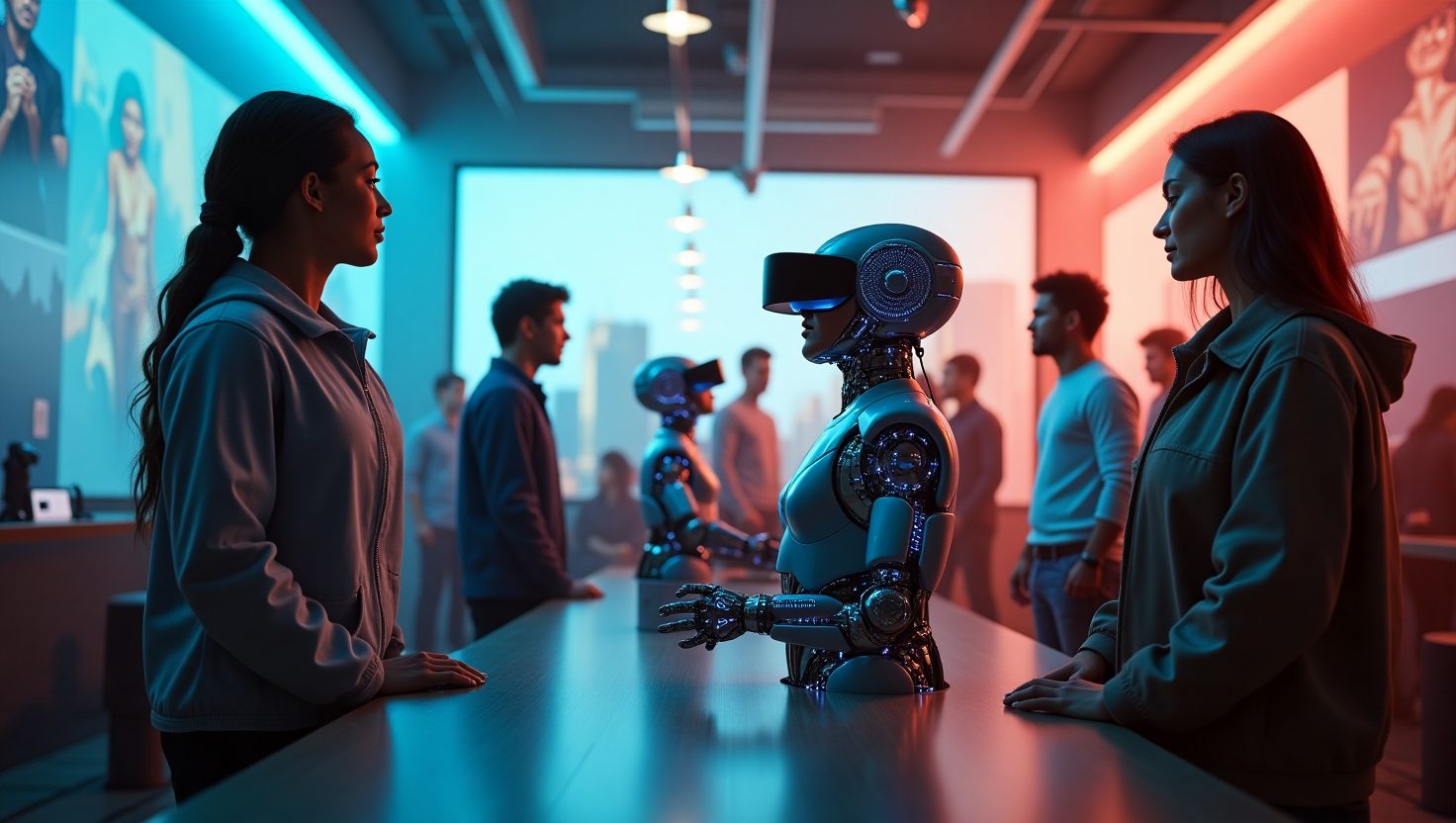
Let’s start with the one that had everyone talking: Svedka. The vodka brand went all-in, debuting what it called the first “primarily AI-generated” national Super Bowl commercial. In partnership with a firm named Silverside AI, they spent four months coaxing a generative model to create their dancing “Fembot” and “Brobot” characters. Four months! That’s hardly the instant-gratification push-button solution some AI evangelists promise, is it?
This wasn’t a case of an intern typing “make me a vodka ad” into a text prompt. It was a painstaking process of iteration and refinement. Think of it less like a vending machine and more like training a very gifted, very strange, and occasionally uncooperative new creative partner. The result was visually distinctive, for sure. But did it make you want to buy a bottle of Svedka, or did it just make you wonder if a human creative director was weeping somewhere in a darkened room? That’s the tightrope these brands are walking.
When Chatbots Throw Punches
Of course, it wouldn’t be the tech world without some drama. Anthropic, the creators of the Claude chatbot, decided to use its multi-million dollar slot to take a direct shot at its biggest rival. Their ad’s tagline was a masterclass in passive aggression: “Ads are coming to AI. But not to Claude.”
You could practically hear the gasp from Silicon Valley. This wasn’t just advertising; it was a public declaration of war against OpenAI. Unsurprisingly, OpenAI’s chief, Sam Altman, wasn’t about to take that lying down, reportedly calling the ad “clearly dishonest” in a public spat that played out after the game. This is the new cola war, folks, fought not over taste but over business models and ethics. Anthropic is positioning itself as the principled, ad-free Switzerland of AI, whilst painting OpenAI as the company ready to sell out. It’s a bold, risky strategy that depends entirely on consumers actually caring about the philosophical purity of their AI assistants. Do they? I have my doubts.
Big Tech Puts its AI Where its Mouth is
Whilst the newcomers were busy squabbling, the established giants used the Super Bowl to show how AI is already baked into their products. This wasn’t just about making the ads; it was about selling the AI-powered future.
– Meta’s Window to the World: Meta didn’t just use AI to create its ad; it advertised its Oakley-branded AI glasses. The message was simple: see this cool adventure? Our AI can help you capture and share it. It’s a clever attempt to normalise wearable AI and make it seem less like a surveillance tool and more like a creative one.
– Amazon’s Star Power: Amazon trotted out Chris Hemsworth for its Alexa+ spot, a humorous take on real-time ad creation that showed the AI’s power and its potential for unexpected, funny outcomes. By using a beloved celebrity, Amazon makes its increasingly powerful AI feel accessible and fun, not intimidating.
– Ring Finds Fido: Perhaps the most emotionally resonant use of AI came from Ring. Their ad for the ‘Search Party’ feature, which uses a network of cameras to help find lost pets, was a stroke of genius. Citing that the feature reunites “more than one lost dog with its owner every day,” Ring successfully connected its AI technology to a universal human experience: the panic of losing a pet. Now that is how you achieve consumer engagement.
– Google’s Banana Flex: And then there was Google, which couldn’t resist showing off its technical chops. Its ad for the fictional “Nano Banana Pro” was a subtle nod to its powerful image-generation models. It was an inside joke for the tech-savvy, a way of saying, “Yes, we’re still the ones building the foundational stuff everyone else uses.”
Is Generative Marketing the New Normal?
So, where does this all leave us? The era of generative marketing is clearly here. What we saw during Super Bowl LX wasn’t an anomaly; it was a trailer for the next decade of advertising. The ability to generate, test, and iterate on creative concepts at lightning speed will change everything.
Brands that cling to the old ways of working—long development cycles, single ‘hero’ concepts—are going to be left behind. The future belongs to those who can master these new tools, combining human oversight with algorithmic power to create campaigns that are not only efficient but also deeply personal and engaging. Adapting won’t be optional.
This isn’t about replacing human creativity. That four-month Svedka project proves that. It’s about augmenting it. The creative director of the future might spend less time sketching on a whiteboard and more time writing the perfect prompt and curating the AI’s output. The core skill—understanding human desire and telling a compelling story—remains the same. The toolbox is just getting a whole lot bigger and stranger.
The real challenge for brands will be cutting through the noise. When everyone has access to the same generative tools, how do you stand out? The answer, as always, will lie in the quality of the idea. AI can generate a thousand images, but it still needs a human to provide the spark of a truly brilliant concept.
What do you think? Which brand’s use of AI felt like a genuine leap forward, and which was just expensive smoke and mirrors? Let me know your thoughts.



