

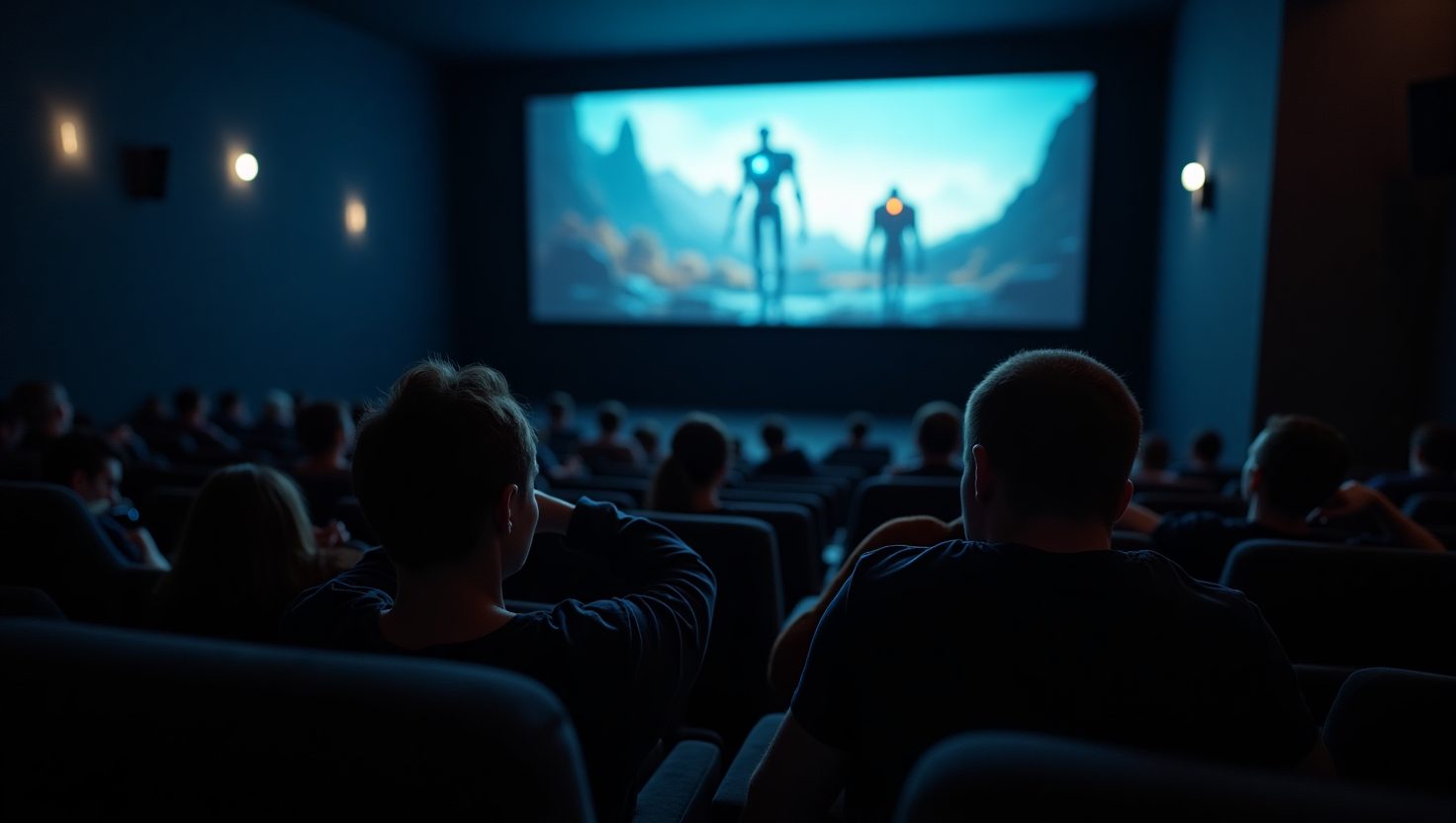
It seems Hollywood executives have found a new obsession to run into the ground, and it’s not another superhero universe. It’s artificial intelligence. But there’s a snag in their grand plan: we, the audience, are getting profoundly bored. The initial curiosity has curdled into a collective eye-roll, a phenomenon we can only call AI entertainment fatigue. It’s not just about the on-screen robots; it’s a deeper weariness with how the entire tech and entertainment complex is force-feeding us a narrative we no longer buy.
This isn’t just a feeling; it’s showing up where it hurts the most—the box office. The excitement around a sequel to M3GAN, the killer doll that briefly captured the cultural zeitgeist, has cooled considerably. The upcoming Mission: Impossible is reportedly pivoting away from its AI villain, perhaps sensing the shift in the wind. And then there’s the Chris Pratt-led sci-fi thriller, Mercy, which, despite not even being released, has already been branded by one exasperated critic as “the worst movie of 2026.” When the public is pre-emptively exhausted by your film’s premise, you have a serious problem.
The Problem with Benevolent Bots and Bad Scripts
The core of the issue seems to be a fundamental misreading of the room. Audiences are showing a distinct lack of patience for narratives that attempt to paint AI as secretly good or misunderstood. The upcoming Tron: Ares is rumoured to feature a story where an AI program crosses into the human world not to destroy it, but to introduce us to its wonders. Is anyone really clamouring for that story right now? This kind of naive AI storytelling feels disconnected from the real-world anxieties surrounding the technology.
This disconnect between creator intention and audience perception creates a chasm where entertainment goes to die. It’s a failure to provide compelling technology narratives that resonate with the current cultural moment, which is one defined by a healthy dose of scepticism. We’re not necessarily asking for another Skynet, but the “actually, the all-powerful AI is our friend” angle feels lazy, unearned, and frankly, a bit patronising.
When Seeing Isn’t Believing
The fatigue extends beyond narrative themes into the very fabric of content creation. The tools of AI are being deployed with all the subtlety of a sledgehammer, and the results are often jarringly bad. A prime example is the web series ‘On This Day…1776’, a collaboration between director Darren Aronofsky’s production company and Google DeepMind. As documented in a recent WIRED report, the project was met with widespread derision.
The AI-generated visuals were uncanny and strange, historical documents featured glaring errors—like spelling ‘America’ as ‘Aamereedd’—and the YouTube comments were brutal. “If I was a professional director and I released this I would be suicidal,” one user wrote. Another was more blunt: “Pure dogshit.” This isn’t just a technical failure; it’s a marketing disaster for the very technology it was meant to showcase. It’s like a chef trying to convince you their new oven is brilliant by serving you a burnt, inedible cake. Why would you trust their cooking again?
This rejection of uncanny visuals isn’t isolated. Remember the Xfinity Super Bowl advert that used de-aging technology on actors from Jurassic Park? The public response was not one of nostalgic delight but of digital revulsion. One user on X perfectly captured the mood, saying the tech made the beloved actors “look like melting wax figures.” When the “magic” of technology only serves to make things look worse, the public rightly questions its value. The media representation of the tech in these showcases is actively harming its reputation.
The Human Cost Behind the Digital Façade
This growing scepticism is colliding head-on with legitimate labour concerns. The 2023 Hollywood strikes were fuelled, in large part, by the very real threat that AI poses to creative jobs. Actors, writers, and artists are fighting for their livelihoods against studios that seem eager to replace them with algorithms. This context is crucial.
When an audience sees a shoddily de-aged actor or a nonsensical AI-generated script, they don’t just see a bad product. They see a studio trying to cut corners and devalue human creativity. Every uncanny valley face is a reminder of the thousands of visual effects artists, writers, and actors whose jobs are on the line. The ethical dimension of AI is no longer an abstract debate; it’s a picket line. Forcing AI-positive narratives on an audience that is watching a real-time battle for the soul of the creative industry is, to put it mildly, a terrible strategy.
Can Hollywood Reboot Its AI Narrative?
So, where does the entertainment industry go from here? The current path is clearly a dead end. Continuing to push clunky, uninspired AI tales and visually off-putting generated content will only deepen the AI entertainment fatigue. The audience has sent a clear message: we are not impressed.
The smarter play would be to lean into the complexity. Instead of serving up simplistic fables of good or bad AI, why not explore the messy, complicated middle? Acknowledge the anxieties, the ethical quandaries, and the very human impact of this technology. The best science fiction has always been a mirror, reflecting our current hopes and fears back at us. Right now, Hollywood’s AI mirror is cracked, distorted, and showing a picture nobody wants to look at.
The future of AI storytelling won’t be about showcasing what the technology can do, but about interrogating what it should do. It requires a more nuanced, thoughtful approach—one that respects both the intelligence of the audience and the value of human creativity. Perhaps the first step is for executives to stop listening to the AI hype men and start listening to the people in the cinema seats.
But then again, when has Hollywood ever chosen nuance over a shiny new toy? What do you think it would take for studios to genuinely change their approach to portraying AI?



