

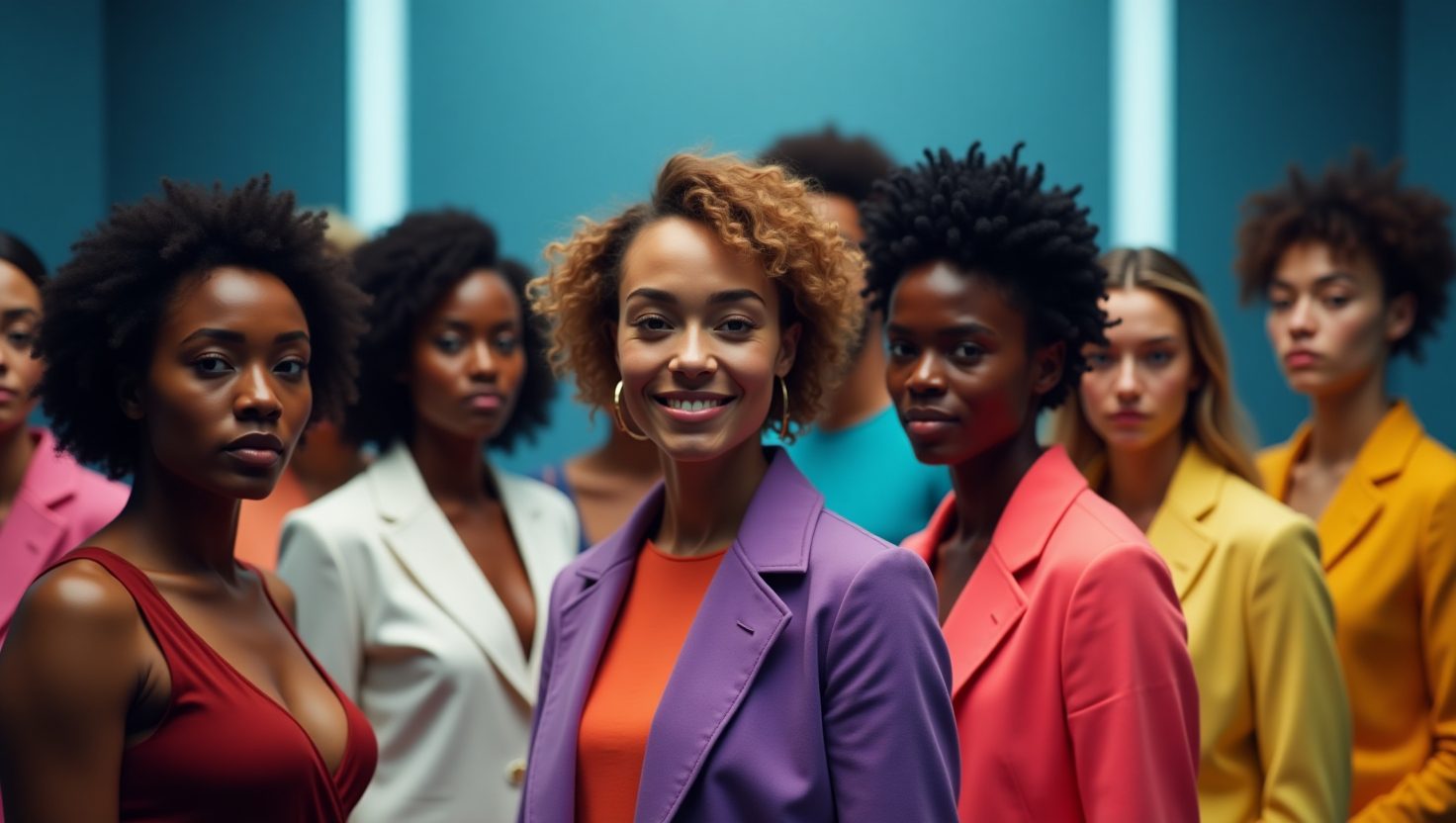
So, what’s actually going on behind the scenes? It’s less about a robot takeover and more about a very clever editing suite.
The New Playbook: Virtual Model Adaptation
Let’s cut through the jargon. What is virtual model adaptation? It’s not about creating entirely fake, soulless digital models that live in the cloud. Instead, think of it as a powerful remixing tool. Zara conducts a photoshoot with a real, human model wearing an item, say, a blue blazer. They get the lighting right, the pose is perfect, and the model is, of course, consented and compensated for their work.
Now, what happens when they release that same blazer in red, green, and beige? In the old days, that meant more studio time, more logistics, and more cost, either by reshooting the model or painstakingly putting product shots on a mannequin. Today, with virtual model adaptation, AI steps in. It takes the original approved image of the model in the blue blazer and intelligently ‘redresses’ her in the other colours. The human element—the model’s pose, expression, and realism—remains the foundation. The AI just handles the wardrobe change.
The benefits are glaringly obvious for a company built on speed:
– Speed to Market: New product variations can have high-quality, model-based imagery online in hours, not weeks.
– Cost Reduction: The expense of multiple, repetitive photoshoots for simple colour changes is dramatically reduced.
– Marketing Versatility: The same base image can be adapted for different campaigns or regional markets without calling the model back into the studio.
Connecting the Dots: Supply Chain Content Integration
This isn’t just a clever-clogs marketing trick; it’s a strategic overhaul of the workflow. This is where we see true supply chain content integration. In the fast-fashion universe, the supply chain is everything. Getting a design from a sketchpad to a storefront in a matter of weeks is the name of the game. Now, content creation is becoming just another node in that same lightning-fast network.
Imagine the process. A new batch of jumpers is manufactured in five new colours. As soon as those SKUs (Stock Keeping Units) are logged into the inventory system, the information is channelled directly to the AI. The system already has the approved base photos of the model wearing the original jumper. The AI automatically generates the images for the five new colours, which can then be immediately pushed to the website.
The friction is gone. The email chain between the merchandising team, the photography studio, and the web team is slashed. This is the kind of quiet, unsexy efficiency improvement that doesn’t make for a splashy press release but has a huge impact on the bottom line. As detailed in a recent analysis by Artificial Intelligence News, this is about embedding AI into existing pipelines to solve repetitive, mundane tasks. It’s evolution, not revolution.
Walking the Tightrope of Ethical Imagery Standards
Right, let’s address the big question. Is this ethical? Are we one step away from generating any image we want, plastering a real person’s face on it without their permission? This is where established ethical imagery standards become not just a nice-to-have, but a business necessity.
Zara’s approach seems to be a masterclass in pragmatism. According to reports, the models involved have given their consent for their images to be used and adapted in this way, and they are compensated accordingly. This is the crucial difference between innovation and exploitation. It’s not about stealing a likeness; it’s about licensing a likeness for a broader, AI-assisted use case.
For any brand looking to follow suit, the rules of engagement should be crystal clear:
– Human Oversight is Non-Negotiable: An AI might generate the image, but a human must approve it. This prevents weird artefacts, misrepresentations, or anything that could damage brand reputation.
– Consent and Compensation are King: The original model must explicitly agree to this form of image manipulation and be paid for it. Their image is the asset; the AI is just the tool.
– Authenticity Still Matters: The goal isn’t to create unrealistic fantasies. The AI’s job is to represent the product accurately on a human form, maintaining the trust a customer has in the brand.
Failing to get this right isn’t just an ethical misstep; it’s a potential PR car crash waiting to happen.
Lessons from the Zara Playbook
So, what can we learn from Zara’s quiet AI implementation? The biggest lesson is that the most powerful AI applications are often the most BORING. Zara isn’t boasting about an AI that can predict the next fashion trend (though they are probably working on that, too). Instead, they’ve targeted a specific, costly, and time-consuming bottleneck in their operations—product imagery—and applied AI as a very practical solution.
The report from Artificial Intelligence News hits the nail on the head: this is a pattern of “practical AI adoption” that focuses on incremental improvements. It’s about making existing workflows better, not dreaming up entirely new ones from thin air.
This is likely the template for how AI will continue to permeate big business. It won’t arrive with a thunderclap but with the quiet hum of a thousand optimised processes. It’s about finding the repetitive, scalable tasks that can be automated, freeing up human creativity, time, and resources for more complex problems.
The future of AI fashion production, then, looks less like The Jetsons and more like a highly efficient factory assembly line, where digital content is just one more component being seamlessly integrated. The trick is to do it smartly and ethically. Brands that understand this will pull ahead, not because they have the flashiest tech, but because they have the sharpest focus on solving real-world problems.
What do you think? Is this pragmatic approach the right way forward for AI in creative industries, or are we chipping away at the value of human creators, one photoshoot at a time?



