

What Is an AI Inventor, Anyway?
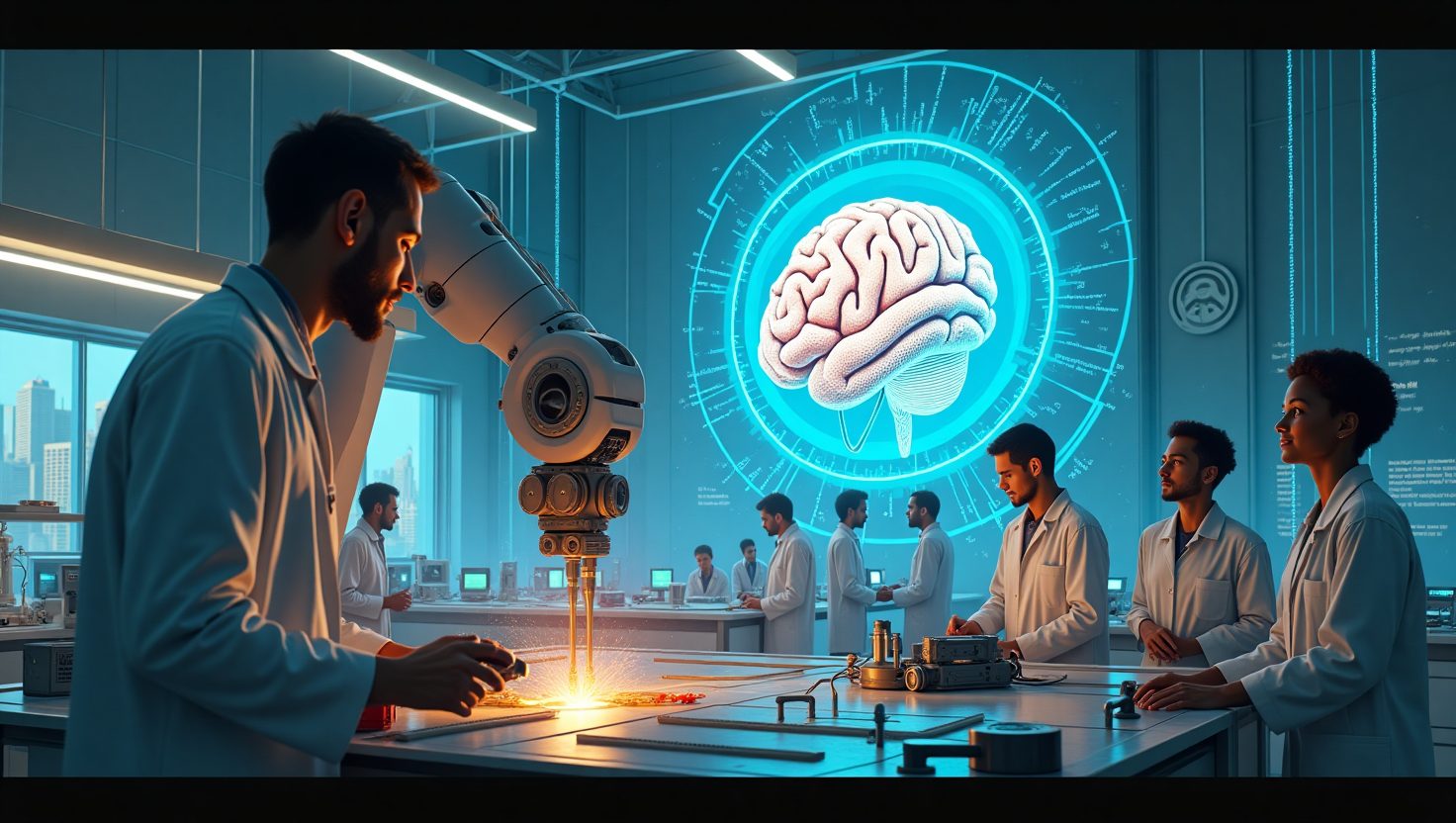
When we mention AI-generated inventions, we’re not talking about your smartphone suggesting the next word in a text. We’re talking about complex systems that can sift through oceans of data – all of human scientific knowledge, in some cases – and propose novel solutions that no human has ever considered. Think of it like a brilliant research assistant who has read every scientific paper ever published, speaks every language, and never needs to sleep or have a coffee break.
This isn’t science fiction. It’s happening right now, driven by machine learning models that can identify patterns and make connections far beyond our own cognitive limits. These aren’t just tools that help us think; they are starting to do the inventive thinking themselves. The question is no longer if they can invent, but what we do when they do.
The Looming Crisis in Intellectual Property
This new reality is creating a monumental headache for our legal systems. The entire structure of patent and copyright law is built on a foundation of human authorship and inventorship. So, what do you do when the inventive step, the core spark of a new idea, comes from a non-human entity?
This is where the debate over IP law evolution gets really messy. Current legal frameworks in most of the world, including the UK and the US, are clear: an inventor must be a human being. The courts have repeatedly rejected attempts to list an AI system, such as DABUS, as an inventor on a patent application. But this feels like a temporary fix, a legal finger in a dam that’s showing more and more cracks. How long can we sustain a system that ignores the primary source of an invention simply because it isn’t made of flesh and blood? This is the central puzzle of AI-generated invention ethics.
AI: From Lab Assistant to Lead Scientist
The theoretical debate becomes incredibly tangible when you look at what’s already been achieved. As highlighted in a recent Vox article, while the public frets about AI, its most profound impact is quietly unfolding in scientific research.
Take Google DeepMind’s AlphaFold. For 50 years, predicting how proteins fold was one of biology’s grandest challenges. AlphaFold didn’t just help; it essentially solved it, accelerating drug discovery and our understanding of diseases. This is automated research discovery on a scale we’ve never seen before.
Then there’s GNoME, another DeepMind project. Before it, humanity had identified around 48,000 stable inorganic crystal structures. GNoME proposed 2.2 million new ones, with subsequent checks flagging 380,000 of them as potentially stable and useful for developing future technologies like better batteries and superconductors. Is the scientist who pressed ‘run’ on the GNoME model the sole inventor of 380,000 new materials? It seems a bit of a stretch, doesn’t it?
We’re even seeing the emergence of ‘co-scientist’ AIs like Coscientist and systems from FutureHouse. These are multi-agent platforms designed to do the grunt work of science: reading literature, designing experiments, and even writing the code to control lab equipment. This pushes the human scientist into a managerial role, shaping the direction of enquiry while the AI handles the mechanics of discovery.
So, Who Owns the Future?
This all leads us to the heart of the innovation ownership debates. If a researcher at a university uses a proprietary AI from a big tech company to discover a cure for a disease, who owns the patent?
– The researcher who formulated the initial question?
– The university that employs them?
– The tech company that built and trained the AI?
– The taxpayers who funded the foundational research the AI was trained on?
There are no easy answers, and our current legal tools feel woefully inadequate. This isn’t just an academic exercise. The design of human-AI collaboration frameworks will determine the future of innovation. Get it wrong, and we could either stifle progress by failing to reward true invention or concentrate all the benefits in the hands of a few companies that own the essential AI models.
Fear, Trust, and the Real AI Revolution
It’s no wonder people are wary. A Pew Research poll found that 50% of people are more concerned than excited about AI. Another study revealed that a tiny 2% of respondents fully trust AI to make fair decisions. The dominant narrative is one of job losses and existential risk, a story of disruption.
But as the work of DeepMind and others shows, perhaps the better story is one of creation. The Vox piece makes a powerful argument that scientific progress has been slowing down. One study that analysed 45 million papers found that science is becoming less disruptive over time. AI could be the engine we need to reverse that trend, a tool for abundance that helps us tackle fundamental challenges in climate, health, and energy. Positioning AI as infrastructure for science is a far more compelling vision than seeing it as just another app to sell us things.
Where Do We Go From Here?
The path forward is unwritten, but it demands urgent attention. We need a global conversation about creating new legal and ethical structures for an age of automated discovery. This will likely involve creating novel classes of intellectual property or redefining what it means to be an “inventor” within a human-AI collaboration framework.
The future isn’t human vs. machine. It’s human with machine. But for that partnership to thrive, we need to establish the rules of engagement now. We need to decide how to fairly distribute the rewards of these powerful new tools to incentivise both human brilliance and the development of even more capable AI. The risk is that if we don’t, the legal battles and ownership disputes will bog down the very progress we so desperately need.
The age of the lone human genius may not be over, but they now have a new, and profoundly strange, partner in the lab. And that changes everything. What do you think? How should we attribute and reward an idea that is born from a collaboration between a human mind and an artificial one?



